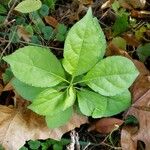
Orthilia secunda
Serrated-wintergreen · One-sided orthilia · One-sided-wintergreen · Side-bells-wintergreen · One-sided pyrola
Description
Source: leafsnapOrthilia secunda, commonly known as the one-sided wintergreen, is a small evergreen plant belonging to the Ericaceae family. Native to North America, it thrives in various habitats, including coniferous forests, bogs, and rocky slopes. This plant features a creeping stem that grows up to 15 cm long, adorned with alternate, oval-shaped leaves that have serrated edges. The leaves are dark green on the top and lighter underneath. From May to July, Orthilia secunda produces small, white or pinkish bell-shaped flowers that hang from one side of the stem. These flowers eventually give way to red berries that ripen in late summer. Native Americans have used Orthilia secunda for medicinal purposes to treat ailments such as stomach problems, headaches, and rheumatism. Overall, Orthilia secunda is an attractive evergreen ground cover with ornamental value, thanks to its delicate flowers and bright red berries. It is an excellent choice for woodland or rock gardens.
🎭 Protection and healing: it is used to soothe fears and to calm the nerves.
Care Guide
💧 Water Every 7 days
Sidebells wintergreen thrives in the cool, moist conditions of boreal forests, where it prefers soil that remains consistently moist. For optimal health, it's important to water it weekly. Although typically grown outdoors, this plant adapts well to changes in seasonal moisture. It benefits from natural rainfall and shows resilience during periods when watering may be less predictable.
How should I water my Sidebells wintergreen plant?
To properly water the Sidebells wintergreen, it is recommended to use filtered water at room temperature. Tap water may contain harmful particles that can negatively affect the plant's health. Since the Sidebells wintergreen thrives in warm environments, it is important to avoid using cold water as it can be a shock to the plant. Additionally, it is best to avoid watering the plant from above to prevent any issues with the foliage. Instead, gently pour the filtered room temperature water onto the soil until it is thoroughly soaked. This method helps to moisten the roots and supports their growth by enabling them to spread throughout the soil and absorb the necessary nutrients.
What should I do if I give too much or too little water to my Sidebells wintergreen?
Overwatering your Sidebells wintergreen can cause wilting and yellowing of the stems and leaves. It can also lead to diseases like root rot, mold, and mildew, which can be fatal to the plant. Underwatering is less common, but it can make the leaves brittle and brown. To care for your Sidebells wintergreen, it's important to recognize and address signs of overwatering early. Reduce watering if you notice these signs and make sure the soil drains well. If your plant shows signs of being underwatered, increase watering until the signs disappear.
How frequently should I water my Sidebells wintergreen plant?
If your Sidebells wintergreen plant is in a pot, the most precise way to determine if it needs water is by sticking your finger into the soil. If the top two to three inches of soil feel dry, it's time to water it. If you have your Sidebells wintergreen planted outdoors in the ground, you can use a similar method to test the soil. Once you find the top few inches of soil have dried out, it's time to water it. In the spring and early fall, this usually means watering about once a week. When it gets very hot, you might need to water twice or more per week. However, mature, well-established Sidebells wintergreen plants can handle drought well.
How much water does my Sidebells wintergreen plant require?
When you water your Sidebells wintergreen, make sure to water it generously. The soil should be dry up to the first two to three inches before watering. Give enough water to fully saturate the soil, causing excess water to flow out of the drainage holes at the bottom of the pot. If you don't see excess water draining, it means you haven't watered enough, but be careful not to let water accumulate in the soil as it can harm the plant. On the other hand, if water doesn't drain properly, it could be due to poorly draining soil, which is not good for the plant's health. If the plant is outside, it will be enough to receive 1 inch of rain per week.
How do I water my Sidebells wintergreen at different stages of growth?
The water needs of the Sidebells wintergreen can vary depending on its growth stages. When the plant is in its early years or has just been transplanted, it will require more water. During these stages, the plant directs a lot of energy towards developing new roots, which need extra moisture to support future growth. As the plant matures, it will require less water. Another stage that may require increased watering is during the blooming period, as the flower development utilizes a significant amount of moisture.
☀️ Light Partial sun
Sidebells wintergreen prefers a spot that receives a mix of shade and sun during the day, though it can also tolerate a location that is sunny most of the time. Sunlight is essential for its healthy growth, and it originated in areas with a balance of sun and shade. Too much or too little light may harm its vitality.
What are the sunlight requirements for Sidebells wintergreen?
Sidebells wintergreen thrives in conditions where it can receive a balanced mix of shade and sun throughout the day, although it can also tolerate full sun exposure for most of the time. For optimal growth, the plant benefits from about 3-6 hours of sunlight (partial sun) but can also do well in areas receiving more than 6 hours of sunlight (full sun). Observing how sunlight moves through your garden will help you choose locations that ensure the right balance of light and shade, promoting the plant's health and happiness.
How does artificial lighting support plant growth indoors?
For indoor plants, especially when natural sunlight is insufficient, artificial lighting provides a necessary solution for healthy growth. LED lights are recommended due to their ability to offer specific wavelengths needed for different plant requirements. The intensity of the light should vary with the plant's natural needs: full sun plants require 30-50W/sq ft, partial sun plants need 20-30W/sq ft, and full shade plants need 10-20W/sq ft. Positioning the light 12-36 inches above the plant and mimicking natural daylight hours (8-12 hours per day) can promote healthier, faster growth.
What symptoms indicate insufficient light for Sidebells wintergreen?
When Sidebells wintergreen receives inadequate light, several symptoms can manifest. These include smaller new leaves, leggy or sparse growth, and faster leaf drop as the plant tries to conserve resources. Growth may stall, and new leaves may appear lighter or display chlorosis, turning yellow due to a breach in chlorophyll production. Excessive direct sunlight can lead to sunscald, leaf curling, wilting, and leaf scorching, damaging the plant's ability to photosynthesize effectively.
How can I address light-related issues for my Sidebells wintergreen?
To address light-related issues for Sidebells wintergreen, gradual adaptation to sunlight is key. For indoor plants, gradually shifting them to sunnier spots each week or providing additional artificial light can optimize growth. Outdoor plants benefit from a careful transition to sunnier locations to prevent sunburn. If sunlight is obstructed, consider pruning or relocating the plant to a brighter spot. Remember that while parts of the plant affected by poor lighting may not recover, new growth should be healthy with increased light exposure.
🌡️ Temperature 5–32.2°C
Sidebells wintergreen is a plant that grows best in cool to moderately warm conditions, favoring a temperature range of 41 to 89.6 °F (5 to 32 ℃). In seasons with extreme temperatures, its conditions must be adjusted carefully to ensure healthy growth.
What is the ideal temperature range for growing Sidebells wintergreen?
Sidebells wintergreen, scientifically known as Orthilia secunda, thrives best in a cool to moderately warm climate. The ideal temperature range for its growth is between 41 to 89.6 °F (5 to 32 °C). This makes it quite adaptable to varying weather conditions, providing it does not exceed these temperature extremes for prolonged periods.
How does Sidebells wintergreen cope with cold winter temperatures?
Sidebells wintergreen possesses a strong resistance to cold and usually does not require special frost protection measures. However, in particularly harsh winters where temperatures are expected to drop below -30°C, additional protection should be considered, such as covering the plant with soil or straw. An important tip before the first freeze of autumn is to water the plant abundantly, ensuring the soil is moist as it freezes. This proactive approach helps the plant avoid drought and water scarcity during winter and early spring.
What should I do if the temperature drops below -30°C?
Although Sidebells wintergreen can tolerate cold weather, temperatures falling below -30°C may not show immediate damage during winter but can lead to decreased sprouting or no sprouting at all come spring. To mitigate these effects, it is recommended to remove any parts of the plant that have failed to sprout as the spring season begins.
How should I care for Sidebells wintergreen during high temperatures?
During the summer months, it's important to ensure that temperatures around the Sidebells wintergreen do not exceed 32°C. Exposure to temperatures above 35°C can cause the plant's leaves to become lighter in color, curl up, become susceptible to sunburn, and, in extreme cases, lead to wilting and dryness of the entire plant. To protect the plant during such conditions, trim any sunburned or dried-up parts, relocate it to a shaded area or use a shade cloth to protect it from the midday and afternoon sun. Additionally, maintain soil moisture by watering the plant in the morning and evening.
💨 Humidity
🪴 Soil 5-6
🌱 Fertilizer
One fertilizer application in spring is generally adequate for Sidebells wintergreen, though repeated feedings can increase growth. Feed about once every one to one-and-a-half months. Fertilizing improves the leaves’ appearance and function, helping keep an even color and healthy texture. It also promotes root development and nutrient uptake, supporting the plant’s long-term health.
🪴 Pot & Repot
✂️ Pruning
The small, evergreen perennial known as sidebells wintergreen thrives in shaded areas and benefits from light pruning between early and late spring. Lightly trim away dead foliage to encourage healthy growth, as heavy pruning is not needed due to the plant's slow growth rate. Proper pruning enhances air circulation and promotes a fuller appearance.
🌿 Propagating
🐛 Diseases & pets
☠️ Toxicity
Characteristics
- Plant Type
- Herb
- Life Cycle
- Perennial
- Genus
- Orthilia
- Family
- Ericaceae
- Hardiness Zone
- 4-8
- Mature Height
- 8 cm to 20 cm
- Mature Spread
- 20 cm to 30 cm
- Leaf Color
- Green
- Leaf Type
- Evergreen
- Flower Color
- White
- Flower Size
- 2.54 cm
- Bloom Time
- Early summer, Mid summer
- Planting Time
- Spring, Summer
- Harvest Time
- Late summer, Early fall
- Native Area
- Turkey, Sweden, India, Austria, Mexico, Guatemala, Slovakia, Montenegro, Pakistan, Slovenia, Croatia, Belarus, Russia, Germany, Iceland, Estonia, Koppen, Romania, Latvia, Netherlands, France, Czech Republic, Bulgaria, Poland, Greece, Ukraine, Serbia, China, Lithuania, Norway, Italy, Kazakhstan, Spain, Switzerland, Denmark, Japan, Mongolia, Finland, Iran, Albania, Ireland, United Kingdom, Hungary, Azerbaijan