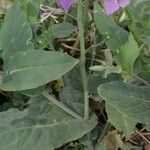
Orychophragmus violaceus
Mustard · Violet orychophragmus
Description
Source: wikipedia (CC BY-SA)Orychophragmus violaceus, the Chinese violet cress, is a species of flowering plant in the family Brassicaceae. It is native to northern and southeastern China and North Korea, and it has been introduced to Japan and the U.S. state of Virginia. An annual or biennial herb typically 60 cm (24 in) tall, it is found in a wide variety of habitats, including anthropogenically disturbed ones. Hardy in USDA zones 7 through 10, in China it is cultivated as a vegetable for its stalks. The Royal Horticultural Society considers it "potentially harmful".
💡 Many plants are not only beautiful but also possess beneficial properties, and Orychophragmus violaceus is no exception. Recent scientific research has led to the discovery of a new fatty acid in the Chinese violet cress. This fatty acid is a potential replacement for both petroleum and synthetic oils due to its high heat resistance. It has been proven to perform exceptionally well as a lubricant and, best of all, it is 100% renewable.
🌳 Among its various uses, chinese violet cress functions as an environmentally friendly option for fabric dyes. The bright violet color of the plant’s flowers can be extracted and applied in the textile industry. In a time when sustainability is central, plant-based dyes are attracting interest for their lower environmental impact compared with synthetic alternatives.
🎭 Friendship and peace between the Chinese and the Japanese
Care Guide
💧 Water
The Chinese violet cress, a plant native to East Asia, thrives in conditions of moderate rainfall and consistent moisture, though it should not be waterlogged. While the plant can endure brief periods of dryness, watering it weekly is beneficial for optimal growth. This plant is usually cultivated outdoors, where it takes advantage of natural rain patterns during its active growing season, which is essential for its flowering cycle.
☀️ Light Full sun
Chinese violet cress flourishes under clear skies and depends on abundant sunlight to support its growth. Native to habitats with high sun exposure, it is healthiest when it receives continuous light. However, too little or too much light can impede its development. Throughout all stages of growth, unobstructed sunlight is essential.
What are the sunlight requirements for Chinese violet cress?
Chinese violet cress requires full sun, meaning it needs more than 6 hours of sunlight daily to thrive. It is essential to observe your garden's light patterns to find the perfect balance of light and shade for your plants. Chinese violet cress originates from sunny environments and relies heavily on the sun for its growth. Both lack and overexposure to sunlight can impede its development, making uninterrupted sunlight crucial throughout all its growth phases.
How can artificial lighting benefit indoor-grown Chinese violet cress?
For indoor plants like Chinese violet cress, adequate lighting is vital for optimal growth, especially when natural sunlight is insufficient. Artificial lights, such as LED lights, can be used to simulate natural sunlight conditions. These lights should provide 30-50W/sq ft for full sun plants, 20-30W/sq ft for partial sun plants, and 10-20W/sq ft for full shade plants. The light source should be positioned 12-36 inches above the plant and be on for 8-12 hours per day to mimic natural daylight hours, promoting faster and healthier growth.
What symptoms indicate light deficiency in Chinese violet cress when grown indoors?
When grown indoors and experiencing limited light, Chinese violet cress might exhibit symptoms such as smaller new leaves, leggy or sparse growth, faster leaf drop, slower or stopped new growth, and lighter-colored new leaves. These signs suggest the plant is not receiving enough sunlight for normal photosynthesis and growth. On the other hand, symptoms like chlorosis, sunscald, leaf curling, wilting, and leaf scorching indicate damage from excessive sunlight.
What are the solutions for managing light conditions for indoor and outdoor Chinese violet cress?
For indoor plants, gradually increase sunlight exposure by moving them to a sunnier spot weekly until they receive at least 6 hours of direct sunlight. Utilizing a south-facing window or artificial lights like desk lamps or grow lights for at least 8 hours daily can also be beneficial. Outdoors, the gradual relocation to sunnier spots can help, but avoid sudden changes to prevent sunburn. If obstructions like trees block sunlight, consider pruning them or transplanting smaller plants during their dormant period to a location with more sunlight and good drainage. Note that parts of the plant damaged by insufficient light may not recover, but new growth should be healthy with improved light conditions.
🌡️ Temperature 15–35°C
Chinese violet cress originates from areas with mild to warm temperatures, preferring a range of 68 to 95 °F (20 to 35 ℃). Seasonal adjustments may be necessary to preserve the ideal climate for growth.
What is the native climate of Chinese violet cress?
Chinese violet cress is native to environments with moderate to warm temperatures, thriving best in the range of 68 to 95 °F (20 to 35 °C). Given its preference for relatively warm temperatures, efforts to maintain conditions above 20°C during winter cultivation are beneficial. The plant should be protected from temperatures dropping below freezing to prevent damage, and when outdoor temperatures approach -5°C (25°F), it is advisable to bring the plant indoors or protect it using a temporary greenhouse or wrapping with plastic film or fabric.
How does Chinese violet cress react to low temperatures?
Chinese violet cress has a moderate tolerance to low temperatures and grows optimally between 20°C and 35°C. During winter, it's critical to keep it above 0°C to avoid frost damage. If temperatures fall below -15°C, the leaves may darken, and in severe cases, the plant can suffer from water-soaked necrosis, wilting, and drooping, eventually turning the leaves brown. To combat frost damage, affected parts should be trimmed away, and the plant should be moved to a warm indoor environment or protected with a makeshift greenhouse. It helps to place the plant near a south-facing window for sufficient sunlight during indoor cultivation, and supplemental lighting might be necessary in case of inadequate light.
What action should be taken if Chinese violet cress is exposed to high temperatures?
In summer, it's important to ensure that the ambient temperature around Chinese violet cress does not exceed 35°C. Exposure to temperatures above 41°C can slow down the plant's growth and make it more prone to sunburn, evidenced by a lightening of leaf color and susceptibility to damage. In such instances, sunburned and dried parts should be trimmed away, and the plant should be moved to a shaded location, especially away from the harsh afternoon sun. Additionally, to help the plant cope with high temperatures, watering it in the morning and evening can keep the soil adequately moist.
💨 Humidity
🪴 Soil 6-7
🌱 Fertilizer
Species of Chinese violet cress benefit from one or two applications of natural organic fertilizers containing potassium and phosphorus. Apply the fertilizer before planting, work it into the soil, and water thoroughly. One application is usually enough, but a second can be applied once seedlings have become established. Avoid excessive fertilizer use to prevent damage to the plants.
🪴 Pot & Repot
✂️ Pruning
Chinese violet cress thrives with regular pruning, which helps to promote better growth and more abundant flowering. In early spring, prune to remove any damaged stems and to shape the plant. Later, in late spring, lightly prune again to encourage denser foliage. Be sure to clean your tools before pruning to prevent the spread of disease. Avoid heavy pruning during the blooming period to preserve the flower cycle.
🌿 Propagating
🐛 Diseases & pets
☠️ Toxicity
Characteristics
- Plant Type
- Herb
- Life Cycle
- Annual, Biennial, Perennial
- Genus
- Orychophragmus
- Family
- Brassicaceae
- Hardiness Zone
- 7-10
- Mature Height
- 10 cm to 49 cm
- Mature Spread
- 61 cm
- Leaf Color
- Green
- Leaf Type
- Evergreen
- Flower Color
- Pink, Purple
- Flower Size
- 0.76 cm to 1.52 cm
- Bloom Time
- Mid spring, Late spring, Early summer
- Planting Time
- Spring, Summer
- Harvest Time
- Early summer, Mid summer
- Native Area
- Koppen, China