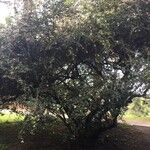
Osmanthus delavayi
Description
Source: leafsnapOsmanthus delavayi is a species of flowering plant in the olive family Oleaceae. It is an evergreen shrub native to the Guizhou, Sichuan and Yunnan regions of southern China, and widely cultivated as an ornamental in temperate and subtropical zones elsewhere.
Care Guide
💧 Water
The Delavay Teaolive thrives with balanced moisture and shows moderate tolerance to drought. It does well when watered every 1-2 weeks. Its evergreen nature helps retain water, making it an excellent choice for outdoor growth in areas with consistent rainfall.
☀️ Light Partial sun
Delavay Teaolive occurs naturally in habitats like forest understories or rocky areas, where it is subject to natural shade. It prefers partial sun but can tolerate full sun or full shade, showing its versatile and hardy nature.
🌡️ Temperature 15–35°C
Delavay Teaolive is highly adaptable to a variety of climates, from very hot summers to cold winters. Nonetheless, it has a preferred temperature range for healthy growth. If temperatures become too high, the plant is susceptible to heat and humidity stress, which can cause it to die. In areas where temperatures approach the lower boundary of its cold tolerance, taking insulating measures to protect the plant is important.
💨 Humidity
🪴 Soil 6-8
🌱 Fertilizer
The timing of fertilizing Delavay Teaolive is important. Apply fertilizer in early spring and continue monthly until early summer. Fertilizer promotes lovely blooms and supplies energy during both dormant and active growth phases.
🪴 Pot & Repot
✂️ Pruning
Delavay Teaolive displays fragrant white flowers and evergreen leaves throughout the year. To maintain its shape and promote healthy growth, prune the plant from early to late winter. This helps improve air circulation and light penetration, resulting in more abundant blooms. Always use clean, sharp tools for pruning to prevent infections, and remove any dead or diseased wood.
🌿 Propagating
🐛 Diseases & pets
☠️ Toxicity
Characteristics
- Plant Type
- Shrub
- Life Cycle
- Perennial
- Genus
- Osmanthus
- Family
- Oleaceae
- Hardiness Zone
- 7-9
- Mature Height
- 1.83 m to 3.66 m
- Mature Spread
- 1.83 m to 3.66 m
- Leaf Color
- Green
- Leaf Type
- Evergreen
- Flower Color
- White
- Flower Size
- 2.54 cm
- Bloom Time
- Early spring, Mid spring
- Planting Time
- Spring, Autumn
- Harvest Time
- Early summer, Mid summer
- Native Area
- China