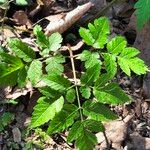
Osmorhiza longistylis
Smooth sweet cicely · Aniseroot · Longstyle sweetroot · Long-style Sweet Cicely · Long-style Sweetroot
Description
Source: leafsnapOsmorhiza longistylis, commonly known as sweet cicely or aniseroot, is a perennial herbaceous plant belonging to the Apiaceae family. Native to North America, it is commonly found in the eastern and central regions of the United States and Canada. The plant grows to a height of 1-2 feet, featuring a slender stem that supports compound leaves with toothed leaflets. These leaves emit a sweet, anise-like scent when crushed or bruised. The small flowers, which are either white or cream-colored, are arranged in umbels situated at the end of long stalks that stem from the leaf axils. Sweet cicely prefers moist soils in shaded areas such as woodlands, meadows, and stream banks. It blooms from May to June and produces small fruits called schizocarps that split into two halves upon maturity. For centuries, Native Americans have utilized the plant for its medicinal properties, particularly its antiseptic qualities that aid in treating wounds and infections. Additionally, the roots of the plant have been used as a natural sweetener due to their high anethole content—a compound also found in licorice—which imparts its distinctive flavor. Beyond its medicinal benefits, sweet cicely is valued as a culinary herb, often used to flavor desserts such as custards and fruit salads, thanks to its unique taste reminiscent of licorice and fennel. Overall, Osmorhiza longistylis is a fascinating plant with significant historical and contemporary value for its medicinal and culinary uses.
🌳 Although it may not be well known in commercial products, longstyle sweetroot has a noteworthy presence in its native habitat. The plant’s roots have long been used as a wild spice because of their anise-like taste. Additionally, its seeds provide food for various wildlife species. These features emphasize longstyle sweetroot’s potential for further exploration in culinary uses and wildlife management, highlighting an underutilized versatility.
Care Guide
💧 Water Every 7 days
Longstyle sweetroot thrives best in consistently moist soil, so it's important to water it weekly to maintain its health. This herbaceous perennial grows well outdoors, benefiting from seasonal rainfall patterns to effectively use water during its active growing season.
How should I water my Longstyle sweetroot?
To effectively water the Longstyle sweetroot plant, it is recommended to use filtered water at room temperature. Tap water may contain harmful particles, making filtered water a better option. The ideal temperature of the water should be at room temperature or slightly warmer since the plant is accustomed to warm environments and cold water can be a shock to its system. It is important to avoid overhead watering, as it can cause issues with the foliage. Instead, it is advised to directly apply filtered room temperature water to the soil until it is thoroughly saturated. This method is beneficial as it helps moisten the roots, allowing them to spread throughout the soil and absorb the necessary nutrients.
What should I do if I give my Longstyle sweetroot plant too much water or too little water?
Overwatering is a more common issue than underwatering for Longstyle sweetroot plants. Overwatering can cause wilting, yellowing leaves, and diseases like root rot. Underwatering is less common but can cause brittle, brown leaves. It's important to notice signs of overwatering early to prevent irreversible damage. Reduce watering if you see these signs and check the soil's drainage. Replace poorly draining soil with well-draining potting mix. If underwatering is the issue, simply water more regularly until the signs improve.
How much water does my Longstyle sweetroot need?
If your Longstyle sweetroot plant is in a pot, the most accurate way to determine if it needs water is by checking the moisture level of the soil. Plunge your finger into the soil and if the top two to three inches feel dry, it is time to water it. If you have planted your Longstyle sweetroot outdoors in the ground, you can use a similar method to test the soil. Again, if the first few inches of soil have dried out, it is time for watering. Typically, during the spring and early fall seasons, you will need to water this plant about once a week using this method. However, when the weather becomes extremely hot, you may need to increase the frequency to around twice or more per week. It is important to note that mature and well-established Longstyle sweetroot plants have a remarkable ability to tolerate dry conditions.
How much water does my Longstyle sweetroot plant need?
When watering your Longstyle sweetroot plant, don't be afraid to give it a good amount of water. Make sure the top few inches of soil are dry before watering, then water thoroughly until the soil is completely soaked. Be sure to add enough water so that it drains out of the bottom of the pot. If you don't see excess water draining, it means you haven't watered enough. However, be careful not to let water accumulate in the soil, as this can harm the plant. On the other hand, if water doesn't drain properly, it could mean that the soil isn't draining well, which is bad for the plant's health. If the plant is outside, it should receive about 1 inch of rain per week.
How should I water my Longstyle sweetroot at different times it grows?
The water needs of the Longstyle sweetroot vary depending on its growth stages. In the first few years of its life or after being transplanted, more water is required. This is because the plant will be focusing on growing new roots which need extra moisture for optimal development. As the plant matures, less water will be needed. Additionally, during the bloom period, the Longstyle sweetroot may require more water as the flowers utilize significant moisture.
☀️ Light Partial sun
Longstyle sweetroot grows best in places with filtered light. It also tolerates full sun and low-light conditions. Coming from habitats with varying sun exposure, the plant stays healthy. Excessive or too little light can upset its growth, though it is somewhat tolerant.
What are the sunlight requirements for Longstyle Sweetroot?
Longstyle Sweetroot, or Osmorhiza longistylis, thrives in a range of sunlight conditions. It can grow in filtered daylight, full sunlight, and minimal light exposure, showing versatility from its natural habitats. The plant requires about 3-6 hours of sunlight (partial sun) to above 6 hours (full sun or full shade). However, its growth can be negatively impacted by both overbearing and scarce light though it has some tolerance to these conditions. It's important to watch how sunlight moves through your garden to choose spots that provide a balance of light and shade, ensuring the plant's happiness.
How can artificial lighting benefit indoor Longstyle Sweetroot plants?
Indoor Longstyle Sweetroot plants benefit significantly from adequate lighting, especially when natural sunlight is insufficient. Artificial lights, such as LEDs which can be customized to specific wavelengths, support optimal growth by promoting faster, healthier development. For full sun plants, 30-50W/sq ft of artificial light is recommended, 20-30W/sq ft for partial sun plants, and 10-20W/sq ft for full shade plants. The artificial light source should be placed 12-36 inches above the plant to mimic natural sunlight and should be kept on for 8-12 hours per day to simulate the length of natural daylight hours.
What are the symptoms of insufficient light for Longstyle Sweetroot?
Symptoms of insufficient light in Longstyle Sweetroot include smaller new leaves, leggy or sparse growth, faster leaf drop, slower or halted new growth, lighter-colored new leaves, and symptoms of excessive light exposure such as chlorosis, sunscald, leaf curling, wilting, and leaf scorching. These symptoms highlight the plant's struggle in inappropriate light conditions, either due to a lack of or excessive sunlight, affecting its ability to photosynthesize and maintain healthy growth.
What are some solutions for light-related issues in Longstyle Sweetroot?
For light-related issues in Longstyle Sweetroot, gradual adaptation to changing light conditions is key. Indoors, move the plant weekly to sunnier spots until it receives 3-6 hours of direct sunlight daily or use artificial light sources for at least 8 hours a day. Outdoors, avoid sudden light intensity changes by also gradually moving plants to sunnier locations. Additionally, minimize light obstructions by pruning and consider transplanting smaller plants to sunnier spots during their dormant periods. It's crucial to understand that parts of the plant suffering from light deprivation may not recover, but new growth post-adjustment will be healthy.
🌡️ Temperature 5–32.2°C
Longstyle sweetroot grows best within a temperature range of 41 to 89.6 °F (5 to 32 °C). It comes from temperate habitats and needs cooler conditions during winter. To cope with seasonal variation, providing shade and enough moisture in the warmer months is recommended.
What are the ideal temperature conditions for Longstyle sweetroot?
Longstyle sweetroot, botanically named Osmorhiza longistylis, thrives best in a temperature range of 41 to 89.6°F (5 to 32°C), making it well-suited for temperate environments. It requires cooler temperatures during the winter months to adjust properly to seasonal changes. To ensure it copes well during warmer months, it's recommended to provide adequate shade and moisture. The plant exhibits strong cold resistance, so special frost protection measures aren't usually necessary. However, if temperatures are expected to drop below -25°C, protection is advised by covering the plant with soil or straw, especially after watering it abundantly before the first freeze of autumn. This helps the soil to remain moist and freezes in that state to prevent drought and water scarcity during the colder seasons.
How does Longstyle sweetroot react to low temperatures?
Longstyle sweetroot demonstrates considerable cold tolerance, thriving best when temperatures remain above 5°C. During the winter, it's crucial to keep the temperature above -20°C to prevent damage. If temperatures fall below -25°C, while there may not be immediate visible damage during the winter, there could be a noticeable decrease in the plant's ability to sprout or even a failure to sprout come spring. To address any sprouting issues in spring, any parts that have failed to sprout should be removed to encourage new growth.
What should be done if Longstyle sweetroot is exposed to high temperatures?
During the summer, it's important to ensure that Longstyle sweetroot does not exceed temperatures of 32°C. Exposure to temperatures above 35°C can lead to symptoms such as leaves becoming lighter in color, prone to curling, susceptibility to sunburn, and in severe cases, wilting and drying of the entire plant. To mitigate damage, trim away any sunburned and dried-up parts of the plant. Additionally, moving the plant to a location that offers protection from the midday and afternoon sun, or using a shade cloth can provide necessary shade. Ensuring the soil remains moist by watering the plant in the morning and evening can also help alleviate stress caused by high temperatures.
💨 Humidity
🪴 Soil 5-6
🌱 Fertilizer
Usually one fertilizer application in spring is adequate for Longstyle sweetroot, though several feedings can optimize growth. Apply fertilizer about every month to a month and a half. Fertilizing improves the leaves' appearance and function, helping maintain even color and a healthy texture. It also encourages root development and better nutrient uptake, supporting long-term plant health.
🪴 Pot & Repot
✂️ Pruning
Longstyle sweetroot features umbels of white flowers and fern-like leaves. To ensure optimal growth, prune it in early to late spring. Remove any dead stems and lightly trim the tips. This practice enhances air circulation, reduces the risk of disease, and promotes vigorous growth. Always use clean tools when pruning.
🌿 Propagating
🐛 Diseases & pets
☠️ Toxicity
Characteristics
- Plant Type
- Herb
- Life Cycle
- Perennial
- Genus
- Osmorhiza
- Family
- Apiaceae
- Hardiness Zone
- 5-8
- Mature Height
- 30 cm to 91 cm
- Mature Spread
- 61 cm
- Leaf Color
- Green, Yellow
- Leaf Type
- Deciduous
- Flower Color
- White
- Flower Size
- 2.54 cm
- Bloom Time
- Late spring, Early summer
- Planting Time
- Spring
- Harvest Time
- Early summer, Mid summer