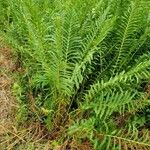
Osmunda cinnamomea
Cinnamon fern
Description
Source: leafsnapOsmunda cinnamomea, commonly known as the cinnamon fern, is a deciduous fern species native to North America. This robust plant can reach up to 5 feet in height and 3 feet in width. The cinnamon fern gets its name from its cinnamon-colored, spore-bearing fronds that emerge in the spring. The plant produces two types of fronds: sterile and fertile. The sterile fronds are green, broad, and pinnate, with lance-shaped leaflets arranged in opposite pairs along the stem. These fronds grow throughout the growing season but die back in winter. The fertile fronds are taller than the sterile ones and have a distinctive brownish-red coloration at their base, where spores develop on specialized structures called sporangia. These fertile fronds appear later in the spring than the sterile fronds. Cinnamon ferns prefer moist soils rich in organic matter, such as those found in swamps or wetlands, but they can also tolerate drier soils if they receive sufficient water during dry periods. They are hardy plants, capable of surviving temperatures as low as -40°F (-40°C), making them suitable for growing across much of North America. Historically, Native Americans used cinnamon ferns for medicinal purposes, believing them to possess healing properties for various ailments such as fever and rheumatism, due to their high tannin content. Overall, Osmunda cinnamomea is an attractive ornamental plant that adds texture and interest to any garden or landscape. It provides ecological benefits such as erosion control and habitat creation for wildlife species like birds and insects, which rely on the plant for food throughout their life cycles.
Care Guide
💧 Water Every 7 days
☀️ Light Full shade
The cinnamon fern prefers moderate light but can tolerate shaded conditions. Its vigor and growth improve under the dappled light commonly provided by overhead canopies in its native woodland habitats. However, too much light or very little light can stress this fern and ultimately impair its growth and development.
🌡️ Temperature 0–35°C
Cinnamon fern is a robust plant that adapts well to the temperate regions where it is native. It flourishes at temperatures between 32 and 95 °F (0 to 35 ℃). When seasons change, small adjustments should be made to keep it within this temperature range for optimal health.
💨 Humidity
🪴 Soil 5-7
🌱 Fertilizer
🪴 Pot & Repot
✂️ Pruning
🌿 Propagating
🐛 Diseases & pets
☠️ Toxicity
Characteristics
- Plant Type
- Fern
- Life Cycle
- Perennial
- Genus
- Osmunda
- Family
- Osmundaceae
- Hardiness Zone
- 3-9
- Mature Height
- 61 cm to 91 cm
- Mature Spread
- 61 cm to 91 cm
- Leaf Color
- Green, Olive Drab
- Leaf Type
- Deciduous
- Flower Color
- Yellow, Green, Brown
- Planting Time
- Spring, Autumn
- Native Area
- Colombia, Cuba, Mexico, Guatemala, Bolivia, Venezuela, Peru, Brazil, El Salvador, Nicaragua, Ecuador, Costa Rica, Jamaica