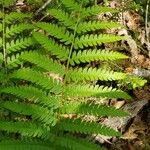
Osmunda claytoniana
Interrupted fern · Clayton's fern · Fern
Description
Source: leafsnapOsmunda claytoniana, commonly known as the interrupted fern, is a deciduous fern species native to North America. This tall and robust plant can reach up to 5 feet in height and 3 feet in width. It has an upright growth habit with bipinnate fronds, meaning the fronds are divided into smaller leaflets on both sides of the stem. The interrupted fern gets its name from the distinctive pattern of its fronds. The fertile leaflets in the middle part of each frond are interrupted by sterile leaflets at regular intervals along the stem. These sterile segments give the plant a unique appearance, making it easy to identify. Osmunda claytoniana thrives in moist soil conditions and is commonly found in wetlands, swamps, bogs, and along streams or riverbanks. It is also widely used as an ornamental plant in gardens due to its attractive appearance. The interrupted fern holds several medicinal uses among Native American tribes, who use it to treat various ailments such as fever and rheumatism. Additionally, it serves as an important food source for wildlife such as deer and moose, which feed on its young shoots during the springtime. Overall, Osmunda claytoniana is a fascinating species with unique characteristics that make it stand out among other plants in North America's wetland ecosystems.
Care Guide
💧 Water
☀️ Light Partial sun
🌡️ Temperature 0–25°C
💨 Humidity
🪴 Soil 4-6
🌱 Fertilizer
🪴 Pot & Repot
✂️ Pruning
🌿 Propagating
🐛 Diseases & pets
☠️ Toxicity
Characteristics
- Plant Type
- Herb
- Life Cycle
- Perennial
- Genus
- Osmunda
- Family
- Osmundaceae
- Hardiness Zone
- 3
- Mature Height
- 49 cm
- Mature Spread
- 0.61 m to 1.22 m
- Leaf Color
- Green, Red, Brown
- Leaf Type
- Deciduous
- Bloom Time
- Summer
- Planting Time
- Spring, Summer
- Harvest Time
- Early summer, Mid summer