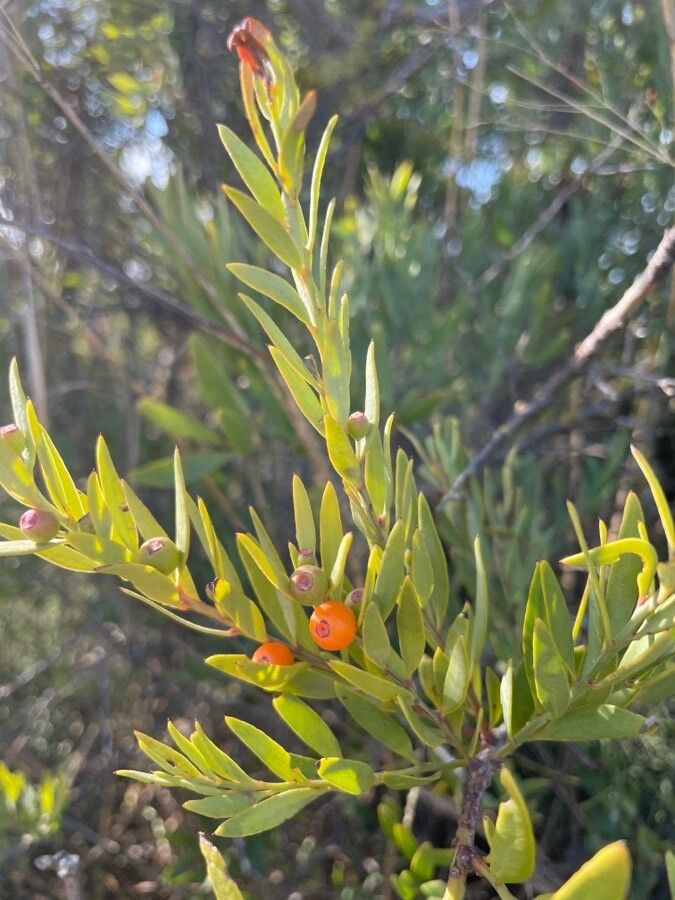
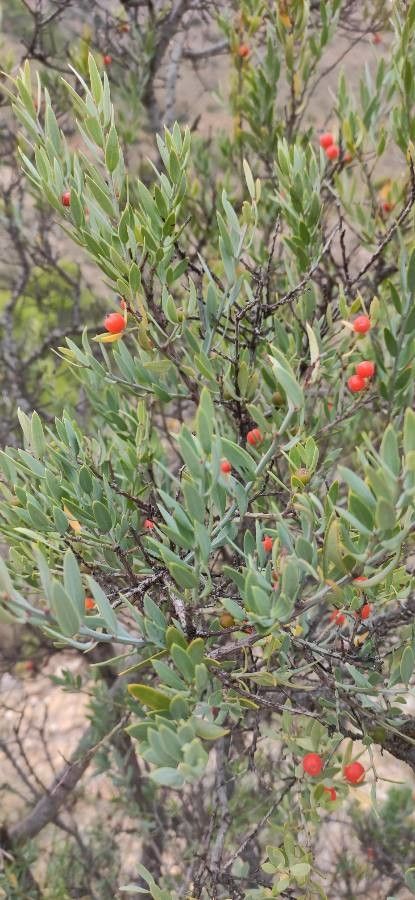
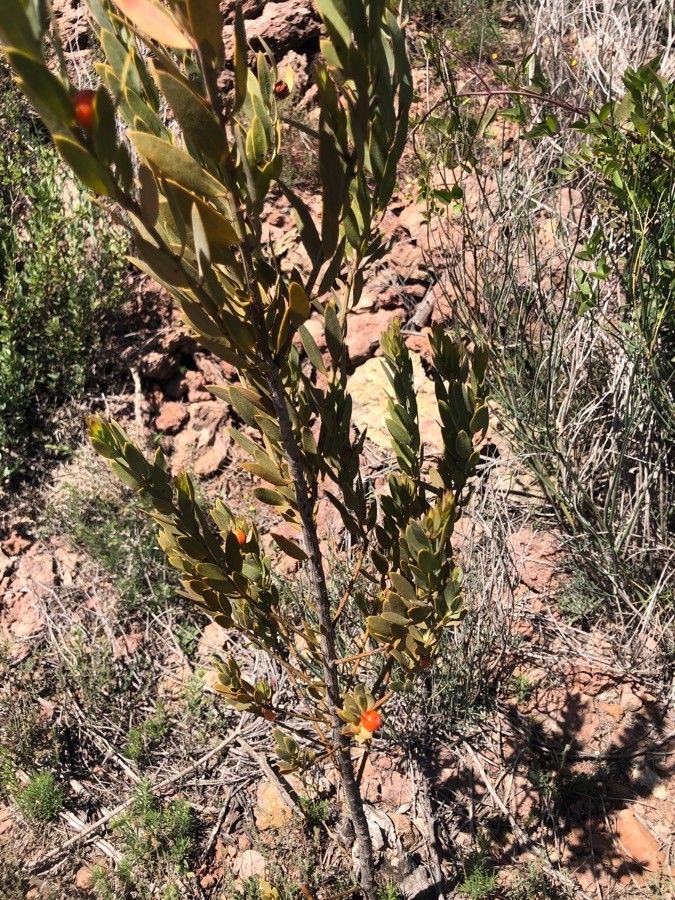
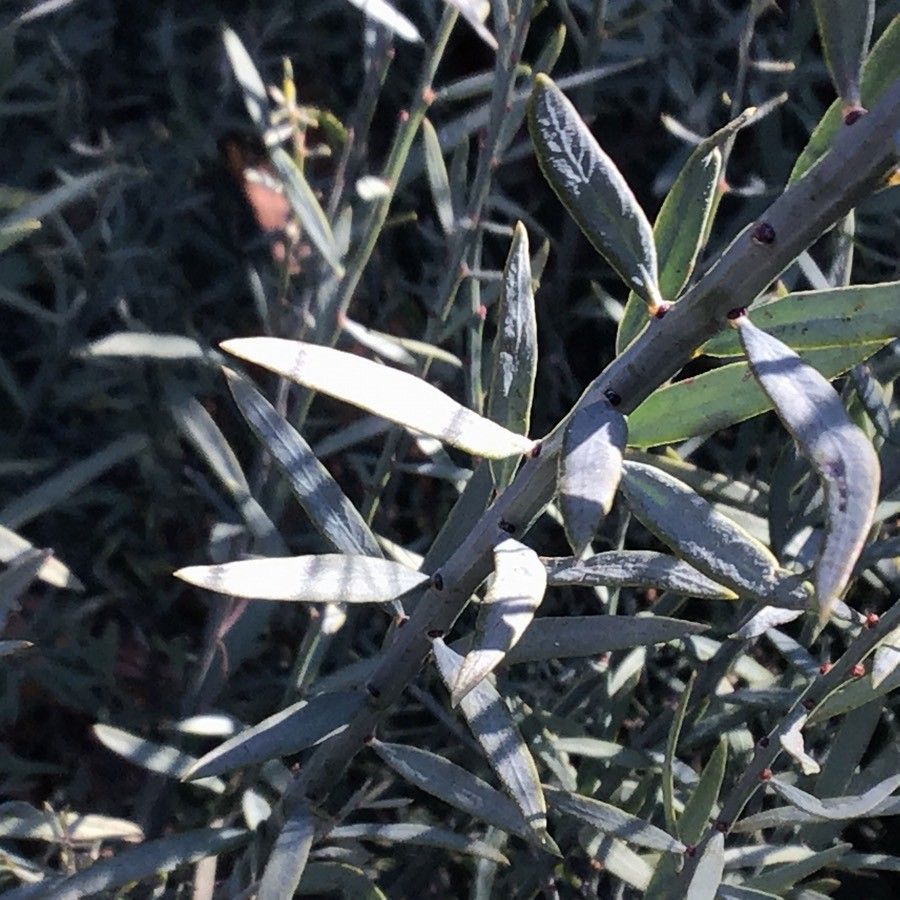
Osyris lanceolata, commonly known as African sandalwood or red sandalwood, is a small evergreen shrub belonging to the Santalaceae family. Native to the southern and eastern regions of Africa, this plant features a woody stem that can grow up to 2 meters tall. Its small, lance-shaped leaves are arranged alternately along the stem.
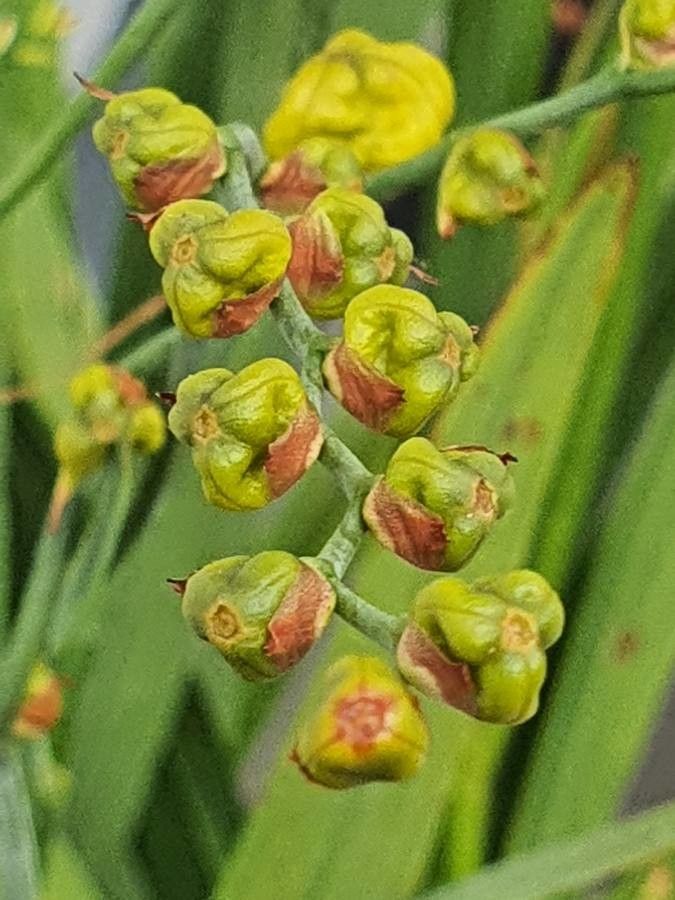
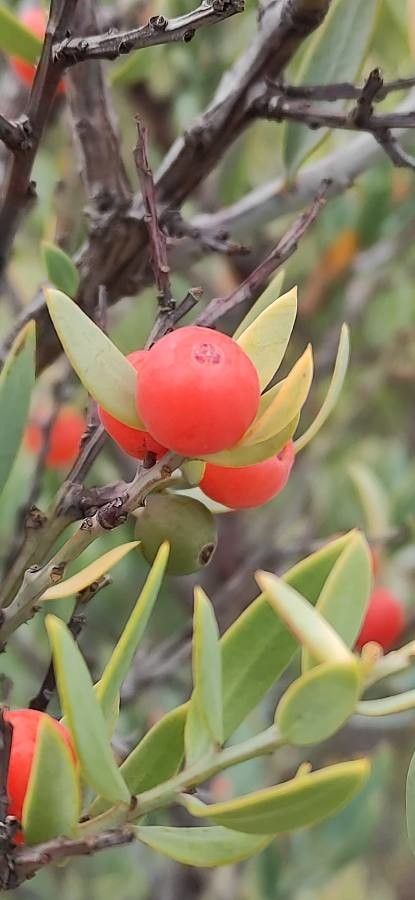
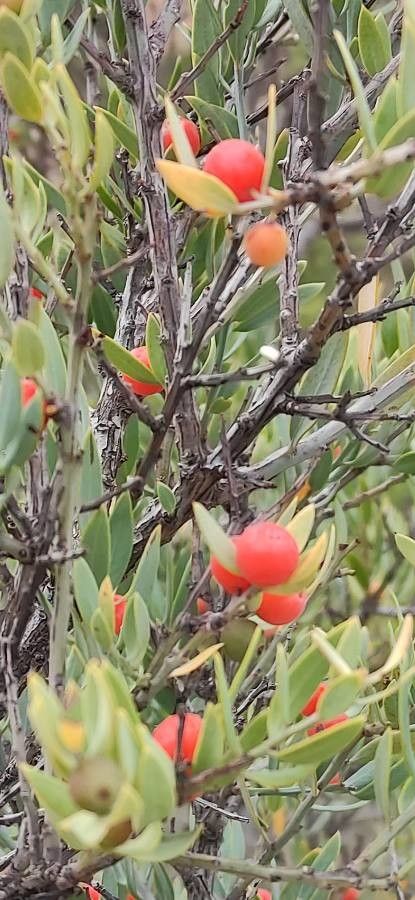
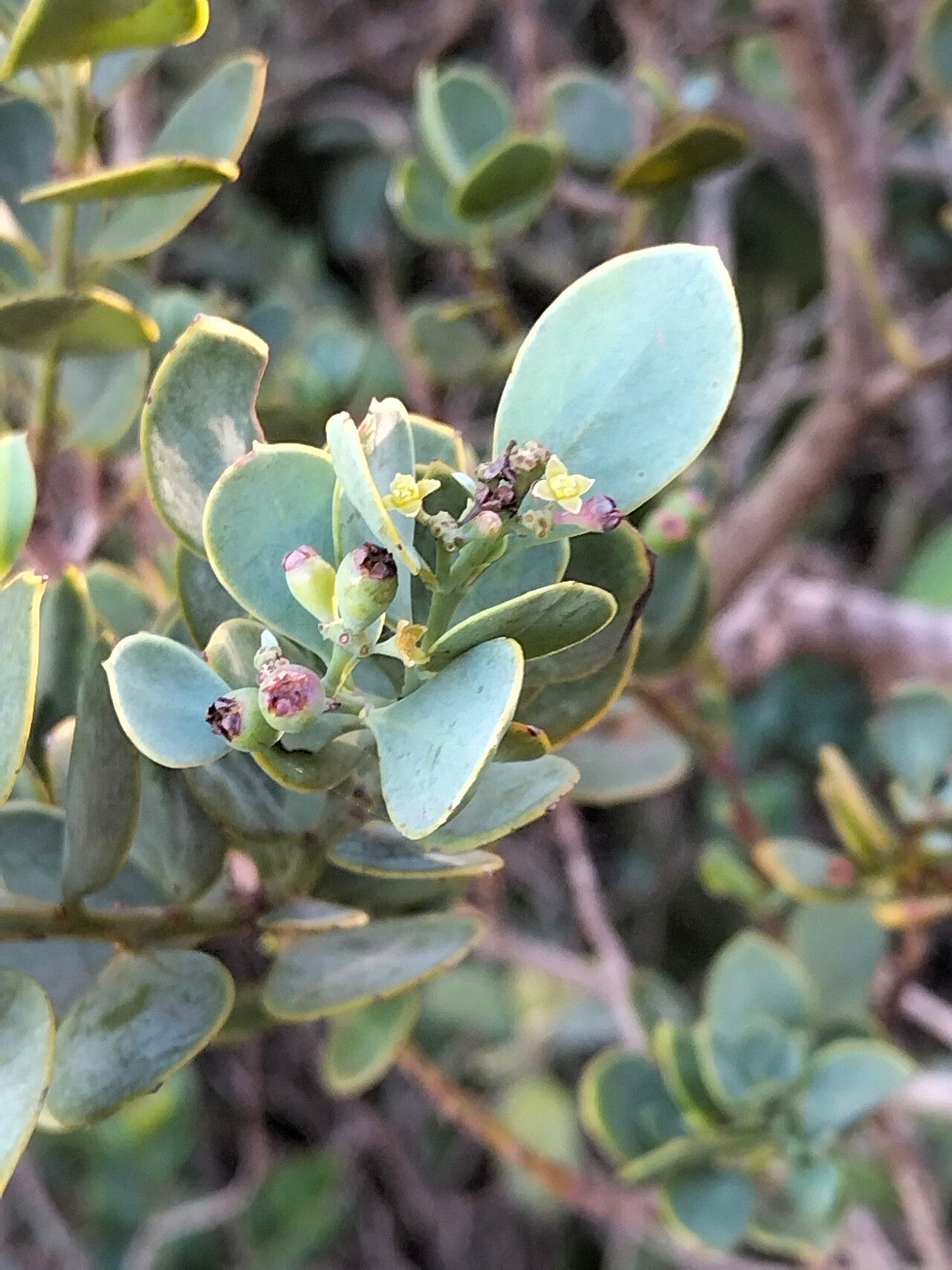
The flowers of Osyris lanceolata are small and inconspicuous, with male and female flowers appearing on separate plants. Male flowers are yellowish-green, while female flowers are reddish-brown. The plant produces fruit in the form of drupes, which transition from green to red as they ripen.
Traditionally, Osyris lanceolata has been used for medicinal purposes by various African tribes to treat ailments such as fever, coughs, diarrhea, and dysentery. Additionally, it holds cultural significance for some tribes who use it in rituals.
This shrub thrives in sandy soils with good drainage but can also grow well in rocky or clayey soils, provided they also have good drainage. While it requires full sun exposure, it can tolerate partial shade.
In conclusion, Osyris lanceolata is a valuable shrub species native to Africa, cherished for its medicinal properties and cultural importance. Its woody stem serves as an important source of timber, while its role in traditional rituals underscores its cultural significance within its native regions.
Osyris wightiana exhibits strong disease resistance and is generally not prone to illnesses. In terms of care, this plant is fairly low-maintenance. Planted outdoors, it needs only minimal watering, and larger specimens typically do not require pruning. Smaller plants, however, should be pruned after they have bloomed. Osyris wightianat is suitable for anyone with an outdoor area, such as a garden or a deck, and does not demand extensive gardening experience.
Botanical profile.
Other names.