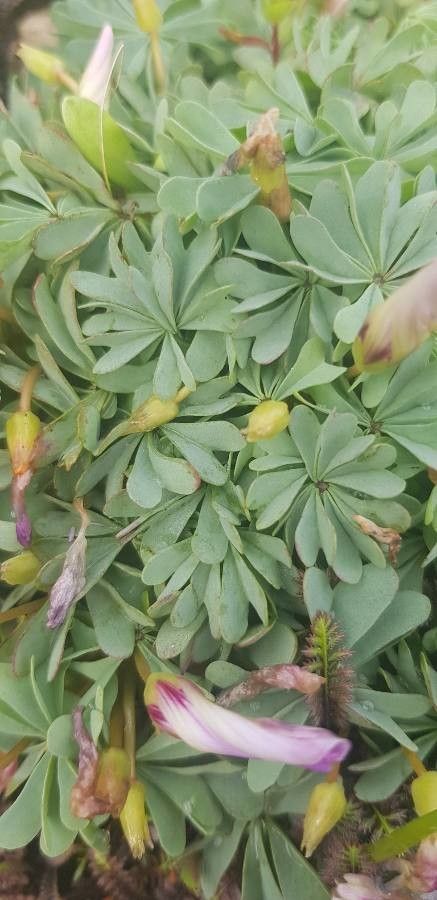
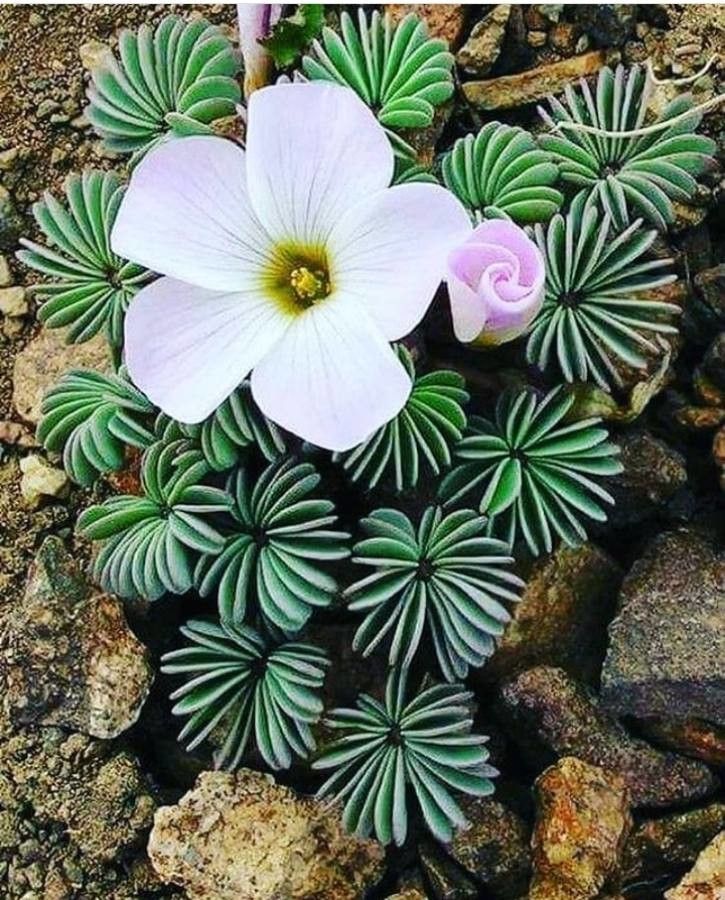
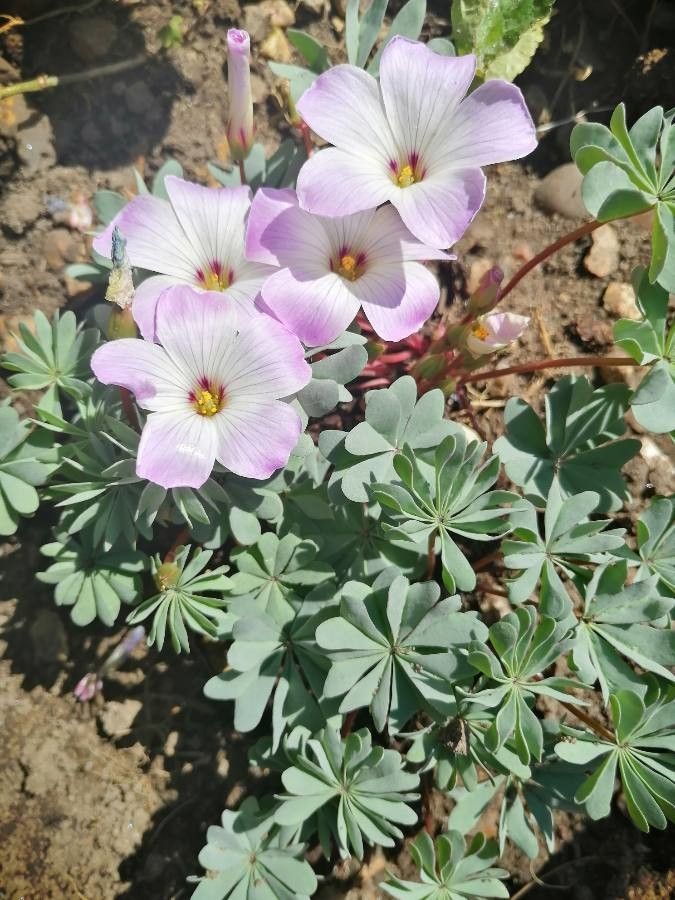
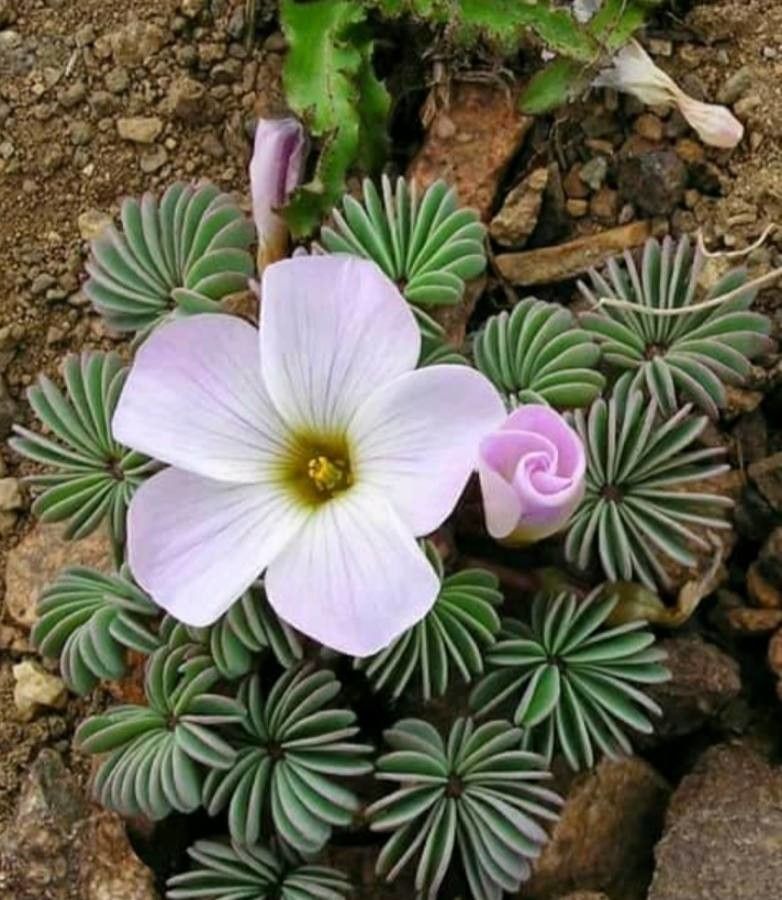
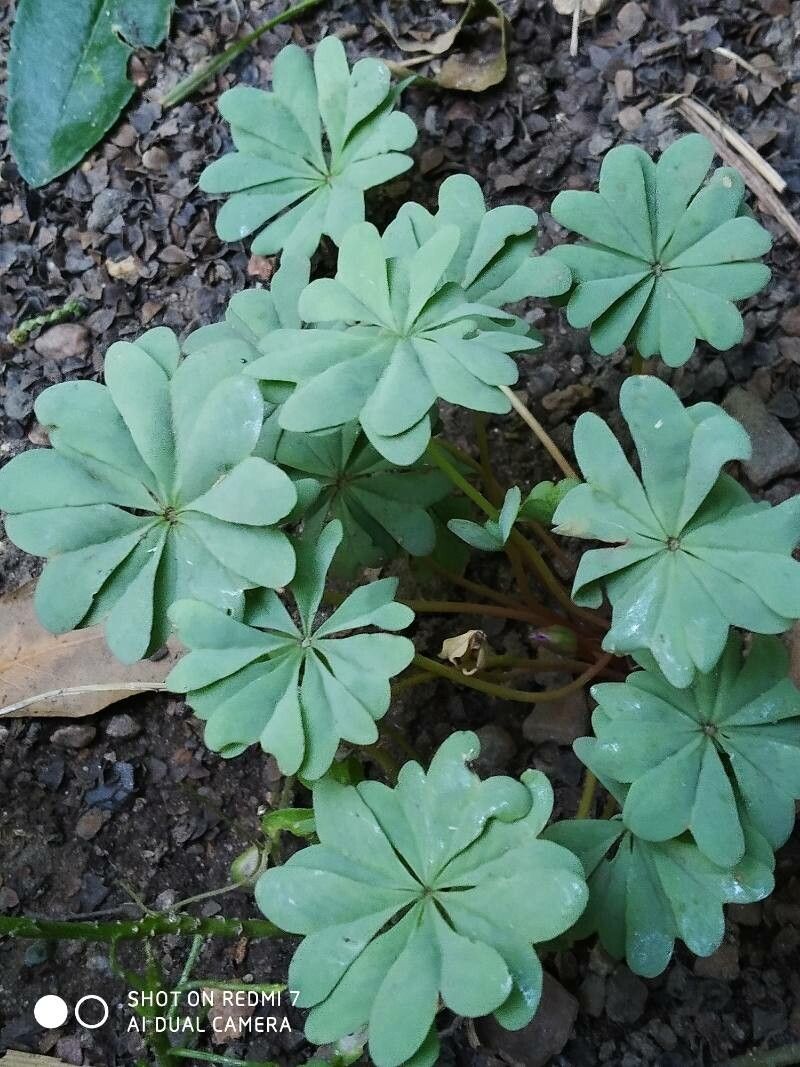
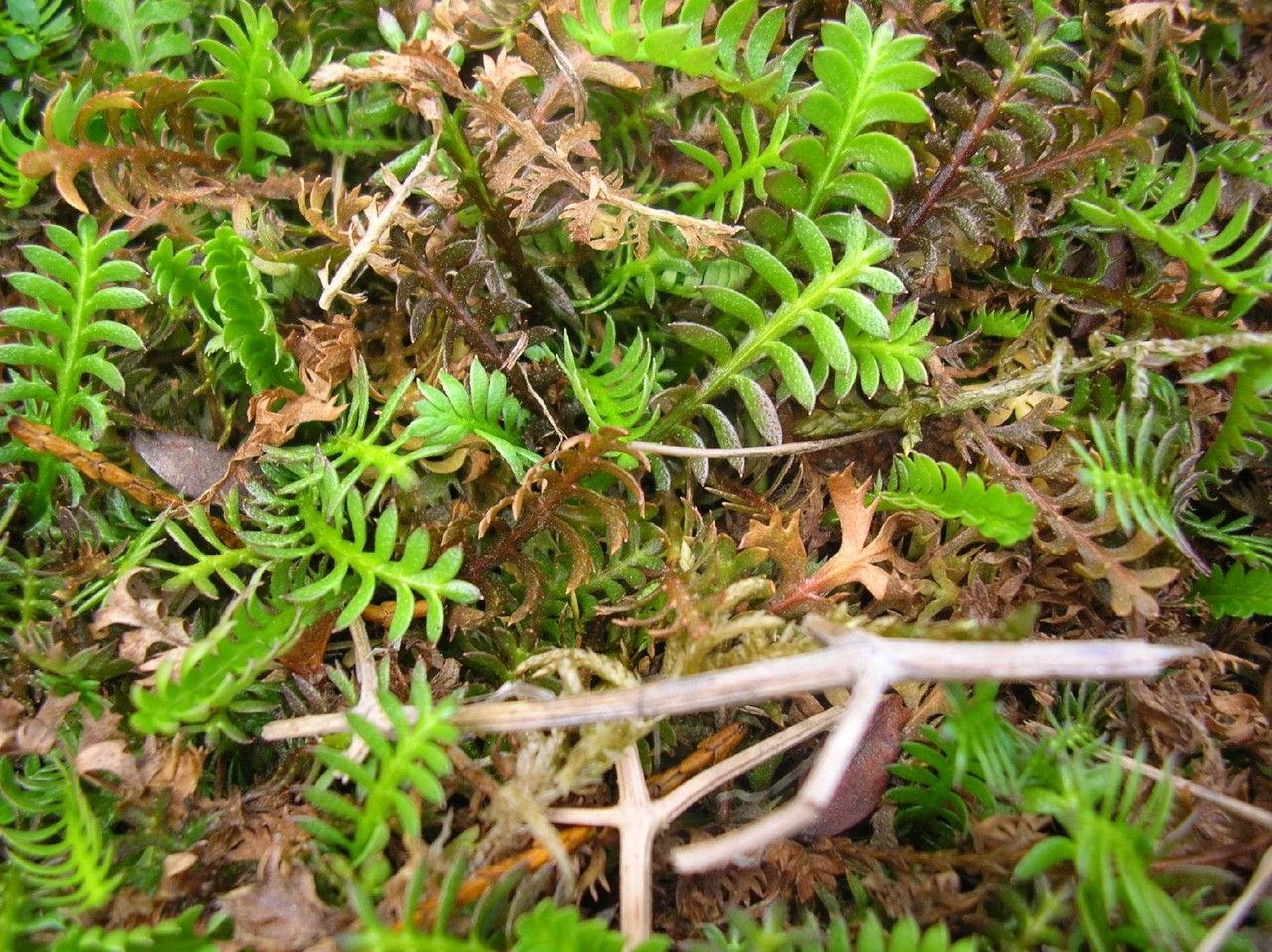
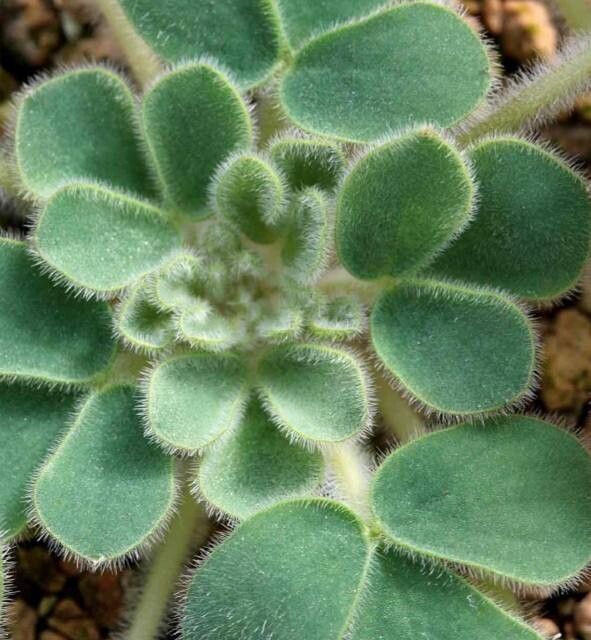
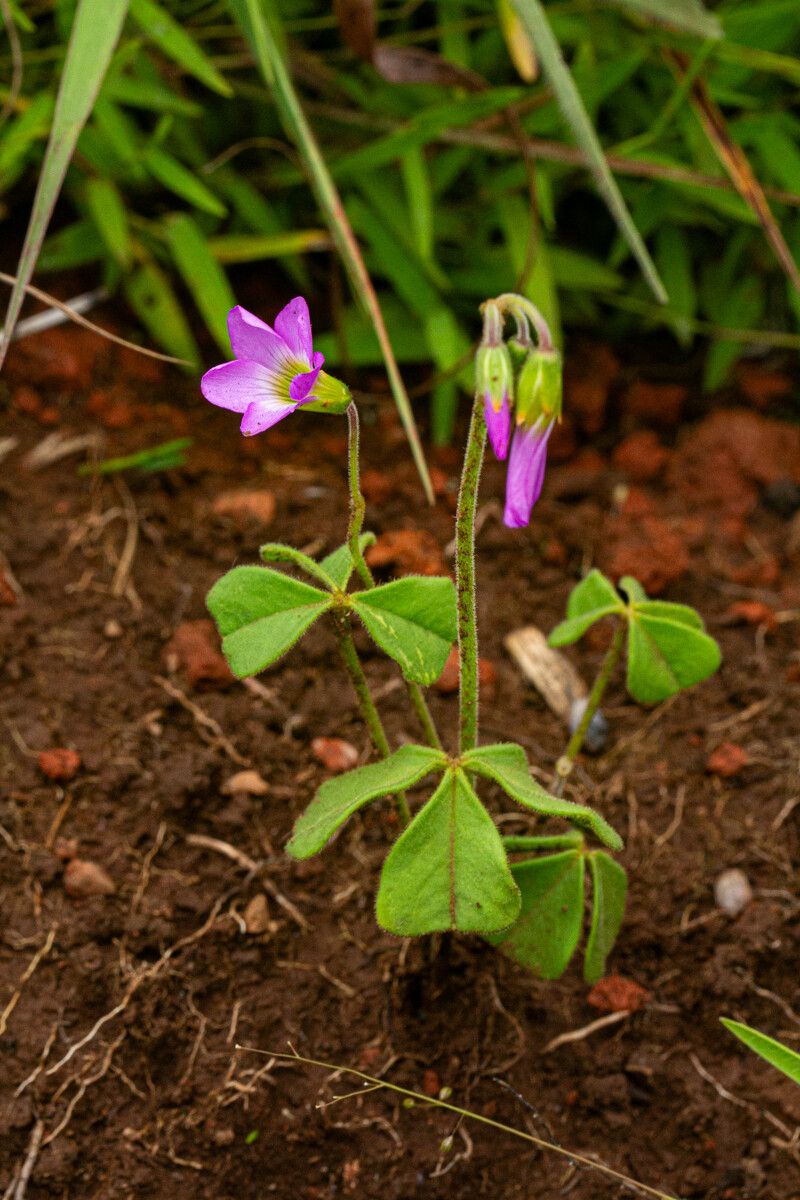
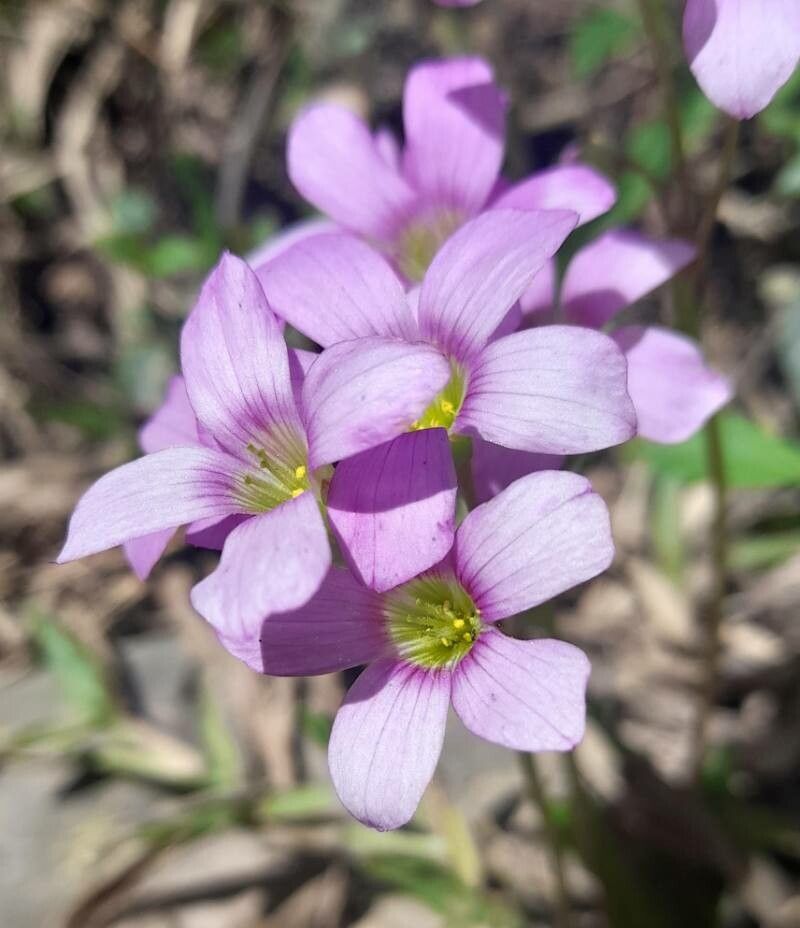
Oxalis adenophylla, commonly known as Chilean oxalis or silver shamrock (among other common names), is an Argentinian and Chilean alpine plant. It does well in far-north locations such as Sweden, Norway and Nova Scotia (Canada), as well as in purely temperate regions. Its cold-hardiness comes from the bulb's adaptation to freezing during dormancy. It is, however, susceptible to rot in the winter in temperate zones, a problem not present where ground freezes in winter. It is tolerant of some shade, but will bloom most with southern full sunlight [1].
Silver shamrock has strong resistance to disease and generally is not susceptible to illnesses. Still, it can be affected by pests and diseases present in its environment. Such infections are generally mild. Regarding care, this plant requires moderate maintenance. It should be pruned regularly to maintain an attractive appearance and support healthy growth. Fertilizing can also help encourage flowering. Silver shamrock is appropriate for anyone who has an outdoor area, such as a garden or patio, and does not demand substantial gardening experience. It may need more attentive care if grown indoors.
How to keep Oxalis Adenophylla.
Light
Silver shamrock does best in spots that receive partial sun for several hours each day, though it tolerates full sun. Seasonal changes in light may mean you need to provide shade when it’s planted outdoors. Too little sunlight can stunt growth and reduce flowering.
Water
Silver shamrock thrives with consistent moisture and benefits from weekly watering. As a deciduous plant, it sheds its leaves during dry periods to conserve water, an adaptation to fluctuating water availability throughout the seasons. It does not tolerate drought well and is not particularly fond of high humidity.
Temperature
Oxalis adenophylla is native to regions with a warm environment, but it thrives in the cooler temperatures of between 60 and 70 degrees Fahrenheit (15.6 and 21.1 degrees Celsius) during the day and between 55 and 65 degrees Fahrenheit (12.8 and 18.3 degrees Celsius) at night. The Silver Shamrock plant does well in the typical humidity found in homes.
Fertilizer
The primary time to fertilize Silver shamrock is in early spring as the flowers begin to develop. Using an appropriate fertilizer promotes better blooms and helps Silver shamrock produce attractive flowers. Applying fertilizer in early spring ensures strong flowering during the season and supplies energy for dormant growth periods.
Pruning
Silver shamrock is characterized by its silvery leaves and pink flowers. The best time for pruning is from early to late spring, concentrating on removing any dead or damaged foliage. Be careful not to over-prune, as minimal cutting encourages healthy growth, improves air circulation, and supports strong blooming, all of which enhance the plant's appearance.
Pot & Repot
Repot your silver shamrock every 2-3 years in the spring, after its dormancy period has ended. Choose a pot that offers good drainage to prevent water-logging. Water the plant moderately, and place it in a spot where it can receive bright, indirect light to encourage new growth. Be patient, as silver shamrock takes time to recover after repotting.
Toxicity
Oxalis plants are toxic both to people and animals when ingested. All parts of the plant are poisonous, with the highest concentration of toxins being in the bulbs.
Further reading →
The toxicity and danger assessments provided are for reference only. We do not assure their accuracy, so it's crucial not to depend on them. Seek professional advice when necessary for accurate guidance.
Botanical profile.
- Plant Type
- Herb
- Life Cycle
- Perennial
- Genus
- Oxalis
- Family
- Oxalidaceae
- Hardiness Zone
- 5-9
- Mature Height
- 10 cm
- Mature Spread
- 15 cm
- Leaf Color
- Green, Gray, Silver
- Leaf Type
- Semi-evergreen
- Flower Color
- Purple, Pink
- Flower Size
- 2.03 cm to 3.05 cm
- Bloom Time
- Mid spring, Late spring, Early summer
- Planting Time
- Spring, Summer, Autumn
- Harvest Time
- Summer
- Native Area
- South America
Other names.