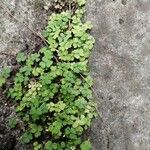
Oxalis exilis
Least Yellow-sorrel · Shady woodsorrel · Shady wood-sorrel
Description
Source: leafsnapOxalis exilis, commonly known as the small wood-sorrel, is a small perennial plant belonging to the Oxalidaceae family. Native to North America, it thrives in various habitats, including woodlands, meadows, and rocky slopes. The plant grows up to 10 cm in height and features trifoliate leaves that range in color from green to reddish-purple. Its flowers, which are white or pink with five petals, bloom from May to August. Due to its attractive foliage and delicate flowers, Oxalis exilis is popular as an ornamental plant. It can be grown both indoors and outdoors, provided it is planted in well-drained soil with partial shade or full sun exposure. During the growing season, the plant requires moderate watering but should be kept dry during its winter dormancy. Historically, Native Americans have used the small wood-sorrel for medicinal purposes, treating various ailments such as fever, sore throat, stomach issues, and skin irritations. However, it's important to note that some species of Oxalis contain oxalic acid, which can cause digestive problems if consumed in excess. In summary, Oxalis exilis is an attractive ornamental plant with delicate flowers that can enhance any garden or indoor space. Additionally, it has certain medicinal properties when used appropriately and under the guidance of a healthcare professional.
Care Guide
💧 Water Every 7 days
Least yellow sorrel, a plant that originates from moist, shaded environments, thrives with consistent moisture and ideally requires weekly watering. It prefers moderate climates and indirect light, making it suitable for indoor growth where the humidity can be maintained. This humidity is essential for keeping its evergreen foliage lush throughout the year.
☀️ Light Partial sun
Least yellow sorrel does best with full sun exposure, which is important for its healthy growth. Its native habitat indicates a requirement for steady, strong light. Too little illumination can hinder its development, while too much can harm its health.
What are the sunlight requirements for Least Yellow Sorrel?
Least Yellow Sorrel requires full sun exposure for its healthy growth, which means it should receive above 6 hours of sunlight daily. However, it can also thrive in partial sun, receiving about 3-6 hours of sunlight. Monitoring the way sunlight moves through your garden can help you choose the ideal spots for your plants, providing them with a perfect balance of light and shade to ensure their happiness and health.
What essentials do I need to know about growing Least Yellow Sorrel?
The vital factor for the healthy growth of Least Yellow Sorrel is its exposure to full sunlight, akin to its natural habitat. This exposure is crucial for its development; insufficient light can hinder its growth, while excessive light may have adverse effects. In cases where natural light is not enough, particularly for indoor plants, artificial lighting becomes essential. LED lights are a popular option since they can be customized to provide specific wavelengths needed by plants. Full-sun plants require 30-50W/sq ft, partial-sun 20-30W/sq ft, and full-shade plants 10-20W/sq ft of artificial light. The light source should be placed 12-36 inches above the plant, and for most species, 8-12 hours of light per day is advisable.
What are the symptoms of light deficiency in Least Yellow Sorrel, and how can it be treated?
Symptoms of light deficiency in Least Yellow Sorrel include small leaves, leggy or sparse growth, faster leaf drop, slower or halted growth, and lighter-colored or yellowing leaves due to chlorosis. Excessive sunlight, on the other hand, can cause sunscald, leaf curling, wilting, or leaf scorching. To address these issues, gradually move the plant to a sunnier location until it receives at least 6 hours of sunlight daily, use artificial lighting if necessary, and for outdoor plants, ensure gradual adaptation to prevent sunburn. Removing obstacles blocking sunlight and transplanting smaller plants to sunnier locations can also help. Note that damaged parts may not recover, but new growth should be healthy following these adjustments.
🌡️ Temperature 5–32.2°C
In its native habitat, least yellow sorrel prefers temperatures between 68 and 95 °F (20 to 35 ℃). It's advisable to adjust the ambient temperature as the seasons change to keep least yellow sorrel in optimal condition.
What is the ideal temperature range for growing least yellow sorrel?
The ideal temperature range for growing least yellow sorrel is between 68 and 95 °F (20 to 35 °C). Adjusting the environmental temperature with the changing seasons can help keep the plant healthy. Least yellow sorrel possesses strong cold resistance, making special frost protection measures unnecessary in most cases. However, if temperatures are expected to drop below -30°C, providing cold protection by covering the plant with soil or straw is advisable. To prepare for winter, it's recommended to water the plant abundantly before the first freeze in autumn, ensuring the soil remains moist to prevent drought and water scarcity during the colder months.
How does least yellow sorrel react to low temperatures?
Least yellow sorrel is cold-tolerant and performs best when temperatures are above 20°C. It should ideally be kept above 0°C during winter. Even though the plant may not show noticeable changes when temperatures fall below -30°C, these conditions may lead to a decrease in sprouting or no sprouting in spring. To address this, remove any parts of the plant that have failed to sprout in spring.
What should I do if least yellow sorrel is exposed to high temperatures?
During summer, it's crucial to ensure that least yellow sorrel's environment doesn't exceed 35°C. Exposing the plant to temperatures above 38°C can result in lighter leaf color, susceptibility to curling, sunburn, and in severe cases, wilting and drying of the entire plant. To help the plant recover, trim away the sunburned and dried parts. Moving the plant to a shaded location or using a shade cloth to protect it from the midday and afternoon sun can be beneficial. Additionally, watering the plant in the morning and evening can keep the soil appropriately moist.
💨 Humidity
🪴 Soil 6-7
🌱 Fertilizer
One spring application of fertilizer is generally enough for Least yellow sorrel, though multiple feedings can enhance growth. Apply fertilizer every month to a month and a half. Fertilizing improves leaf appearance and function, helping maintain consistent color and a healthy texture. It also encourages root growth and nutrient absorption, supporting long-term plant health.
🪴 Pot & Repot
✂️ Pruning
Least yellow sorrel thrives when pruned strategically in the spring. This targeted pruning promotes healthy growth and helps maintain the plant's shape. Key practices include removing dead leaves and trimming overgrown stems. This not only improves the plant's appearance but also controls its spread by encouraging denser growth and preventing it from becoming invasive.
🌿 Propagating
🐛 Diseases & pets
☠️ Toxicity
Characteristics
- Plant Type
- Herb
- Life Cycle
- Perennial, Annual
- Genus
- Oxalis
- Family
- Oxalidaceae
- Hardiness Zone
- 4-8
- Mature Height
- 34 cm
- Mature Spread
- 10 cm to 20 cm
- Leaf Color
- Light Green, Forest Green
- Leaf Type
- Deciduous
- Flower Color
- Pink, White
- Flower Size
- 2.54 cm to 5.08 cm
- Bloom Time
- All year round
- Planting Time
- Summer
- Harvest Time
- All year round
- Native Area
- New Zealand