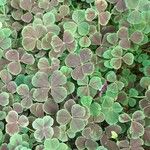
Oxalis purpurea
Round-leaf wood-sorrel · Large-flower oxalis · Large-flower wood-sorrel · Large-leaf wood-sorrel · Variable wood-sorrel
Description
Source: leafsnapOxalis purpurea, commonly known as Purple Shamrock or False Shamrock, is a perennial plant belonging to the Oxalidaceae family. Native to Brazil, it has gained popularity as a houseplant due to its attractive foliage and ease of care. The plant features three-leaf clovers that are purple on the underside and green on top. The leaves are triangular with smooth edges and can grow up to 4 inches in length. The plant's stems are thin and delicate, reaching up to 6 inches in height. Purple Shamrock thrives in bright, indirect light but can also tolerate some direct sunlight. It prefers well-draining soil that is kept moist but not waterlogged. The plant can be propagated through division or by planting its bulb-like structures called tubers. Aside from being an appealing houseplant, Purple Shamrock has been utilized in traditional medicine for treating various ailments such as fever and inflammation due to its antioxidant properties. Overall, Oxalis purpurea is an easy-to-care-for houseplant with unique foliage that adds a pop of color indoors, while also having potential health benefits when used medicinally.
💡 Purple woodsorrel, scientifically known as Oxalis purpurea, grows from small bulbs and forms small colonies. These plants feature three-lobed leaves and pale purple flowers. Both the leaves and flowers are photosensitive, meaning they open in the sunlight and close in the shade.
Care Guide
💧 Water Every 7 days
Purple woodsorrel thrives in moist conditions and needs consistent hydration with evenly moist soil. While it is moderately drought-tolerant, it benefits from weekly watering. Primarily grown outdoors, its growth and flowering are best supported by adequate water availability.
How should I water my Purple woodsorrel?
To properly water the Purple woodsorrel, follow these guidelines: Use filtered water at room temperature or slightly warmer. Tap water may have harmful particles. Since the Purple woodsorrel originates from a warm environment, avoid using cold water as it can shock the plant. Instead of overhead watering, directly apply the filtered room temperature water to the soil until it is fully soaked. This method is beneficial as it moistens the roots and aids their spread through the soil for nutrient collection.
What should I do if I give my Purple woodsorrel either too much or too little water?
Overwatering is a common issue that can harm your Purple woodsorrel plant. When it receives too much water, the stems and leaves may wilt and turn yellow. Prolonged overwatering can also cause diseases like root rot, mold, and mildew, which can kill the plant. In contrast, underwatering is less likely but can still occur. When this happens, the leaves of the plant become brittle and brown. It's important to recognize signs of overwatering early and reduce watering immediately to prevent irreversible damage. If the soil doesn't drain well, replace it with a loose, well-draining potting mix. If you notice signs of underwatering, simply water more regularly until the signs go away.
How often do I need to water my Purple woodsorrel?
If your Purple woodsorrel is in a pot, the most precise way to determine if it needs water is to stick your finger into the soil. If the top two to three inches of soil are dry, it's time to water. If you're growing Purple woodsorrel outdoors in the ground, you can use the same method. Again, if the first few inches of soil have dried out, it's time to water. Typically, this means watering once a week in spring and early fall. However, during extremely hot weather, you may need to water twice or more per week. It's worth noting that mature, well-established Purple woodsorrel can tolerate drought well.
How much water does my Purple woodsorrel require?
When watering your Purple woodsorrel, don't be shy with the amount of water you use. It's best to wait until the top two to three inches of soil are dry before watering. Give the plant a good, thorough watering that completely soaks the soil. Make sure to add enough water so that excess water flows out of the drainage holes in the pot. If you don't see excess water draining, you may not have watered enough. However, you don't want to let water accumulate in the soil, as this can harm the plant. On the other hand, if water is not draining properly through the pot, it may indicate poorly draining soil, which is not good for the plant's health. If the plant is outside, it should be enough to receive 1 inch of rain per week.
How do I give water to my Purple woodsorrel when it's growing at different stages?
The water needs of the Purple woodsorrel can vary depending on its growth stages. When the plant is in its early years or has just been transplanted, it requires more water than usual. This is because, during these stages, the Purple woodsorrel focuses on growing new roots to support future growth. To ensure the roots perform well, they need additional moisture. However, as the plant matures, it will require less water. Another growth stage that may require extra watering is the bloom period when the plant is developing flowers. Flower development demands a significant amount of moisture, so providing more water during this time might be necessary.
☀️ Light Partial sun
Purple woodsorrel requires conditions comparable to full sun exposure for best growth and often originates from sunlit habitats. Nevertheless, it is adaptable and can tolerate lower-light situations. Both excessive and insufficient sun exposure can harm its vitality.
What are the sunlight requirements for Purple Woodsorrel?
Purple Woodsorrel thrives in conditions where it is fully exposed to the sun's rays, typically requiring above 6 hours of direct sunlight for optimal growth. It can, however, tolerate partial sun conditions of about 3-6 hours of sunlight. This adaptability comes from its natural habitat, which is often under full sun exposure. Despite this flexibility, care should be taken to avoid both excess or insufficient sunlight as it could harm the plant's vitality. Additionally, when transitioning plants to different lighting conditions, it's important to do so gradually to ensure they adapt without stress.
How can artificial lighting be used for Purple Woodsorrel indoors?
Indoor Purple Woodsorrel plants that lack natural sunlight can benefit greatly from artificial lighting. For optimal growth, it's essential that the artificial lights provide adequate brightness, mimicking natural sunlight as closely as possible. LED lights are a popular choice because they can offer specific wavelengths needed by plants. Full sun plants should receive 30-50W/sq ft of artificial light, partial sun plants 20-30W/sq ft, and full shade plants 10-20W/sq ft. The lights should be placed 12-36 inches above the plant, mimicking natural sunlight intensity, and kept on for 8-12 hours a day to simulate the length of natural daylight hours.
What are the symptoms of inadequate light in Purple Woodsorrel?
Inadequate light in Purple Woodsorrel can lead to several noticeable symptoms. These include the development of smaller leaves, a leggy or sparse growth appearance, faster leaf drop, slower or halted new growth, and lighter-colored or chlorotic new leaves. Other symptoms can include sunscald, which appears as pale or necrotic areas on the plant tissue; leaf scorching, characterized by brown, dry edges on leaves; leaf curling, which minimizes water loss; and wilting due to excessive water loss through transpiration. It's important to identify these symptoms early to address light deficiencies promptly.
How can I provide optimal light conditions for Purple Woodsorrel?
To ensure Purple Woodsorrel receives optimal light whether indoors or outdoors, gradually increase its sunlight exposure by moving it to sunnier spots each week until it gets at least 6 hours of direct sunlight daily. For plants that are large or hard to move, consider using artificial lighting, such as desk lamps or grow lights for at least 8 hours daily. If sunlight is obstructed, identify and reduce barriers by pruning or transplanting the plant if necessary, especially during its dormant period for minimal stress. Remember, while adjusting light conditions can promote new healthy growth, parts of the plant that have already been deprived of light may not recover.
🌡️ Temperature 20–35°C
Purple woodsorrel comes from areas with mild temperatures and does best in an environment of 68 to 95 °F (20 to 35 ℃). Keep it away from cold winters and excessively hot summers for optimal growth. Modify its surroundings when the seasons change to prevent temperature shock.
What is the ideal temperature range for Purple Woodsorrel?
Purple Woodsorrel, scientifically known as Oxalis purpurea, thrives in mild temperature regions, with an ideal habitat temperature range between 68 to 95 °F (20 to 35 °C). It is essential to avoid extremely cold winters and exceptionally hot summers to ensure the plant's ideal growth. During season changes, adjusting the plant's environment is crucial to prevent temperature shock. While Purple Woodsorrel has some tolerance to cold, typically not requiring special care above 0°C, precautions should be taken if temperatures are expected to drop below freezing by using protective measures like wrapping the plant with suitable materials.
How does low temperature affect Purple Woodsorrel, and what are the solutions?
Purple Woodsorrel has a moderate tolerance to low temperatures, preferring temperatures above 20°C for optimal growth. It should be kept above 0°C during winter to avoid damage. Exposure to temperatures below -5°C may cause the leaves to droop; while they can recover in mild cases, severe exposure can lead to wilted leaves eventually falling off. Solutions to protect Purple Woodsorrel from low temperatures include trimming frost-damaged parts, wrapping the plant with non-woven fabric or cloth, and constructing a wind barrier to protect it from cold winds.
What are the effects of high temperature on Purple Woodsorrel and how can they be mitigated?
During summer, it is crucial to keep Purple Woodsorrel below 35°C to prevent stress and damage. Temperatures exceeding 41°C can cause the leaves' color to lighten, tips to become dry and withered, leaves to curl, and increase the susceptibility to sunburn. To mitigate the effects of high temperatures, trim away sunburned and dried parts of the plant. Additionally, moving the plant to a shaded location or using a shade cloth during the intense midday and afternoon sun helps. Ensuring the soil remains moist through watering in the morning and evening is also beneficial.
💨 Humidity
🪴 Soil 6-7
🌱 Fertilizer
For Purple woodsorrel, the primary time to apply fertilizer is in early spring when the flowers are starting to form. The proper fertilizer promotes stronger blooms and helps Purple woodsorrel produce attractive flowers. Fertilizing in early spring ensures good flowering through the season and supplies energy for dormant growth phases.
Why should I put fertilizer on my Purple woodsorrel?
Fertilization is important for the Purple woodsorrel for a few key reasons. It provides essential nutrients for the plant's growth above and below ground. However, the Purple woodsorrel has relatively low fertilization needs and can sometimes survive without it. Still, annual fertilization can greatly benefit the plant, keeping it healthy and potentially improving the longevity of its flowers. For those wanting their Purple woodsorrel to thrive, regularly fertilizing is recommended.
When should I fertilize my Purple woodsorrel for the best results?
The best time to fertilize a Purple woodsorrel is in late winter to early spring when it is transitioning from a dormant phase to a phase of active growth. Fertilizing at this time promotes healthy growth and sets the plant up for a successful season. Fertilizing in the fall is also acceptable, but it's important to avoid feeding the plant during summer and winter.
When should I not put fertilizer on my Purple woodsorrel?
To avoid overfertilization and its complications, it is recommended to fertilize your Purple woodsorrel only during late winter and early spring. This plant has low fertilization needs, so one annual feeding is enough. However, if you didn't fertilize in spring, you can feed it in fall. During most of the growing season (spring, summer, and fall), refrain from fertilizing. Additionally, there is no need to fertilize during winter since the Purple woodsorrel is dormant and doesn't produce new growth during that time.
What fertilizer should I use for my Purple woodsorrel?
Purple woodsorrel can thrive with any general-purpose fertilizer that has a balanced amount of the three main plant nutrients. However, there are specific nutrient blends that can be even more beneficial. Some gardeners believe that higher levels of phosphorus can promote stronger roots and better flowers. Since Purple woodsorrel is a flowering plant, using a phosphorus-rich fertilizer may be the best option. It doesn't matter if the fertilizer is granular or liquid as long as it contains plenty of nutrients. In addition to manufactured fertilizers, you can also enhance the soil for your Purple woodsorrel using organic methods. Compost, manure, and similar materials can greatly improve the growing medium.
How should I fertilize my Purple woodsorrel?
To fertilize a Purple woodsorrel, the most common method is to use granular or pellet fertilizer applied to the soil around the plant. It is important to fertilize when the plant is transitioning from its dormant growth phase to active growth, typically in early spring when shoots are emerging from the soil. Alternatively, some people opt for liquid fertilizer, which should be diluted with water before application. Regardless of the type of fertilizer used, it is recommended to moisten the soil before, during, and after fertilization.
🪴 Pot & Repot
✂️ Pruning
To improve the density and bloom of purple woodsorrel, prune it from early to late spring. Trim away dead flowers and any overly long stems to maintain a neat shape. Be sure to use clean tools, and avoid cutting back too much to ensure optimal growth and prevent the plant from becoming invasive. Consistent, gentle maintenance is best for promoting healthy plants.
🌿 Propagating
🐛 Diseases & pets
☠️ Toxicity
Characteristics
- Plant Type
- Herb
- Life Cycle
- Perennial
- Genus
- Oxalis
- Family
- Oxalidaceae
- Hardiness Zone
- 9-10
- Mature Height
- 8 cm to 15 cm
- Mature Spread
- 8 cm to 15 cm
- Leaf Color
- Green, Dark Green
- Leaf Type
- Deciduous
- Flower Color
- Purple, Pink, White
- Flower Size
- 3.05 cm to 4.06 cm
- Bloom Time
- Spring, Early summer
- Planting Time
- Autumn, Winter, Spring
- Harvest Time
- Summer
- Native Area
- South Africa, Eswatini