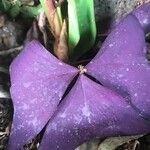
Oxalis triangularis
گل عشق، · Purple shamrock · Wood sorrel · Butterfly plant · Fairy wings
Description
Source: leafsnapOxalis triangularis, commonly called false shamrock, is a species of perennial plant in the family Oxalidaceae. It is native to several countries in southern South America. This woodsorrel is typically grown as a houseplant but can be grown outside in USDA climate zones 8a–11, preferably in light shade. The deep maroon leaves are trifoliate, like species in the clover genus Trifolium which are commonly called shamrock, hence the name “false shamrock”. The leaves fold down at night, when disturbed, and when in harsh sunlight. The white or pale pink five-petalled flowers also close at night.
🌳 False shamrock can function as a bioindicator for certain soil metals, such as copper. Its capacity to grow in metal-rich soils makes it a useful species for biomonitoring and phytoremediation, supporting ecological studies and environmental cleanup efforts.
🎭 Happiness, kind-heartedness
Care Guide
💧 Water Every week
The false shamrock, native to humid environments, thrives when its soil is kept consistently moist, typically needing weekly watering. It grows best in well-draining soil and indirect light. To ensure vibrant foliage and prevent issues like leaf burn or root rot, balance is key in maintaining the right level of hydration.
When Should I Water My False Shamrock?
Watering your false shamrock appropriately is essential for its health, encouraging vibrant growth and colorful leaves. The perfect time to water is when the purple leaves look dull or curled, indicating dehydration. However, always check the soil dryness before watering; the top 1-2 inches should be dry. Also, note that if the leaves droop, it could signify the need for water or a reaction to too much sunlight. The plant also shows a slower response to light changes when it needs water. Over or under-watering can lead to significant health issues for the plant, including root rot or wilted, dry leaves, so watering should be based on the plant's need rather than a strict schedule.
How Should I Water My False Shamrock?
Watering your false shamrock correctly involves specific techniques and considerations for optimal hydration. Bottom-watering is recommended, where you fill a tray or saucer with water and let the plant absorb moisture from the bottom, which helps avoid foliage diseases. If using a watering can, opt for one with a narrow spout to target the base of the plant directly, minimizing leaf wetness. This method reduces the risk of fungal diseases by keeping the foliage dry while ensuring the roots are adequately hydrated.
How Much Water Does False Shamrock Really Need?
The false shamrock's water requirement varies based on the plant size, pot size, and root depth, originating from a habitat with a preference for moderately moist soil. Optimal watering involves saturating the soil to reach the plant's bulb, about 1-2 inches deep, and allowing the water to drain out of the pot's bottom. This ensures the soil is moist but not waterlogged. Correctly watered false shamrock will have vibrant, open leaves. Signs of over or under-watering include yellowing or brown leaves and root rot. It's better to slightly underwater the plant as it tolerates dryness better than excessive moisture.
What Kind of Water is Best for False Shamrock?
The best water for false shamrock is distilled water, which is free of contaminants and minerals. Rainwater collected in a clean container or filtered water that removes harmful elements like chlorine or fluoride can also be suitable alternatives. If using tap water, it is advisable to dechlorinate it by letting it sit out for 24 hours before use due to the plant's moderate sensitivity to chlorine and fluoride, which can cause leaf burn or yellowing. The water should be at room temperature to avoid shocking the plant.
How Do False Shamrock's Watering Needs Change with the Seasons?
False shamrock's watering needs vary throughout the year. In spring, consistent watering supports its growth, keeping the soil's top layer somewhat damp. Summer requires maintaining soil moisture due to increased temperatures, though the plant is heat tolerant and may need less water. In autumn, reduce watering, letting the top soil dry completely to mimic reduced rainfall, preparing the plant for dormancy. Winter marks a dormant period, significantly reducing the plant's water needs. It's vital to avoid over-watering during winter, as decreased evaporation increases the risk of root rot.
☀️ Light Partial sun
False shamrock does best in spots with moderate sunlight but can survive in full shade or very bright light. Native to areas with filtered light, its health relies on that balance of exposure. Both too little and too much sun can harm it.
What are the sunlight requirements for False Shamrock (Oxalis triangularis)?
False Shamrock (Oxalis triangularis) thrives in moderate exposure to sunlight and can persist in both full shade and abundant sunlight conditions. Its native habitat features diffused sunlight, making a balance of light exposure crucial to its health. Insufficient or excessive sun can harm its well-being. It's important to note that sunlight movement throughout your garden varies, and selecting locations which provide an optimal balance of light and shade will ensure the health and happiness of your plants.
How can artificial lighting benefit indoor plants, and what are the recommendations for False Shamrock under artificial light?
Indoor plants, including False Shamrock, require adequate lighting for optimal growth, especially in conditions where natural sunlight is insufficient, such as during winter or in less sunny indoor spaces. Artificial lights, like LEDs, are beneficial as they can mimic natural sunlight and be customized to provide specific wavelengths needed by the plants. For full sun plants, 30-50W/sq ft of artificial light is recommended; partial sun plants require 20-30W/sq ft, while full shade plants need 10-20W/sq ft. The light source should be placed 12-36 inches above the plant to mimic natural sunlight, and for most species, 8-12 hours of light per day is advised for healthy growth.
What symptoms indicate light issues with False Shamrock, and how do they manifest?
Light issues in False Shamrock can lead to various symptoms, including lighter-colored new leaves indicating insufficient sunlight and a disruption in chlorophyll production; leggy or sparse growth due to long stems or spaces between leaves, making the plant look weak; slower or halted growth as the plant enters survival mode under poor light; chlorosis, where leaves lose their green color, turning yellow from excessive sunlight; sunscald, showing as damaged, pale, or necrotic plant tissue; leaf curling as a defense mechanism to reduce surface area exposed to harsh sunlight; wilting from overexposure to sunlight increasing water loss; and leaf scorching, characterized by brown, crispy edges on leaves due to excessive sunlight.
What are the solutions for light-related issues in growing False Shamrock both indoors and outdoors?
To address light issues for False Shamrock, indoor plants can be gradually shifted to sunnier spots each week until they receive 3-6 hours of direct sunlight daily for gradual adaptation. If the plant is large or not easily movable, consider using artificial light, turning on a desk or ceiling lamp for at least 8 hours daily or investing in professional plant grow lights. Outdoors, plants should be moved gradually to sunnier locations to avoid sunburn, adapting to light intensity changes. If parts of the plant have been affected by insufficient sunlight, they may not fully recover, although new growth should be healthy after increasing light exposure. Minimizing obstructions by pruning trees or other barriers and transplanting smaller plants during their dormant period to areas with ample sunlight and good drainage can also help.
🌡️ Temperature 15–35°C
The optimal temperature for false shamrock is 59 to 95 ℉ (15 to 35 ℃), matching the subtropical South American habitat where it naturally grows. In winter, if temperatures fall below 59 ℉ (15 ℃), watering should be reduced to prevent the roots from rotting.
What is the ideal temperature range for False Shamrock?
The ideal temperature range for False Shamrock (Oxalis triangularis), which originates from subtropical regions of South America, spans from 59 to 95°F (15 to 35°C). This temperature range supports its natural growth and health. During winter, when the temperature drops below 59°F (15°C), it's advised to reduce watering to prevent root rot.
What measures should be taken for False Shamrock in winter?
False Shamrock has a moderate tolerance to cold temperatures and does not generally require additional cold protection measures if the temperature remains above -5°C. However, if temperatures are expected to drop below -5°C, it's necessary to temporarily protect the plant by wrapping it with plastic film, fabric, or other insulating materials. These protective measures should be removed once temperatures rise to avoid damaging the plant.
How does False Shamrock react to temperatures below -10°C?
When the temperature falls below -10°C, False Shamrock may exhibit signs of cold stress, such as drooping leaves. Mild cold damage can be recoverable, but in severe cases, leaves will wilt and eventually fall off. To aid in recovery and prevent further damage, trim off frost-damaged parts and wrap the plant with non-woven fabric or cloth, also considering a wind barrier for added protection against cold winds.
How should False Shamrock be cared for in high temperatures?
During the summer, it's important to keep False Shamrock's temperature below 35°C to prevent stress and damage. If the temperature exceeds 41°C, the plant may show signs of distress, such as lighter leaf color, dry and withered leaf tips, curled leaves, and increased susceptibility to sunburn. To remedy and protect the plant, trim away sunburned and dried-up parts, provide shade during the midday and afternoon sun, and ensure the soil remains moist by watering in the morning and evening.
💨 Humidity normal (40-60%)
This plant will thrive in moderate humidity, which is probably the level in your home. However, misting it a few times a week can be very beneficial. Make sure the room has good ventilation.
🪴 Soil 5-6
🌱 Fertilizer
A single fertilizer application in spring is typically enough for False shamrock, although repeated feedings can enhance growth. Fertilize once every month to month and a half. Fertilization improves the leaves' appearance and function, maintaining even color and a healthy texture. It also promotes root development and nutrient uptake for the plant's long-term health.
Why should I put fertilizer on my False shamrock?
The False shamrock mainly consists of leaves, and fertilization is crucial for ensuring that the leaves look great and function properly. By providing proper fertilization, you can maintain consistent color and a healthy texture in the leaves of your False shamrock. Additionally, fertilization also benefits the plant below the surface of the soil by promoting the growth of new roots and maintaining existing roots. This means that fertilization not only keeps your plant healthy in the present, but also helps it absorb soil nutrients more effectively in the future.
When should I fertilize my False shamrock for the best results?
If you grow your False shamrock outdoors each year, it will send out new growth in early spring. This is when you should start fertilizing the plant for the year. Usually, a single application of fertilizer in the spring will be enough for the False shamrock to thrive. But if you want to promote maximum growth, you can fertilize it multiple times throughout the spring and early summer. In this case, you should feed the plant about once every month to a month and a half.
When is not a good time to fertilize my False shamrock plant?
During the late fall and winter, your False shamrock will go into a dormant phase and stop growing. It's important to not fertilize it during this time. In the spring and summer, if you choose to fertilize, gradually decrease the amount as summer approaches because the growth rate of the False shamrock also slows down. In general, it is not recommended to fertilize your False shamrock when the weather is extremely hot or the soil is very dry. Fertilizing in these conditions can cause your False shamrock to become stressed and die prematurely.
What fertilizer does my False shamrock plant need?
Choosing the best fertilizer for a False shamrock is not complicated. These plants do well with a general-purpose garden fertilizer that contains equal amounts of nitrogen, phosphorus, and potassium. A fertilizer with a ratio of 10-10-10 or something similar works effectively. It's advised to avoid fertilizers with high nitrogen levels if you're unsure. Granular fertilizers are commonly recommended for False shamrocks as they should be slow-release and easy to apply to the soil. Additionally, using an organic soil amendment like compost can be beneficial when feeding your False shamrock.
How do I give nutrients to my False shamrock plant?
To start, wait until your False shamrock's first leaves appear in early spring. Once that happens, apply a granular slow-release fertilizer around the base of the plant. You can do this again later in the season if desired. Remember to apply the fertilizer to the soil, not directly onto the plant. In some cases, you may need to move leaves aside to access the soil near the roots. Don't forget to water the plant before and after fertilizing for best results.
🪴 Pot & Repot 2-3 years
When repotting False shamrock, select a pot 1-2 inches (2.5–5.1 cm) larger with good drainage. Use a well-draining potting mix. Repot in spring or fall, making sure the root ball sits slightly below the rim of the flower pot. Water thoroughly after repotting and place in a warm spot with indirect sunlight.
✂️ Pruning
False shamrock plants have triangular leaves and delicate flowers. To promote growth and maintain their appearance, prune any dead or yellowing leaves from early to late spring. Regularly trim any spent flowers to encourage more blooming. Use clean, sharp tools for pruning, and ensure the plants receive adequate light for optimal health.
🌿 Propagating
🐛 Diseases & pets
☠️ Toxicity
Characteristics
- Plant Type
- Herb
- Life Cycle
- Perennial
- Genus
- Oxalis
- Family
- Oxalidaceae
- Hardiness Zone
- 8-10
- Mature Height
- 10 cm to 49 cm
- Mature Spread
- 30 cm to 61 cm
- Leaf Color
- Green, Purple, Blue
- Leaf Type
- Evergreen, Deciduous
- Flower Color
- Pink, White, Purple
- Flower Size
- 1.78 cm
- Bloom Time
- Late spring, Early summer, Mid summer
- Planting Time
- Spring, Summer, Autumn
- Harvest Time
- Summer
- Native Area
- South Africa and South America