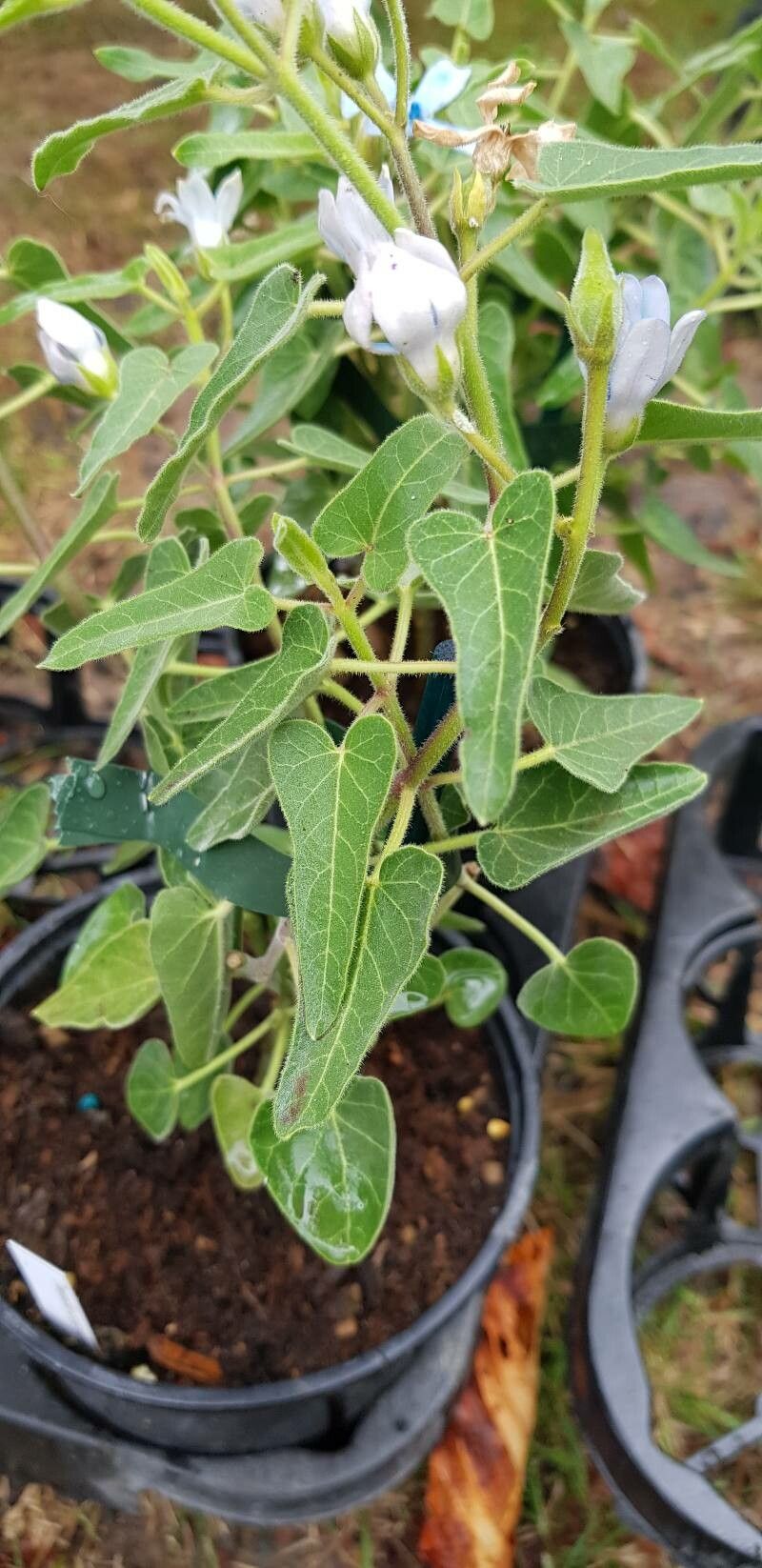
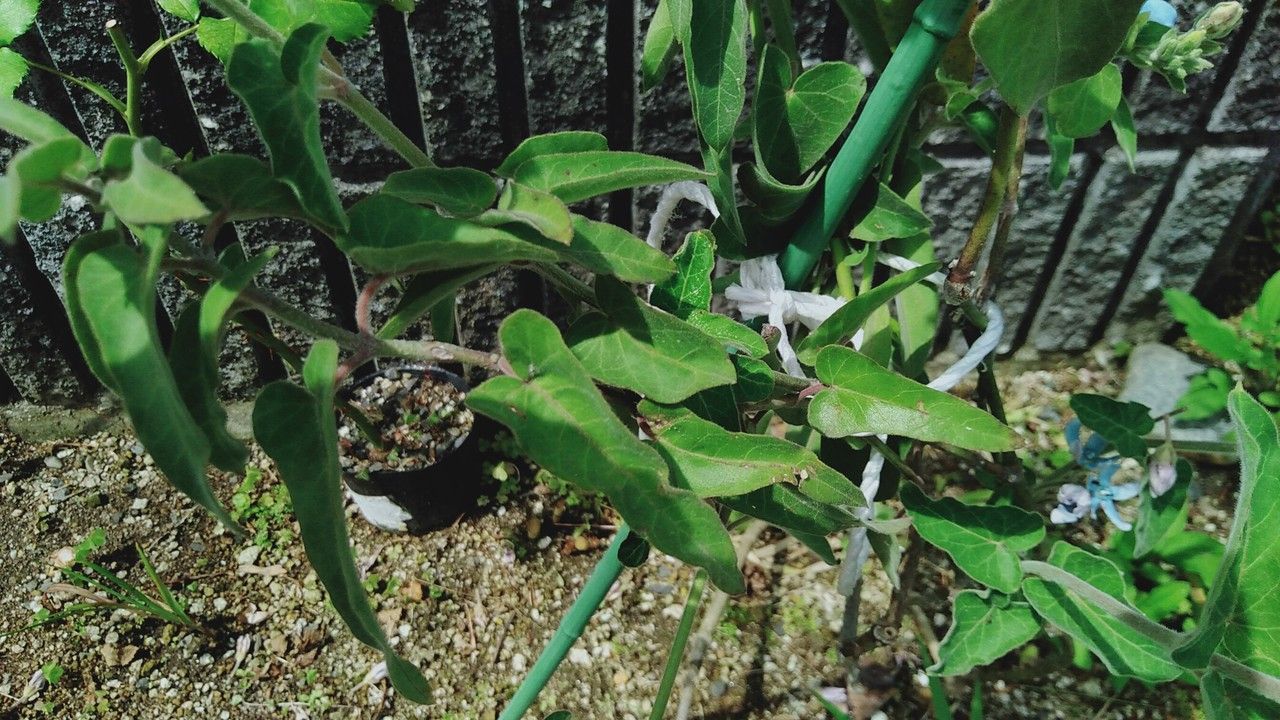
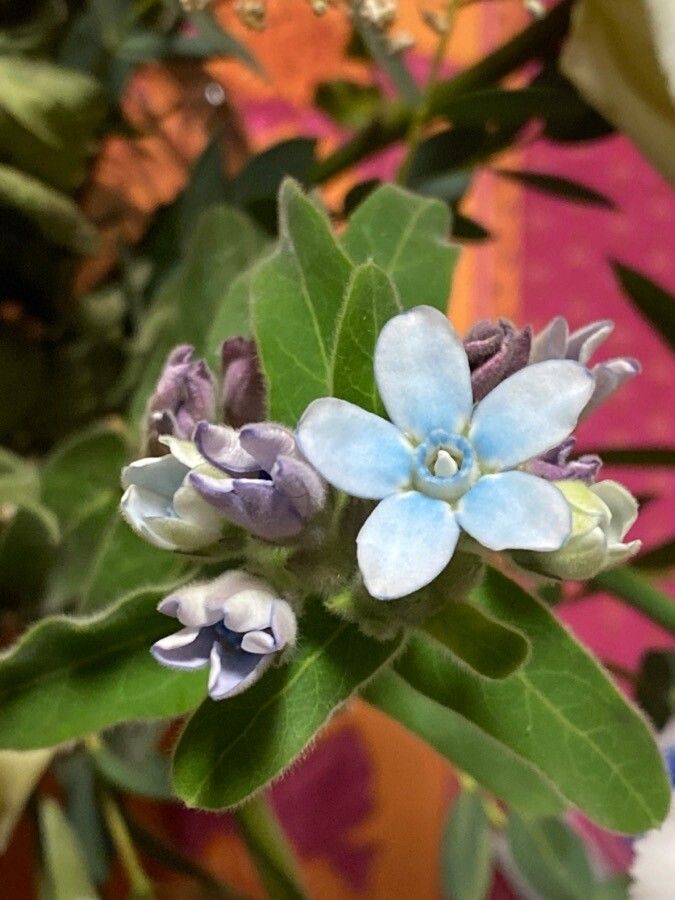
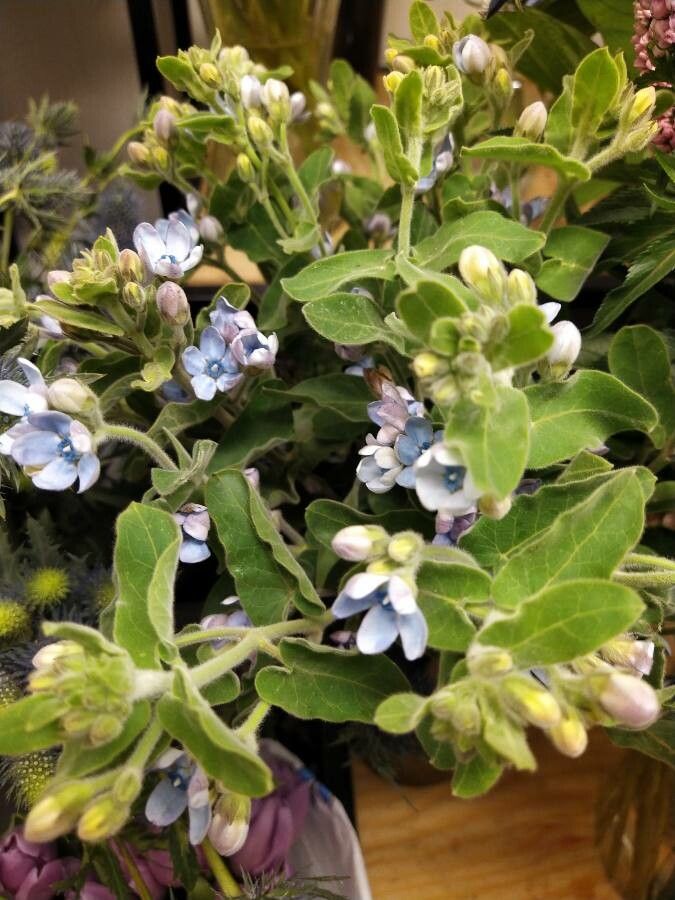
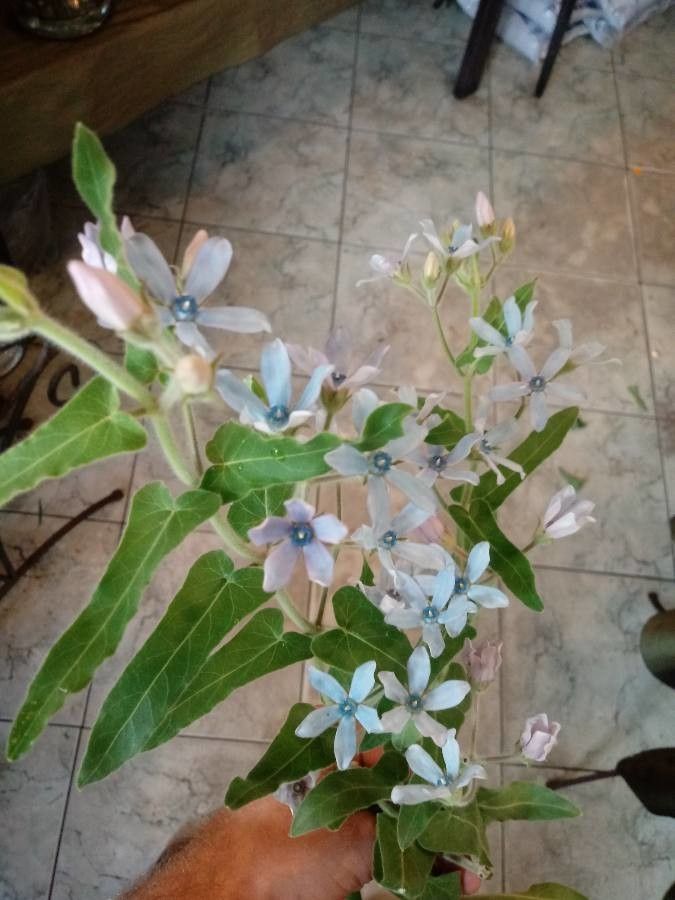
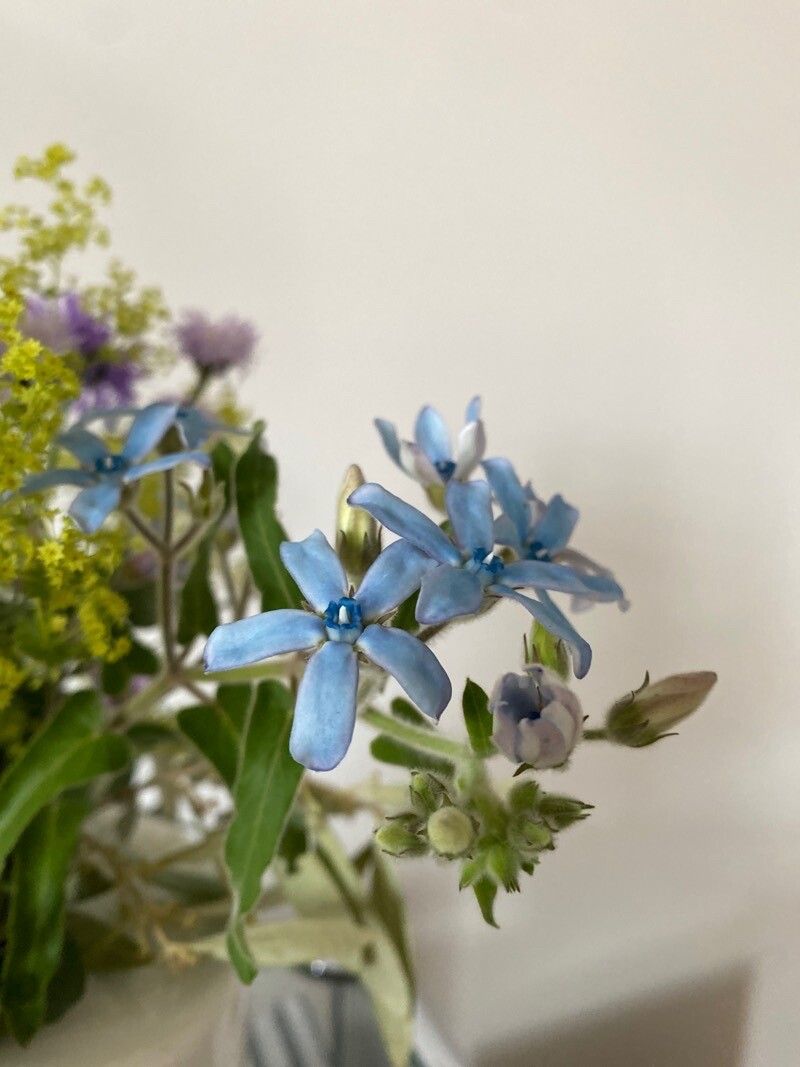
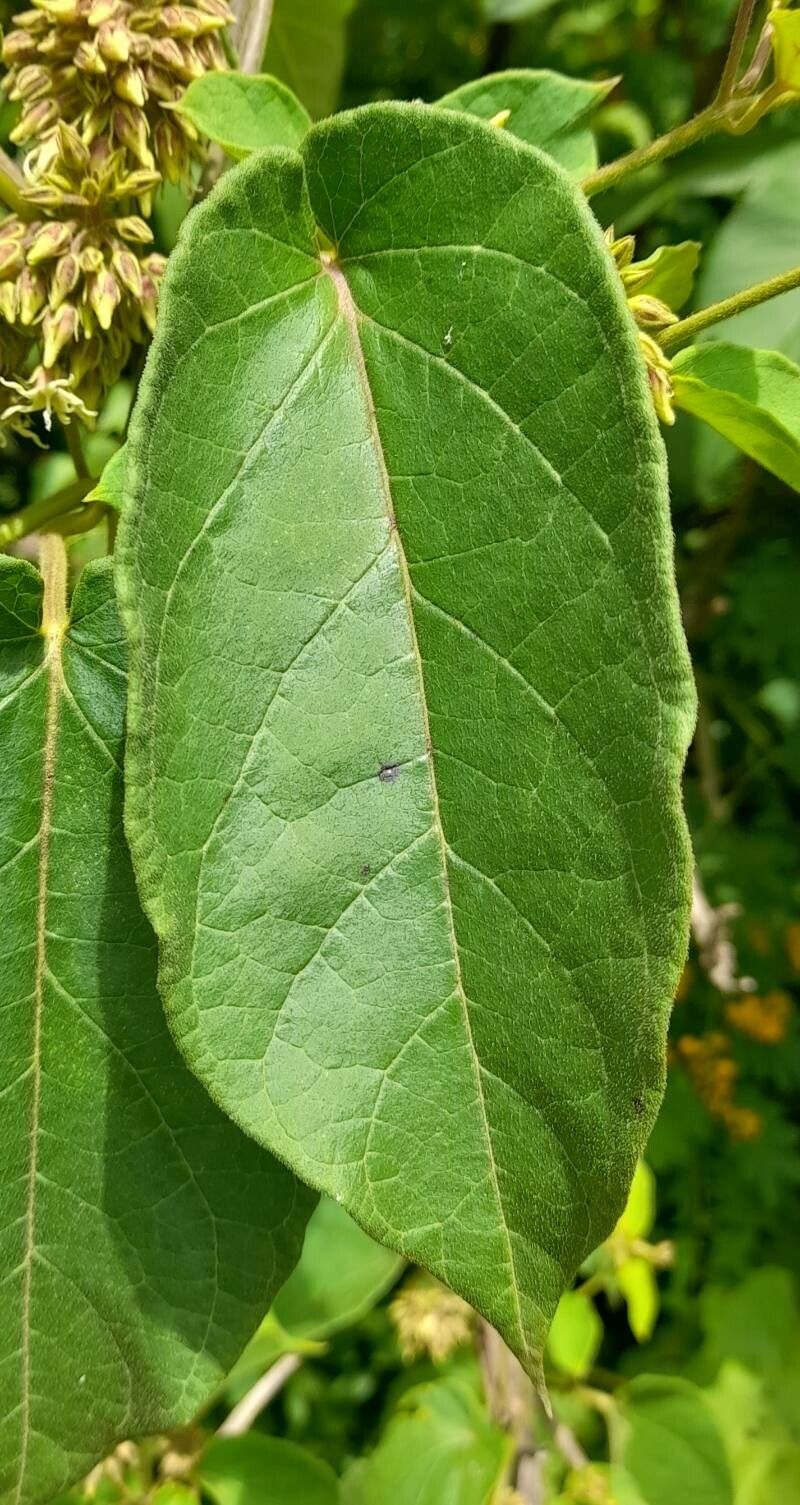
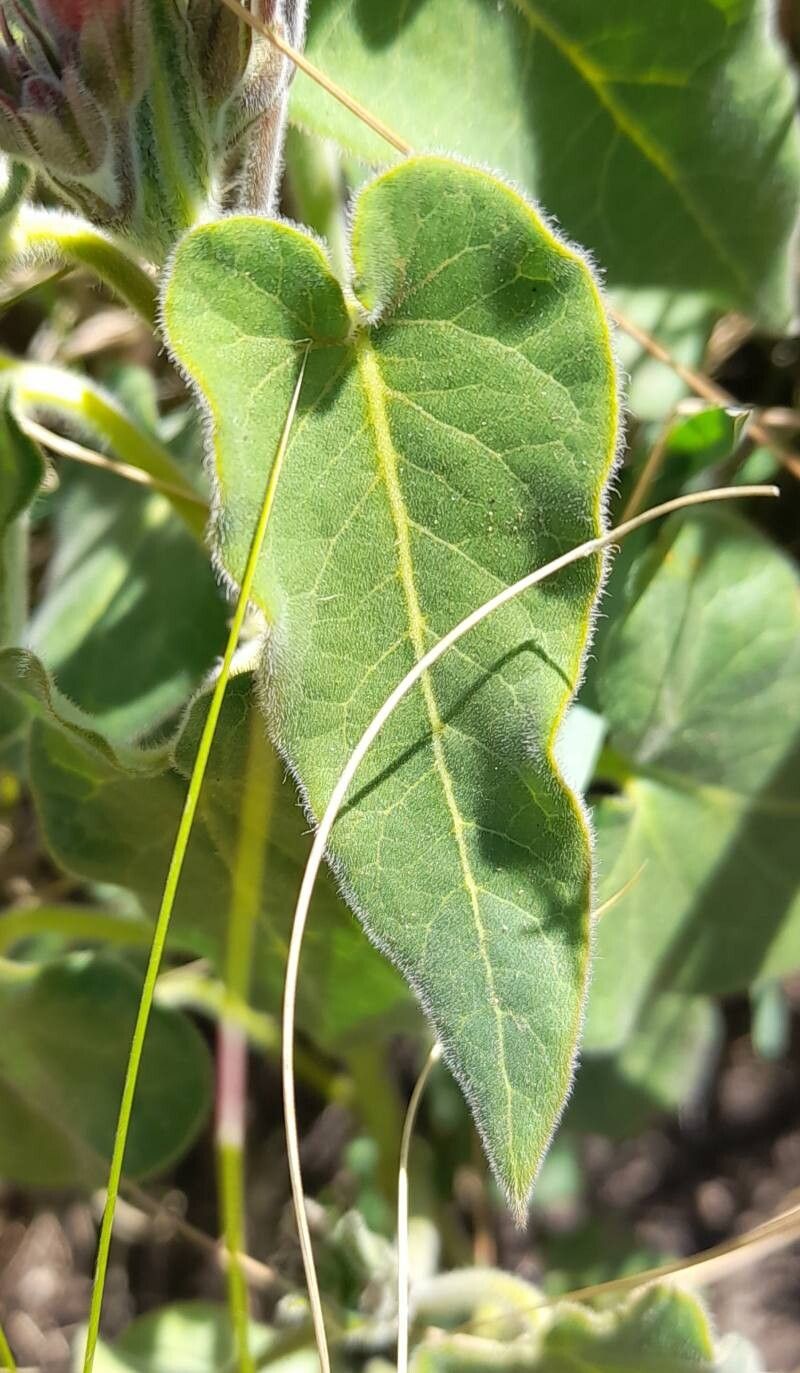
Oxypetalum coeruleum is a species of flowering plant, native to South America from southern Brazil to Uruguay. The synonymous name Tweedia caerulea is also used. Growing to 100 cm (39 in) long, it is a straggling evergreen perennial with heart shaped, gray-green, downy leaves. It is grown for its clear pale blue, star-shaped flowers, which are long lasting and cut well. The summer flowers age to purple and are followed by 30 cm (12 in) long, boat-shaped seed pods. The seeds have downy parachute-like tufts (cypsela). The cultivar 'Alba' has white flowers, while 'Rosea' has pink flowers. Oxypetalum coeruleum requires full sun in a well-drained soil that is dry. Propagation is via seed. With a minimum temperature range of 3–5 °C (37–41 °F), it can be grown outdoors in a frost-free, sheltered environment. Alternatively it can be grown as an annual.This plant has gained the Royal Horticultural Society's Award of Garden Merit.
Blue tweedia has strong resistance to disease and is generally not likely to develop illnesses. Still, it can be vulnerable to pests and diseases present in its environment. Such infections are typically not serious. Regarding care, this plant needs moderate maintenance. It requires regular pruning to keep an attractive appearance and healthy growth. Fertilizing can also help encourage flowering. Blue tweedia is well suited to anyone with outdoor space, such as a garden or patio, and does not demand extensive care experience. It may need more attention when grown indoors.
How to keep Oxypetalum Coeruleum.
Light
Blue tweedia mainly performs best with ample light, similar to the sunny conditions of its native habitat. While that light level encourages vigorous growth, it can tolerate some shade. Nevertheless, reduced light may hinder its growth and lessen its vibrancy.
Temperature
Blue tweedia demonstrates good temperature adaptability, tolerating higher heat and wide temperature fluctuations. In hot conditions, attention should be paid to watering and providing suitable shade to avoid sunburn. However, Blue tweedia is relatively sensitive to low temperatures; while it can handle some cold, very low temperatures can cause frost damage.
Fertilizer
The best time to fertilize a Blue tweedia is in early spring, when it is coming out of dormancy and beginning active growth. Fertilization supplies essential nutrients for healthy development. Although Blue tweedia has relatively low fertilizer needs, fertilizing once a year can improve its survival and encourage better, longer-lasting flowers.
Pruning
Blue tweedia is known for its vibrant blue flowers and delicate leaves. To encourage growth and maintain its shape, prune it between late winter and early spring, making sure to remove any dead stems. Regular pruning helps increase flower production and improves airflow. Remember to always sterilize your tools to prevent the spread of diseases.
Pot & Repot
Repot blue tweedia every 2-3 years in the spring, using a pot that is 20% larger to accommodate its roots. After repotting, use well-draining soil, water regularly, and protect the plant from direct sunlight. This will help the plant recover and encourage healthy growth.
Botanical profile.
- Plant Type
- Herb
- Life Cycle
- Perennial, Annual
- Genus
- Oxypetalum
- Family
- Apocynaceae
- Hardiness Zone
- 9-12
- Mature Height
- 91 cm
- Mature Spread
- 61 cm to 91 cm
- Leaf Color
- Green
- Leaf Type
- Evergreen
- Flower Color
- Blue
- Flower Size
- 2.54 cm
- Bloom Time
- Late spring, Early summer, Mid summer
- Planting Time
- Spring
- Harvest Time
- Summer
Other names.
Reader questions.
What are the sun requirements for Blue Tweedia?
Blue Tweedia, or Oxypetalum coeruleum, requires full sun exposure of above 6 hours of sunlight daily to thrive optimally. It can also grow under partial sun conditions, with about 3-6 hours of sunlight. Observing the movement of sunlight through your garden and selecting locations that provide a good balance of light and shade will ensure your plants grow healthily.
What are the essentials for growing Blue Tweedia?
Blue Tweedia flourishes in conditions that mimic its native sunny habitats, requiring generous exposure to light for lush growth, although it can tolerate some shade. Light limitations may inhibit its growth and vibrancy. For indoor plants, when natural sunlight is insufficient, artificial lighting is crucial for optimal growth. LED lights are recommended due to their ability to provide specific light wavelengths needed by plants. Full sun plants need 30-50W/sq ft, partial sun plants require 20-30W/sq ft, and full shade plants should have 10-20W/sq ft of artificial light. The light source should be placed 12-36 inches above the plant for 8-12 hours per day to mimic natural daylight conditions.
What are the symptoms of insufficient light for Blue Tweedia?
When Blue Tweedia doesn't receive adequate light, it may exhibit symptoms like smaller new leaves, leggy or sparse growth, faster leaf drop, slower or ceased growth, lighter-colored new leaves, and conditions such as chlorosis, sunscald, leaf curling, wilting, and leaf scorching. These issues indicate either too little or too much light exposure, leading to a deficiency in chlorophyll and nutrients or damage from too much direct sunlight.
How can you address light-related issues in Blue Tweedia?
To address light-related issues in Blue Tweedia, gradually moving the plants to sunnier locations can help. Indoor plants may benefit from being placed near a south-facing window or using artificial grow lights for at least 8 hours daily if relocation is not feasible. For outdoor plants, adapting them gradually to brighter spots is key, avoiding sudden light intensity changes to prevent sunburn. Reducing obstructions like pruning trees or transplanting smaller plants can improve sunlight exposure. Unfortunately, parts of the plant already affected by insufficient light might not recover, but new growth should be healthy with improved light conditions.