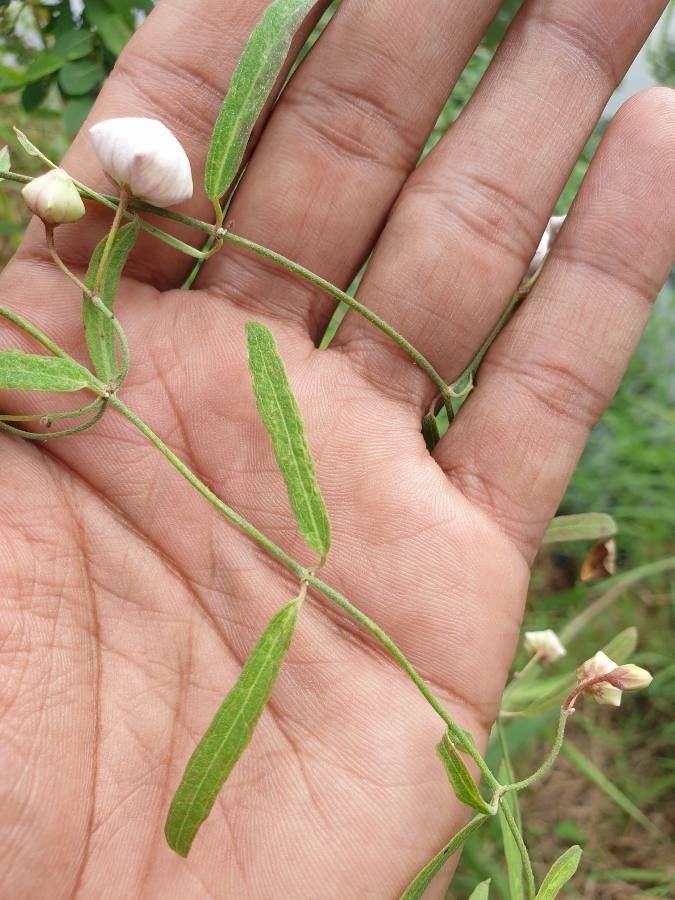
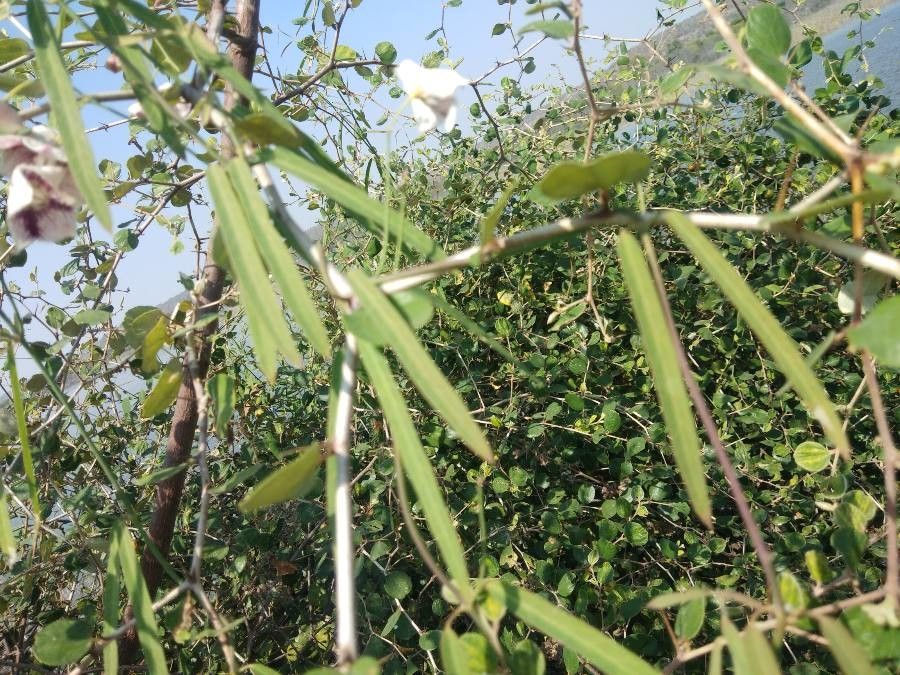
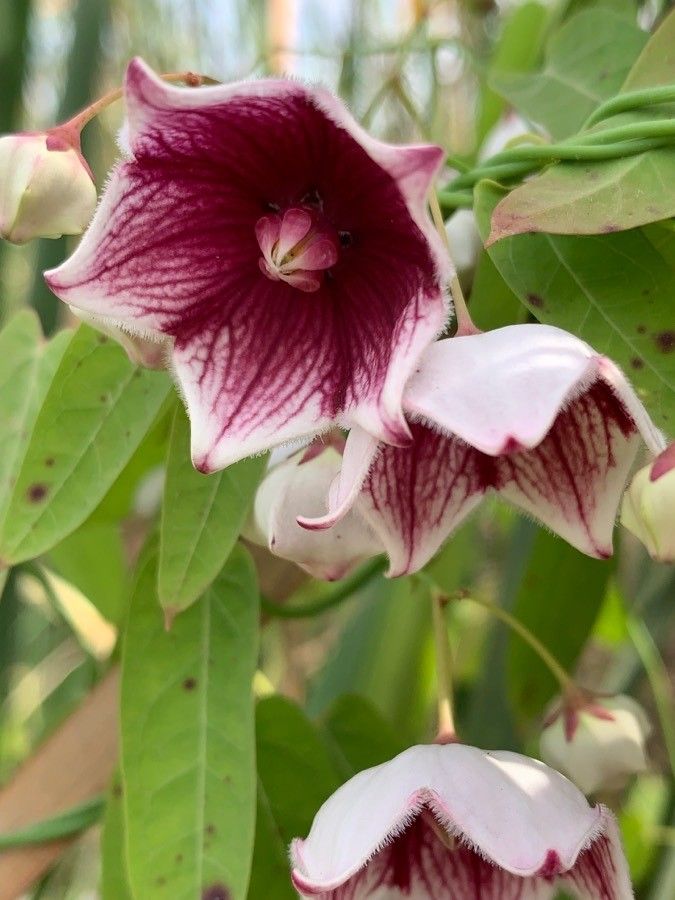
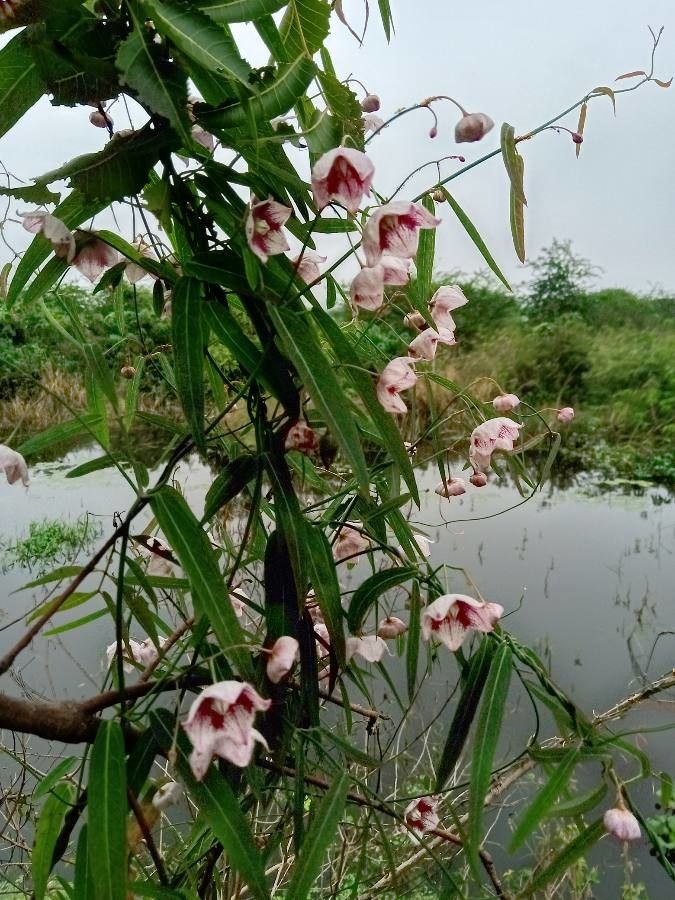
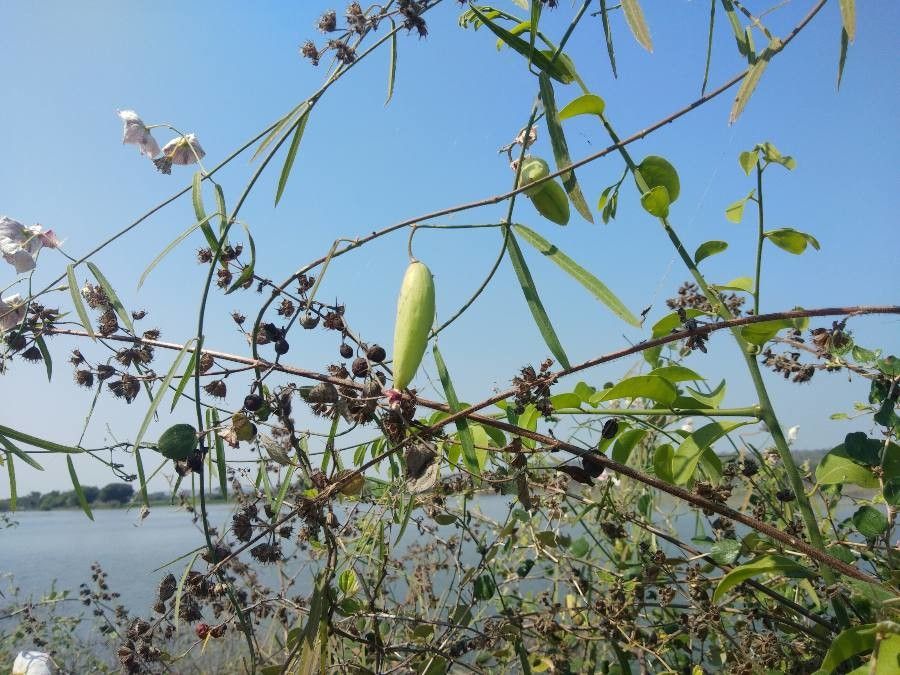
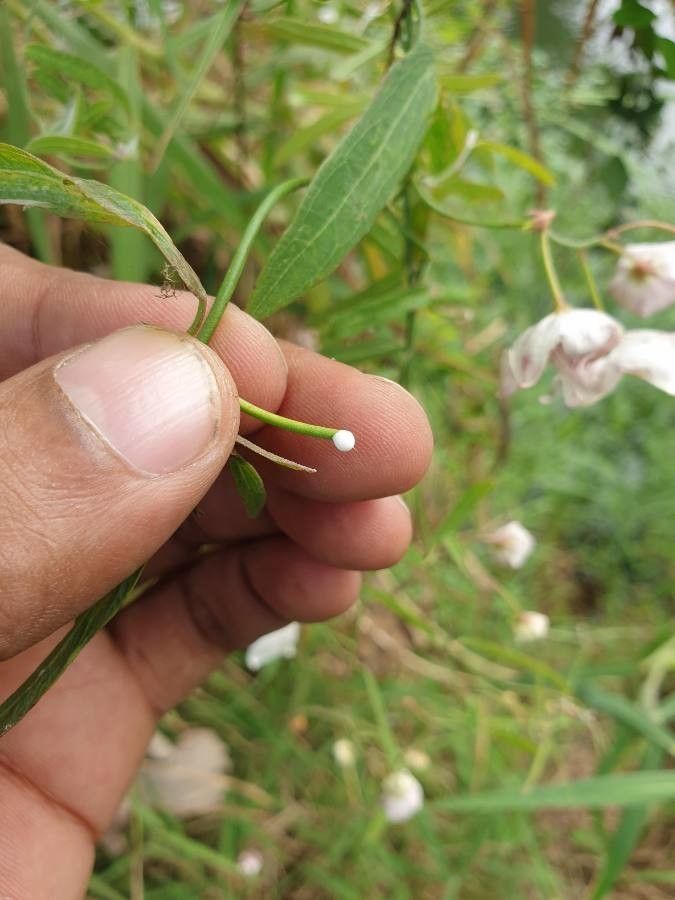
Oxystelma esculentum, commonly known as the edible swallow-wort or twining milkweed, is a perennial climbing plant belonging to the Apocynaceae family. Native to India, it is also found across other parts of Asia. This plant can reach a length of up to 5 meters and features a woody stem. It produces clusters of small white or pink flowers, each with five petals.
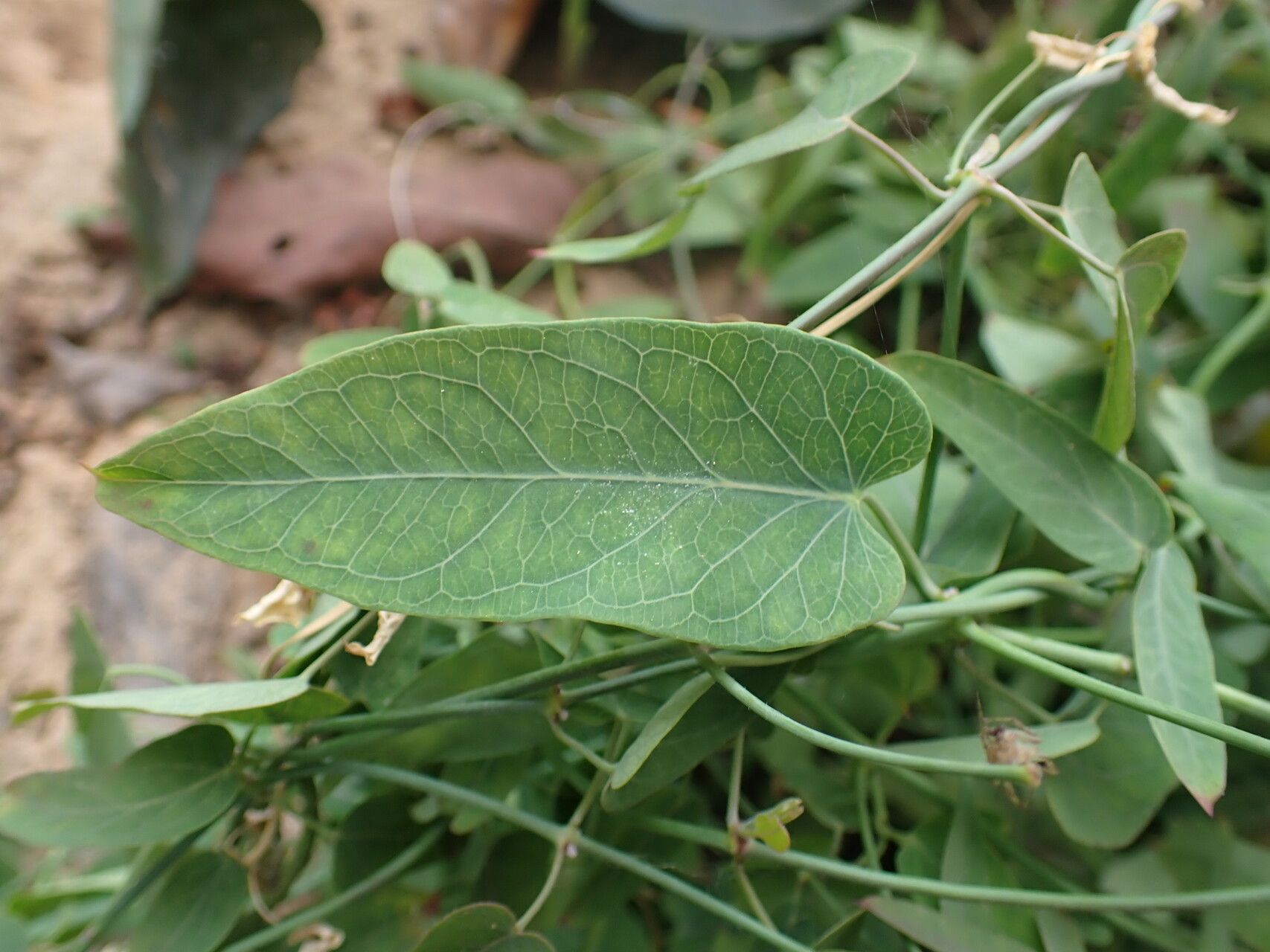
The leaves of Oxystelma esculentum are simple and ovate-shaped with pointed tips, arranged alternately on the stem. The plant yields long pods as fruits, which contain numerous seeds, each adorned with silky hairs.
Historically, the edible swallow-wort has been used in traditional medicine for a variety of ailments, such as fever, coughs, asthma, and other respiratory issues. Additionally, it is regarded as an aphrodisiac in some cultures.
Beyond its medicinal applications, Oxystelma esculentum is also valued in culinary contexts. The young shoots and leaves can be cooked like spinach or added raw to salads, while the seeds are often roasted before consumption.
Despite its benefits in traditional medicine and cuisine, Oxystelma esculentum is considered a weed due to its invasive nature. If not properly managed, it can choke out native plants, causing ecological harm.
rosy milkweed vine has strong disease resistance and is generally not prone to illness. Still, it can be affected by pests and diseases present in its surroundings. These problems are typically not severe. Regarding care, this plant needs medium maintenance. It should be pruned regularly to preserve a tidy appearance and healthy growth. Applying fertilizer can also encourage flowering. rosy milkweed vine is suitable for anyone with outdoor space, such as a garden or patio, and does not demand extensive care experience. It may need more attention when cultivated indoors.
How to keep Oxystelma Esculentum.
Light
Rosy milkweed vine is a sun-loving, perennial herbaceous plant native to open habitats and frequently found in meadows and grasslands. It prefers full sun but can also tolerate partial sun.
Temperature
Rosy milkweed vine comes from tropical areas where the climate is generally warm and humid. Consequently, it is adapted to high temperatures and humidity. It does not tolerate sudden temperature changes and prefers a stable thermal environment, so avoiding temperature fluctuations indoors is important. It typically cannot endure cold and needs higher temperatures to grow. If the ambient temperature falls too low, the plant may stop growing or even die.
Fertilizer
Rosy milkweed vine needs the most fertilizer during its active growth phase, which is mainly in spring, summer, and early fall. Fertilizing supplies essential nutrients the soil may lack, encouraging healthy root and stem development and the attractive foliage that is a notable characteristic of this plant.
Botanical profile.
- Plant Type
- Herb, Vine
- Life Cycle
- Perennial
- Genus
- Oxystelma
- Family
- Apocynaceae
- Hardiness Zone
- 9-11
- Mature Height
- 0.91 m to 2.13 m
- Mature Spread
- 49 cm to 91 cm
- Leaf Color
- Green
- Leaf Type
- Evergreen
- Flower Color
- White, Pink
- Flower Size
- 2.03 cm to 3.05 cm
- Bloom Time
- Summer
- Planting Time
- Spring, Summer, Autumn
- Harvest Time
- Late summer, Early fall, Mid fall
- Native Area
- Nepal, Sri Lanka, Saudi Arabia, Egypt, India, Malaysia, Sudan, Bangladesh, Pakistan, Laos, Tanzania, China, Chad, Iraq, Indonesia, Cambodia, Vietnam, Myanmar, Ethiopia, Thailand
Other names.