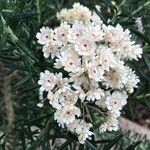
Ozothamnus diosmifolius
White-dogwood · Riceflower
Description
Source: leafsnapOzothamnus diosmifolius, commonly known as Rice Flower or Sago Flower, is a small evergreen shrub belonging to the Asteraceae family. Native to Australia, this plant thrives in various habitats, including heathlands, woodlands, and rocky outcrops. It typically grows between 1 to 2 meters in height and spreads over a similar range. The leaves of Ozothamnus diosmifolius are small and narrow, approximately 1 cm in length. They are alternately arranged on the stem and exhibit a grey-green color, contributing to the plant’s attractive appearance. From late winter through spring (July to November), Ozothamnus diosmifolius produces small clusters of white or cream-colored flowers. These blossoms emit a pleasant fragrance similar to coconut or vanilla, making them popular choices for floral arrangements. This plant is easy to cultivate and requires minimal maintenance. It thrives in well-drained soil with full sun exposure but can also tolerate partial shade. Although drought-tolerant once established, it benefits from occasional watering during extended dry periods. Beyond its ornamental appeal, Ozothamnus diosmifolius possesses medicinal properties, making it useful for treating various ailments such as coughs, colds, and respiratory infections. Overall, Ozothamnus diosmifolius is an attractive shrub that enhances any garden with its beauty and provides medicinal benefits, making it a valuable addition for both aesthetic and practical purposes.
Care Guide
💧 Water Every 7 days
The white dogwood is adaptable to different conditions, although it prefers moderate moisture. While it can withstand drought, it thrives in environments with consistent humidity. For optimal health, it's best to water it weekly. In outdoor settings, natural rainfall during the growing season helps maintain the ideal soil moisture.
☀️ Light Full sun
White dogwood does well when given a generous amount of sunlight each day. It also adapts to sites with moderate sun. Excessive sun, however, can cause leaf scorch, while inadequate light can stunt its growth. Coming from habitats with abundant sunlight, it prospers in comparable conditions.
What are the sunlight requirements for White Dogwood?
White Dogwood thrives best when it receives more than 6 hours of sunlight daily, described as full sun exposure. It can also adapt well to partial sun, which is about 3-6 hours of sunlight. It's crucial to monitor the movement of sunlight through your garden to ensure plants receive an adequate balance of light and shade for optimal growth. Excessive sun can cause leaf scorch, while too little sunlight may stunt the plant's growth. Originating from environments rich in sunlight, White Dogwood performs best under similar conditions.
How does artificial lighting support plant growth?
Indoor plants, including White Dogwood, may require artificial lighting for optimal growth, especially when natural sunlight is not sufficient. This is common in less sunny spaces or during winter. Artificial lighting promotes faster, healthier plant growth by providing the necessary wavelengths of light. LED lights, customizable for specific plant needs, are often recommended. The amount of artificial light needed varies: 30-50W/sq ft for full sun plants, 20-30W/sq ft for partial sun plants, and 10-20W/sq ft for full shade plants. The light source should be placed 12-36 inches above the plant, mimicking natural sunlight conditions, and provided for 8-12 hours per day to match the natural daylight hours for the plant species.
What are common symptoms of insufficient lighting in White Dogwood?
Insufficient lighting can cause several recognizable symptoms in White Dogwood. These include smaller than usual new leaves, leggy or sparse growth, faster leaf drop, and slower or halted new growth. Leaves may display lighter colors or irregular patterns, indicating a lack of chlorophyll and nutrients. Additionally, conditions like chlorosis can arise, where leaves lose their green color and turn yellow, and sunscald, resulting from intense sun exposure, damages plant tissues. Other symptoms include leaf curling as a defense against overexposure to sunlight, wilting due to increased water loss, and leaf scorching characterized by brown, dry edges on leaves.
What solutions can remedy light deficiency symptoms in White Dogwood?
To address light deficiency in White Dogwood, gradual changes are key. For indoor plants, progressively moving them to sunnier spots or using artificial lights such as desk lamps or professional grow lights for at least 8 hours daily can help. Outdoors, the gradual relocation of plants to sunnier areas prevents sunburn and encourages adaptation. Addressing obstructions by pruning or relocating the plant to sunnier locations with good drainage is advisable. Although parts of the plant that suffered from low light may not recover, new growth post-adjustment will be healthy. These adjustments ensure the plant receives the required sunlight for optimal growth.
🌡️ Temperature 20–37.8°C
White dogwood originates from habitats with temperatures ranging from 68 to 100 °F (20 to 38 ℃). It favors these warm conditions. In cooler seasons, appropriate adjustments to temperature should be made to ensure its healthy growth.
What is the native temperature range for White dogwood and how does it affect its care?
White dogwood, with its botanical name Ozothamnus diosmifolius, is native to environments with temperatures ranging from 68 to 100 °F (20 to 38 °C), thriving in warm climates. It's important to adjust temperatures appropriately in cooler seasons to foster healthy growth. White dogwood is extremely heat-loving, making it vulnerable to cold temperatures. During autumn, for plants grown outdoors, it is advisable to bring them indoors and place them near a bright window, ensuring they are not too close to heaters. Maintaining temperatures above 20°C during winter is beneficial for the plant's growth, while temperatures nearing 0°C can be harmful.
What are the symptoms of low temperature exposure on White dogwood, and how can one manage them?
Low temperatures affect White dogwood significantly as it prefers warm climates and thrives best when the temperature is above 20°C. It should be kept above 0°C during winter. Exposure to temperatures below -5°C may lead to the leaves lightening in color. Post frost, the leaf color may turn brown or black, accompanied by wilting and drooping. To manage frost damage, trim off the frost-damaged parts and move the plant to a warmer indoor setting promptly. Placing the plant near a south-facing window ensures ample sunlight, and it's crucial to avoid placing it near heaters or air conditioning vents to prevent air dryness.
What should be done if a White dogwood experiences high temperatures?
During the summer, it's crucial to keep the White dogwood's temperature below 38°C to prevent stress on the plant. Temperatures exceeding 43°C can lead to lighter leaf color and increased susceptibility to sunburn. To manage this, trim away the sunburned and dried-up parts of the plant. Relocating the plant to a shaded area, particularly away from the midday and afternoon sun, helps minimize further damage. Ensuring the soil stays moist by watering the plant in the morning and evening can also aid in the plant's recovery during high temperature periods.
💨 Humidity
🪴 Soil 6-7
🌱 Fertilizer
The best time to fertilize a White dogwood is in early spring, when it is coming out of dormancy. This encourages overall growth and flower development. Fertilizing improves the foliage, stems, and branches, while encouraging large, vibrant, long-lasting flowers. It helps move nutrients from the roots to the flowers and enhances the plant’s health and resistance to disease.
🪴 Pot & Repot 2-3 years
Repot your white dogwood in early spring to align with its growth cycle. This bushy, medium-height plant thrives in spacious pots and should be repotted every 2-3 years to avoid overcrowding. After repotting, place the plant in bright, indirect light and water it moderately. No special care is needed for this resilient species.
✂️ Pruning
To keep white dogwood trees healthy and beautiful, it's best to prune them in late spring. Focus on removing dead branches, improving air circulation, and maintaining the tree's shape. This type of pruning encourages healthier growth and more abundant flowering without causing stress to the plant. By pruning regularly and moderately, you can enhance the tree's appearance and reduce the risk of disease.
🌿 Propagating
🐛 Diseases & pets
☠️ Toxicity
Characteristics
- Plant Type
- Shrub
- Life Cycle
- Perennial
- Genus
- Ozothamnus
- Family
- Asteraceae
- Hardiness Zone
- 9-11
- Mature Height
- 2.13 m
- Mature Spread
- 2.13 m
- Leaf Color
- Green
- Leaf Type
- Evergreen
- Flower Color
- White
- Flower Size
- 0.51 cm to 1.02 cm
- Bloom Time
- Summer
- Planting Time
- Spring, Summer
- Harvest Time
- Late summer, Early fall, Mid fall