Pachycormus discolor
Elephant tree · Succulent Elephant Trees
Description
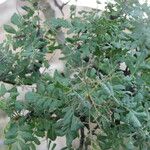
Source: leafsnapPachycormus is a monotypic genus of flowering plants in the cashew family commonly known as the Baja elephant tree, torote blanco, or copalquín. The single species Pachycormus discolor is endemic to the Baja California peninsula, with three varieties. This sarcocaulescent tree or shrub is characterized by its unique gnarled growth habit, skin-like exfoliating bark, and succulent nature, whose appearance has been colorfully described as "the proboscis of an elephant holding a nosegay," a "huge radish protruding from the ground," or "grotesque resemblances of the flexed limbs of a corpulent human being." This drought-deciduous species spends most of the year dormant, but following rains pinnate green leaves emerge, and in the late spring to summer the leaves yellow, fall, and give way to bright red, cream, or pink flowers that give it a striking appearance in bloom.
Care Guide
💧 Water
The elephant tree is well-suited to arid environments, showcasing impressive drought tolerance. For optimal health, it should be watered every four weeks, as it effectively retains moisture. As an evergreen plant, the elephant tree benefits from rainfall during its growing season, which complements its regular watering routine.
☀️ Light Full sun
Elephant tree does best in environments with plentiful light, since it comes from regions with strong sun exposure. These lighting conditions promote healthy growth and vigor. When light is insufficient, the plant’s development can be slowed, while excessive light can lead to stress and damage.
What are the sunlight requirements for an Elephant Tree?
The Elephant Tree requires full sun, meaning it needs above 6 hours of sunlight daily. It's essential to observe how sunlight moves through your garden to select spots that offer a perfect balance of light and shade, ensuring your plant's happiness and health.
What essentials should be considered for an Elephant Tree's growth?
Elephant Tree thrives in environments with an abundance of light, coming from habitats with high solar exposure. These conditions are crucial for healthy growth and vitality. Insufficient light exposure can hinder the plant's growth, while overexposure can lead to stress and damage. If natural sunlight is lacking, especially in winter or less sunny spaces, artificial lighting becomes essential. It can promote faster, healthier growth. Indoor plants might need specific artificial lighting conditions, such as LED lights, which can be customized to provide specific wavelengths beneficial for the plant.
What symptoms indicate light issues in an Elephant Tree?
An Elephant Tree can show several symptoms when facing light-related issues. Inadequate light can lead to smaller new leaves, leggy or sparse growth, faster leaf drop, slower or no new growth, and lighter-colored new leaves, indicating a lack of chlorophyll and essential nutrients. Conversely, excessive sunlight can cause chlorosis (leaves turning yellow), sunscald (damage from intense sunlight), leaf curling, wilting, and leaf scorching, signifying damage from overexposure. These conditions demonstrate the plant's reaction to either insufficient or too much sunlight.
What are the solutions to light-related problems in an Elephant Tree?
To address light-related problems in an Elephant Tree, consider these solutions based on whether the plant is indoor, outdoor, or in the ground. For indoor settings, gradually move the plant to sunnier locations until it gets at least 6 hours of direct sunlight, use south-facing windows, and consider artificial lighting if the plant is large. For outdoor plants, transition them slowly to sunnier spots to prevent sunburn. Consider reducing obstructions such as tree branches for plants in the ground and think about transplanting smaller plants during their dormant periods to areas with better sunlight and drainage. Note that parts of the plant already affected by insufficient sunlight may not recover, but new growth will be healthy with improved light conditions.
🌡️ Temperature 20–37.8°C
The elephant tree comes from tropical areas, where the climate is generally warm and humid. Consequently, it is adapted to high temperatures and humidity. It is sensitive to sudden temperature changes and prefers a steady thermal environment, so avoiding temperature fluctuations indoors is important. It generally does not tolerate cold and needs warmer conditions to grow. If the surrounding temperature falls too low, the plant’s growth can stop or it may die.
💨 Humidity
🪴 Soil 6-7
🌱 Fertilizer
The best time to fertilize an elephant tree is in early spring, when it comes out of dormancy. This encourages overall growth and flower development. Fertilization improves the foliage, stems, and branches, while supporting large, vibrant, and long-lasting flowers. It helps move nutrients from the roots to the flowers and enhances the plant’s health and resistance to disease.
🪴 Pot & Repot 2-3 years
Repot the elephant tree every 2-3 years in early spring, using a slightly larger pot. After repotting, place the tree in bright, indirect light and water it moderately to aid in recovery and growth. To ensure the tree remains healthy and its branches thrive, tailor your care regimen to align with its drought-tolerant nature.
✂️ Pruning
The elephant tree is known for its thick, succulent stems and ability to withstand drought. To promote new growth, enhance airflow, and remove dead branches, it is best to prune in early spring. Pruning during the dormant season minimizes stress and encourages flowering, supporting vigorous growth and reducing the risk of pests. This practice enhances the tree's overall health.
🌿 Propagating
🐛 Diseases & pets
☠️ Toxicity
Characteristics
- Plant Type
- Tree, Shrub
- Life Cycle
- Perennial
- Genus
- Pachycormus
- Family
- Anacardiaceae
- Hardiness Zone
- 9-11
- Mature Height
- 4.57 m to 6.1 m
- Mature Spread
- 3.05 m to 4.88 m
- Leaf Color
- Green, Dark Green
- Leaf Type
- Deciduous
- Flower Color
- White
- Flower Size
- 2.54 cm
- Bloom Time
- Mid spring, Late spring
- Planting Time
- Spring, Summer
- Harvest Time
- Early summer, Mid summer
- Native Area
- Mexico