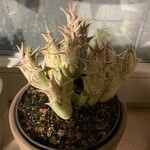
Pachycymbium decaisneanum
Care Guide
💧 Water
☀️ Light Full sun
Native to arid regions, Ceropegia venenosa subsp. venenosa performs best in full sun; its natural habitat features intense sunlight with little shade. It will also tolerate partial sun, offering some flexibility in its growth.
🌡️ Temperature 20–37.8°C
Ceropegia venenosa subsp. venenosa prefers warm conditions and needs higher temperatures during the growing season to support growth and metabolism. It does best with plenty of light, proper moisture, and good air circulation. It is vulnerable to harm from too-low temperatures and from overwatering. Likewise, it’s important to avoid excessively high heat and overly dry conditions.
💨 Humidity
🪴 Soil 6-7
🌱 Fertilizer
For Ceropegia venenosa subsp. venenosa, light applications of fertilizer once or twice a year during the growing season are adequate. Do not fertilize in winter or in summer while the plant is dormant. Use reduced fertilizer for repotted plants and wait a couple of months after repotting before applying fertilizer. Fertilizing promotes healthy growth and encourages blooms.
🪴 Pot & Repot Every 2 years
When repotting Ceropegia venenosa subsp. venenosa, pick a pot slightly larger than the current one that has good drainage. Use a gritty, well-draining succulent or cactus mix. Gently lift the plant from its old container, brush off excess soil, and set it in at the same depth. Wait a few days before watering so any root injury can heal. Repot in spring or fall and place it in a brightly lit spot.
✂️ Pruning
🌿 Propagating
🐛 Diseases & pets
☠️ Toxicity
Characteristics
- Plant Type
- Vine, Succulent
- Life Cycle
- Perennial
- Genus
- Pachycymbium
- Family
- Apocynaceae
- Hardiness Zone
- 10-12
- Mature Height
- 30 cm to 61 cm
- Mature Spread
- 20 cm to 40 cm
- Leaf Color
- Green, Dark Green
- Leaf Type
- Evergreen
- Flower Size
- 2.03 cm to 3.05 cm
- Bloom Time
- Summer, Early fall, Mid fall
- Planting Time
- Spring, Summer, Autumn
- Harvest Time
- Fall
- Native Area
- Saudi Arabia, Mali, Somalia, Burkina Faso, Sudan, Senegal, Mauritania, Ethiopia, Yemen