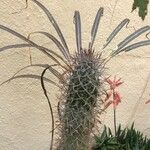
Pachypodium geayi
نامش چیست · Madagascar Palm · Elephant's foot plant · Elephants Foot · Large Madagascar Palm
Description
Source: leafsnapPachypodium geayi is a species of succulent plant belonging to the family Apocynaceae. Native to Madagascar, it can grow up to 6 meters tall. The plant features a thick, woody stem covered in sharp spines and produces clusters of oval-shaped, glossy green leaves at the top, which can reach up to 20 cm in length. During the summer months, Pachypodium geayi blooms with beautiful white flowers that have yellow centers. These trumpet-shaped flowers emit a sweet fragrance that attracts pollinators such as bees and butterflies. For optimal growth, this plant requires well-draining soil and plenty of sunlight. Although it is drought-tolerant, it should be watered sparingly during its dormant period in winter. Pachypodium geayi has been used for centuries by indigenous people in Madagascar for its anti-inflammatory properties. However, it contains toxic compounds that can cause skin irritation and may be lethal if ingested by humans or animals. In summary, Pachypodium geayi is a fascinating succulent species with unique physical characteristics and medicinal properties, but it requires careful handling due to its toxicity.
Care Guide
💧 Water Every 7 days
The Madagascar palm, native to the arid regions of Madagascar, is a drought-tolerant plant that stores water in its thick trunk. To care for it, water sparingly—approximately every three weeks—and ensure the soil drains completely. It thrives in well-draining soil, which helps prevent root rot. The plant prefers dry conditions to excessive moisture.
What do I do if I give my Madagascar palm too much water or not enough water?
Newly planted outdoor plants, especially seedlings, are vulnerable to lack of water. It's important to water them generously for a few months until their roots are established. This way, they can rely on rain most of the time. However, be cautious when your Madagascar palm is planted in pots as overwatering is more likely. If you accidentally overwater your Madagascar palm, take immediate action to remedy the situation. Stop watering the plant to minimize the effects of overwatering. Then, remove the palm from its pot to inspect the roots. If no root rot is found, you can return the plant to its container. Otherwise, trim the affected roots and consider using a fungicide to prevent further damage. Repot the palm in well-draining soil. On the other hand, if you underwater your Madagascar palm, increase the watering frequency. Underwatering can be easily fixed as the leaves will droop, dry out, and fall off. They will regain fullness after sufficient watering. Therefore, adjust your watering schedule promptly if you notice signs of underwatering.
How often should I give water to my Madagascar palm?
Most outdoor plants can be left to grow naturally with rainfall. However, if your area lacks rainfall, you will need to water your plants adequately every 2 weeks in the spring and fall. In the summer, you will need to water them more frequently. During the winter, when growth slows down and plants require less water, you should water them sparingly, or not at all. If you have a young or newly planted Madagascar palm, it is important to water it more often to help it establish and grow into a more adaptable and drought-tolerant plant. For potted plants, there are two main ways to determine how often to water your Madagascar palm. One way is to follow a set watering schedule, such as once a week or every other week. However, this may not always be accurate as it doesn't account for the specific conditions of your growing environment. Another method is to base your watering frequency on the moisture level of the soil. In general, it's best to wait until the top 2 to 4 inches of soil have completely dried out before giving more water. Keep in mind that during the summer, when the plant's water needs are highest, a predetermined watering schedule may not be sufficient.
How should I water my Madagascar palm in the best way?
Your Madagascar palm is not very particular about how you water it. So, you can use just about any common watering tool to moisten the plant's soil. Watering cans, hoses, and even cups will all work perfectly fine when it's time to water your Madagascar palm. No matter which watering tool you use, it's best to water the soil directly. Make sure to moisten all areas of the soil equally, so that the entire root system receives the water it needs. Using filtered water is helpful because tap water may contain particles that can harm the plant. It's also beneficial to use water that is at or slightly above room temperature, as colder or hotter water may shock the Madagascar palm. However, the plant typically responds well to any type of water you provide.
How much water does my Madagascar palm require?
When watering your Madagascar palm, it's important to note that it doesn't always require a lot of water. If only a few inches of soil have dried since your last watering, you can ensure healthy growth by giving it about five to ten ounces of water each time. You can gauge the water volume based on the dryness of the soil. If more than half of the soil has dried out, consider giving more water until you see excess water draining from the pot's holes. If your Madagascar palm is in an outdoor area with sufficient rain, it may not need additional watering. However, when it's young or establishing, aim for 1-2 inches of rain per week. As it grows and becomes established, it can rely solely on rainwater. Only during hot weather and prolonged periods without rain for 2-3 weeks should you provide a full watering to prevent stress.
How can I know if I'm giving enough water to my Madagascar palm plant?
The Madagascar palm is often overwatered, which can be identified by yellowing leaves, leaf loss, shriveling, and root rot. Conversely, an underwatered palm will wilt, have brown leaves, and feel brittle. In either case, it is important to take action and restore the plant's health.
☀️ Light Full sun
The madagascar palm prospers with a large amount of sunlight, similar to the substantial sun exposure of its native habitat. It can also tolerate lower light, but not providing enough sunlight may harm its health and growth. Adequate sunlight is necessary at every stage of growth. Excessive or insufficient light can be damaging.
What are the sunlight requirements for a Madagascar palm?
The Madagascar palm thrives under full sun, requiring above 6 hours of sunlight daily to mimic its natural habitat's conditions. It can also adapt to partial sun, about 3-6 hours of sunlight, but failing to provide enough sunlight may affect its health and growth. Observing how sunlight moves through your garden can help in choosing spots that offer the perfect balance of light and shade for the plant, ensuring its happiness.
How essential is sunlight for the growth stages of a Madagascar palm?
Sunlight is crucial at all growth stages of a Madagascar palm, similar to its original habitat that experiences considerable sun exposure. The plant can adapt to less light; however, insufficient sunlight can negatively impact its health and growth. Both too much and too little light can be detrimental. Indoor plants may require artificial lighting to mimic natural sunlight conditions, especially in winter or less sunny spaces, with LED lights being a popular choice because they can provide specific wavelengths needed for optimal growth.
What are some symptoms of light deficiency in a Madagascar palm?
When a Madagascar palm is cultivated indoors and exposed to insufficient lighting, especially during winter, it may exhibit symptoms such as small or matured leaves growing smaller, leggy or sparse growth indicating longer spaces between leaves or stems, early leaf drop to conserve resources, slowed or halted growth, lighter-colored or chlorotic leaves indicating a lack of chlorophyll and essential nutrients, and symptoms of overexposure like sunscald, leaf curling, wilting, and leaf scorching.
What solutions are available for a Madagascar palm receiving insufficient light?
For indoor Madagascar palms, gradually moving the plant to a sunnier location each week until it receives at least 6 hours of direct sunlight daily is recommended. Utilize south-facing windows and keep curtains open during the day for maximum light. For plants that are large or hard to move, artificial light sources, such as desk lamps or specialized plant grow lights, can provide the necessary lighting for at least 8 hours daily. Outdoors, it's essential to gradually acclimate plants to sunnier locations to prevent sunburn, while removing obstructions or transplanting smaller plants to sunnier spots can improve light exposure. It's important to note that while parts of the plant that suffered from light deficiency may not recover, new growth after increasing light exposure will be healthy.
🌡️ Temperature 20–37.8°C
Madagascar palm is native to regions where temperatures range from 68 to 100 °F (20 to 38 ℃). It does best within that warmth range. If the surrounding temperature falls or rises markedly, take appropriate measures to adjust the ambient temperature to satisfy its thermal needs.
What is the ideal temperature range for Madagascar palm?
Madagascar palm, or Pachypodium geayi, thrives in temperatures between 68 to 100°F (20 to 38°C). This plant is exceptionally heat-loving and does not tolerate cold temperatures well. To maintain its health, it's crucial to adjust its environment to stay within this ideal warmth spectrum. During colder months, especially in autumn, it is advised to move outdoor-grown Madagascar palms indoors and place them near a bright window, though not too close to heaters, ensuring the ambient temperature remains above 20°C. Keeping the temperature above this threshold during winter promotes healthier plant growth, while temperatures nearing 10°C can damage the plant.
How does low temperature affect the Madagascar palm and what steps should be taken?
Low temperatures have a detrimental effect on the Madagascar palm, which prefers to remain above 20°C. Exposure to temperatures below 5°C may lead to a lightening of the leaves, while frost damage can cause the leaves to turn brown or black and result in wilting or drooping. To protect the plant from cold damage, frost-affected parts should be trimmed off, and the plant should be moved indoors to a warmer spot. Placing the palm near a south-facing window ensures it receives enough sunlight without the risk posed by heaters or air conditioning vents, which can lead to excessive dryness.
What should be done if the Madagascar palm is exposed to high temperatures?
During the summer, it's important to ensure that the Madagascar palm is not exposed to temperatures above 38°C. Exposure to temperatures exceeding 43°C can cause the leaves to lighten and increase the risk of sunburn. To mitigate this, sunburned or dried parts of the plant should be trimmed away. Relocating the plant to a spot where it can be shaded from the intense midday and afternoon sun is beneficial. Additionally, watering the plant in the early morning and evening helps keep the soil adequately moist, further protecting it from excessive heat.
💨 Humidity
🪴 Soil 6-7
🌱 Fertilizer
Madagascar palm needs only light fertilizer applications once or twice a year during its growing season. Do not fertilize in winter or in summer when it is dormant. Cut back on feeding for plants that have been repotted and wait a couple of months after repotting before applying fertilizer. Fertilizing helps maintain healthy growth and encourages flowering.
Why should I put fertilizer on my Madagascar palm?
Proper fertilization is crucial for the overall health and well-being of a Madagascar palm. It ensures that the plant receives the necessary energy and nutrients for developing healthy foliage and strong stems and branches. Gardeners particularly value the flowers of a Madagascar palm, which can be enhanced with proper fertilization. By providing the right type of fertilizer, the plant can efficiently transfer nutrients from its roots to its flowers, resulting in larger, vibrant, and longer-lasting blooms. Additionally, adequate fertilization supports the overall health of the plant, making it more resistant to diseases.
When should I fertilize my Madagascar palm?
The best time to fertilize a Madagascar palm is during early spring, when it is coming out of its dormant phase and getting ready to bloom. Feeding it at this time provides energy for growth and flower development. However, it's not the only time to fertilize this plant. Giving it another feeding in the fall can also be beneficial, although it doesn't have to be as big as the first one. Some gardeners choose to fertilize the Madagascar palm while planting, but it's not always necessary.
When is it not a good idea to fertilize my Madagascar palm?
During winter, the Madagascar palm goes into a dormant phase and doesn't require fertilizer, similar to many other plants. This is because it doesn't need much energy from the soil to grow during this time. Fertilizing in winter increases the chances of overfertilization issues. The best times to feed your Madagascar palm are in early spring and fall. So, during most of spring and summer, you don't need to fertilize the plant. Additionally, it's preferable to avoid feeding if the plant is exposed to extreme heat or dry conditions.
What kind of fertilizer should I use for my Madagascar palm?
Madagascar palm plants typically thrive when given a specific type of fertilizer rather than a general-purpose one with equal amounts of nitrogen, phosphorus, and potassium. Nitrogen and phosphorus are the most essential nutrients for these plants, so it's important to have higher amounts of these in the fertilizer compared to potassium. A fertilizer with an N-P-K ratio of 10-10-8 or similar should work well. Additionally, using organic material like compost for at least one annual feeding can be beneficial. When applying fertilizer, it's advisable to use granular fertilizer for Madagascar palms.
How should I give my Madagascar palm plant nutrients?
Applying fertilizer to your Madagascar palm is a simple task that any gardener can do, even if they have little experience. To use granular fertilizer, all you need to do is sprinkle it on the soil after you have moistened it with water. Another option is to improve the plant's soil by adding organic materials like compost or manure. If you choose this route, just place some of the materials on the soil's surface and gently work them into the top few inches of soil with a hand rake, being careful not to disturb the roots.
🪴 Pot & Repot 2-3 years
To support the taproot system of a Madagascar palm, repot it every 2 to 3 years during the spring. Choose a larger pot with good drainage and use a well-draining soil mix. After repotting, place the plant in bright light and water sparingly to prevent root rot and promote healthy growth.
✂️ Pruning
The Madagascar palm is known for its unique bottle-shaped trunk and spiny stems. To encourage healthy growth, it's advisable to prune it occasionally, preferably in early to late winter when the plant is dormant. Pruning involves removing dead or excessively long stems, which can improve air circulation and light exposure. Be cautious while handling the plant to avoid injury from its spines.
🌿 Propagating
🐛 Diseases & pets
☠️ Toxicity
Characteristics
- Plant Type
- Tree
- Life Cycle
- Perennial
- Genus
- Pachypodium
- Family
- Apocynaceae
- Hardiness Zone
- 11
- Mature Height
- 1.52 m
- Mature Spread
- 46 cm
- Leaf Color
- Green
- Leaf Type
- Evergreen, Semi-evergreen, Deciduous
- Flower Color
- White
- Flower Size
- 3.05 cm to 5.08 cm
- Bloom Time
- Summer
- Planting Time
- Winter, Spring
- Harvest Time
- Late summer, Early fall, Mid fall
- Native Area
- Madagascar