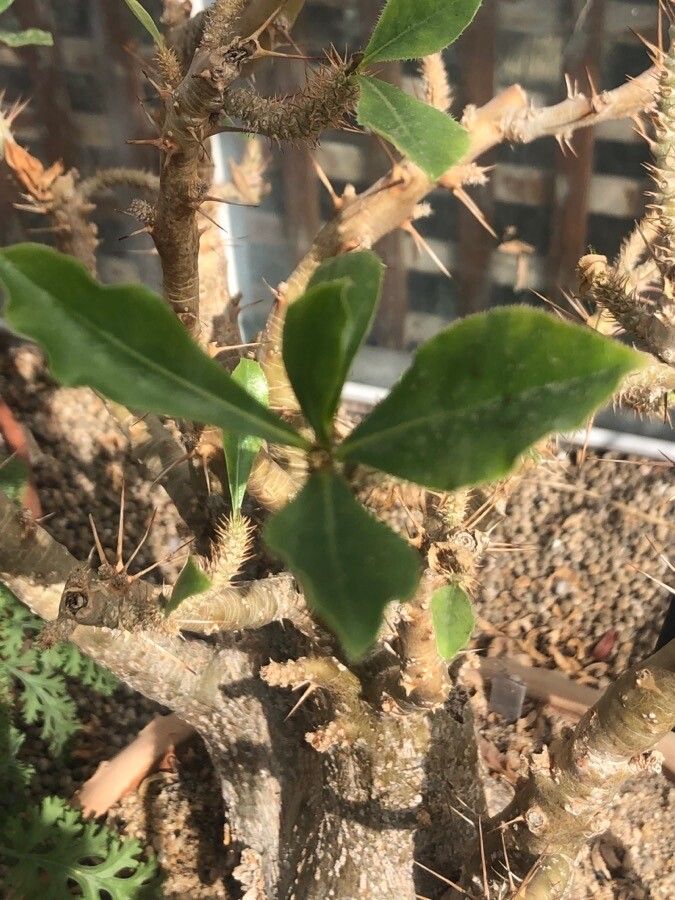
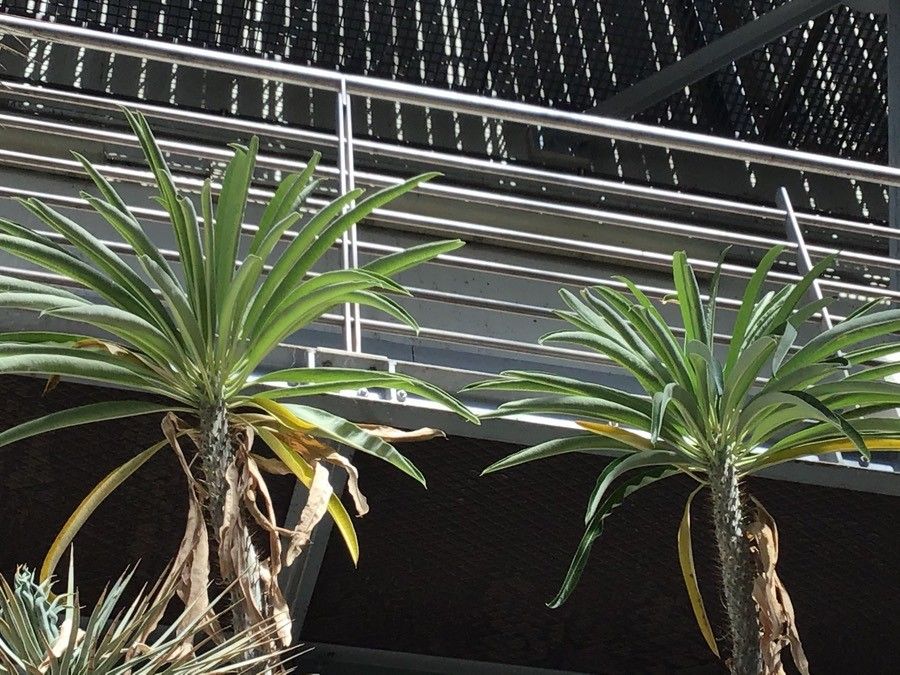
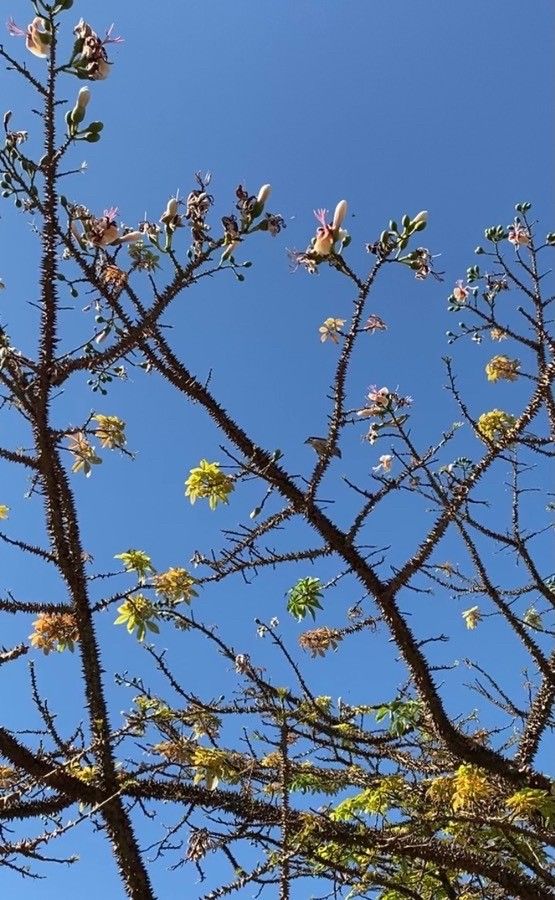
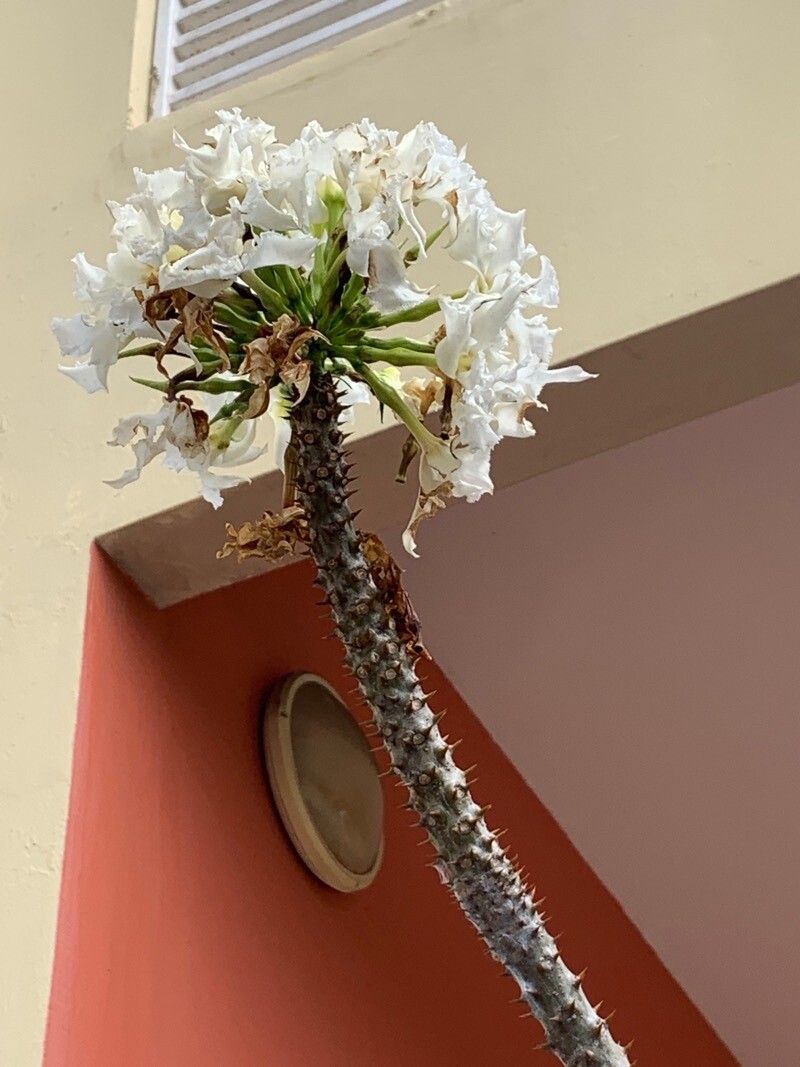
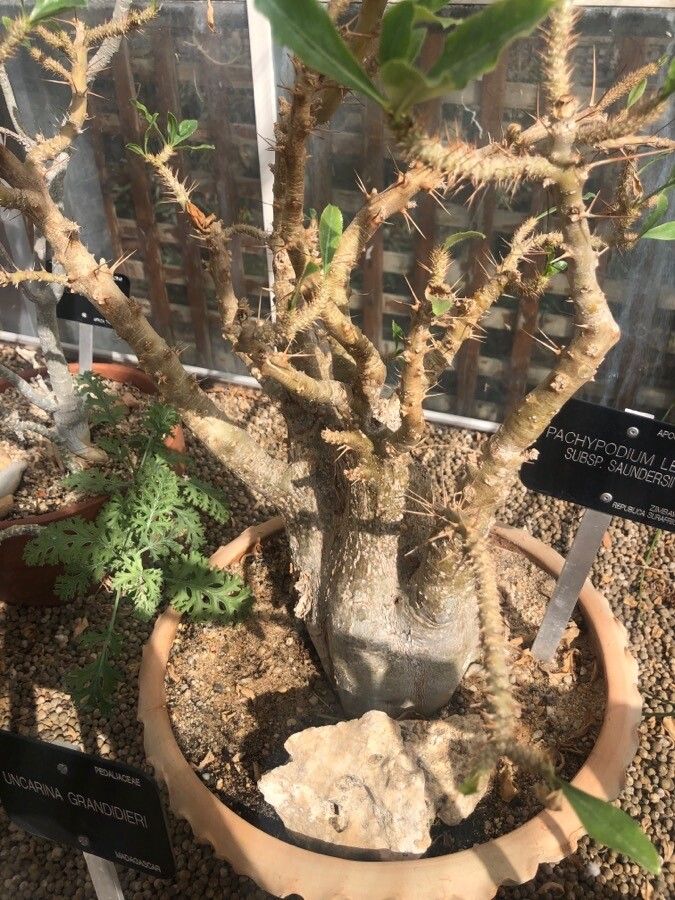
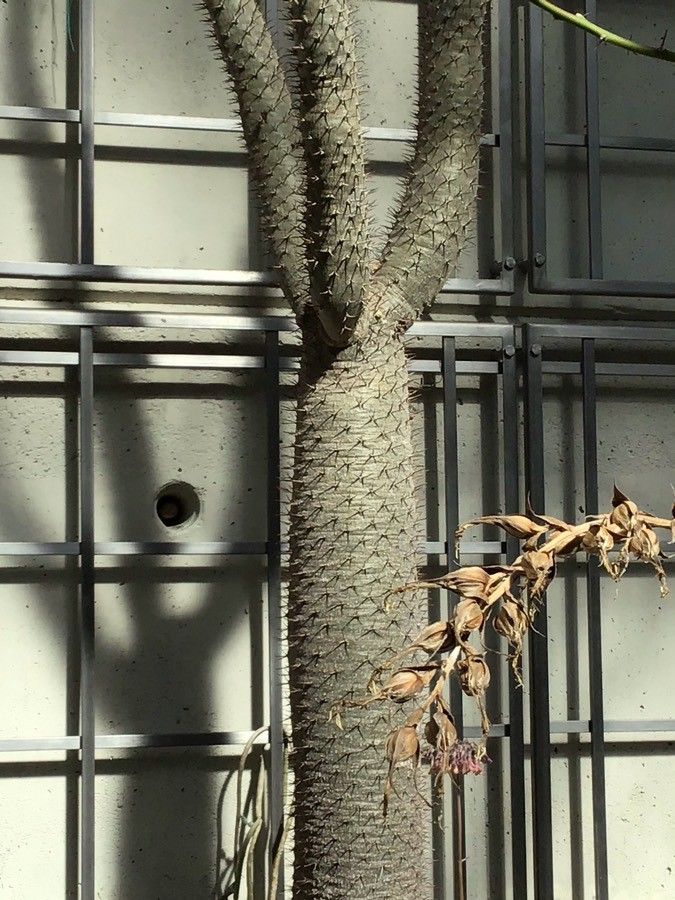
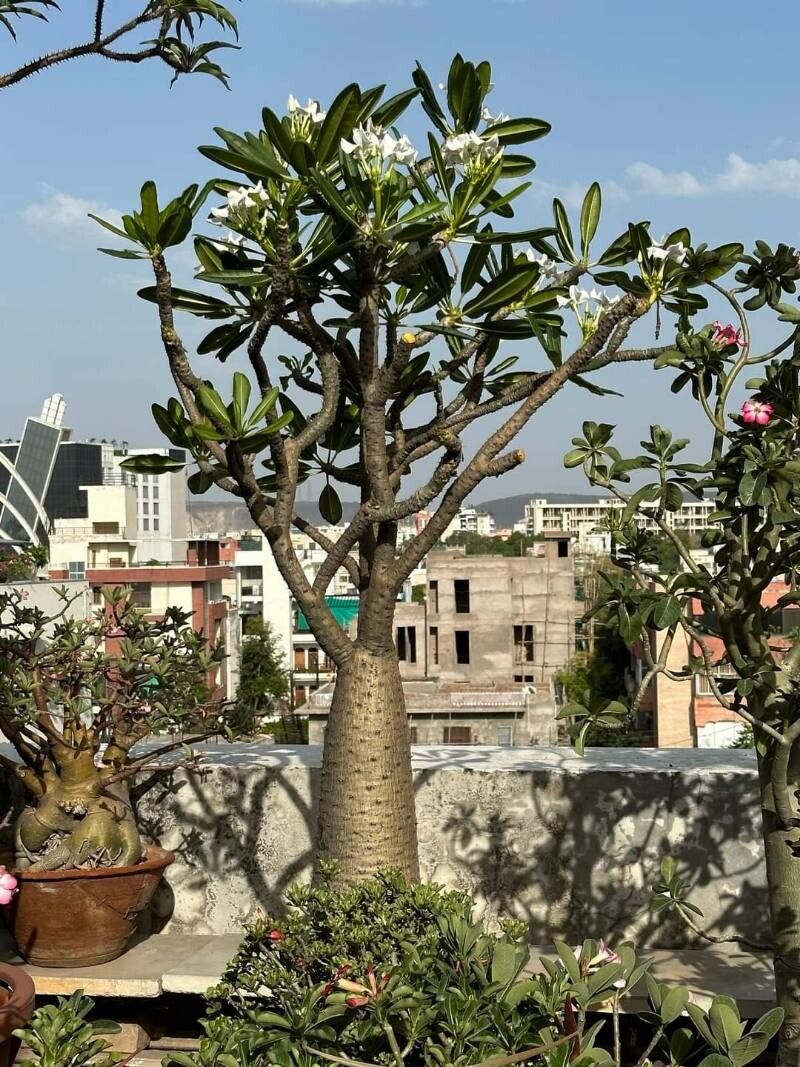
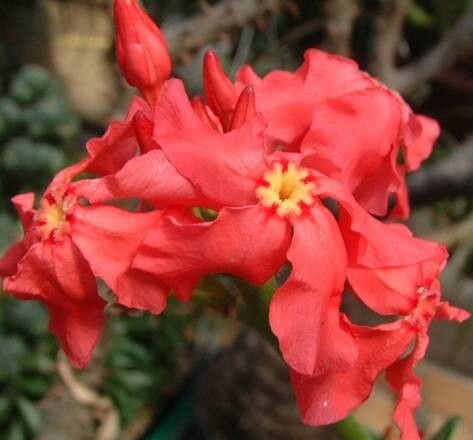
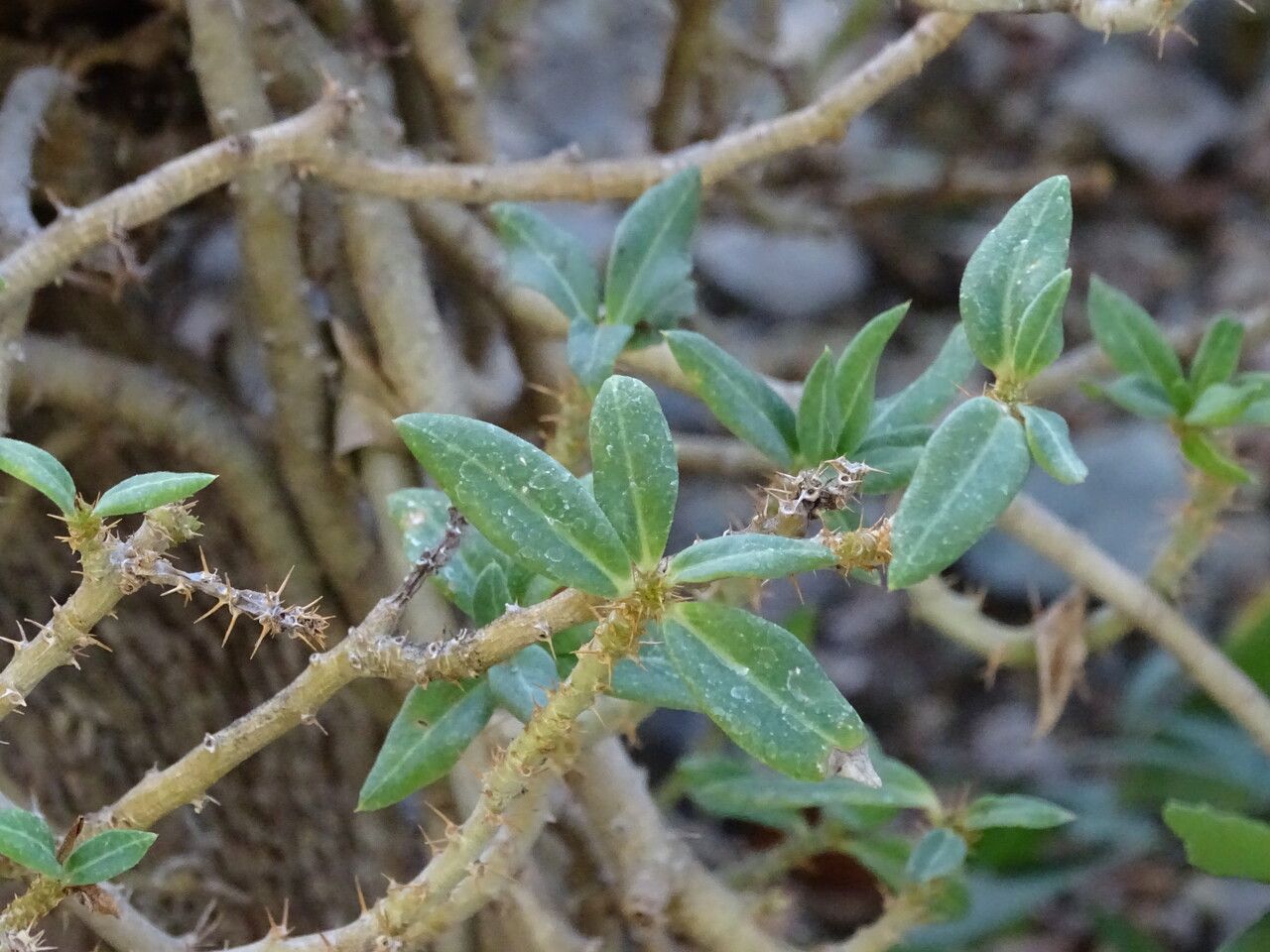
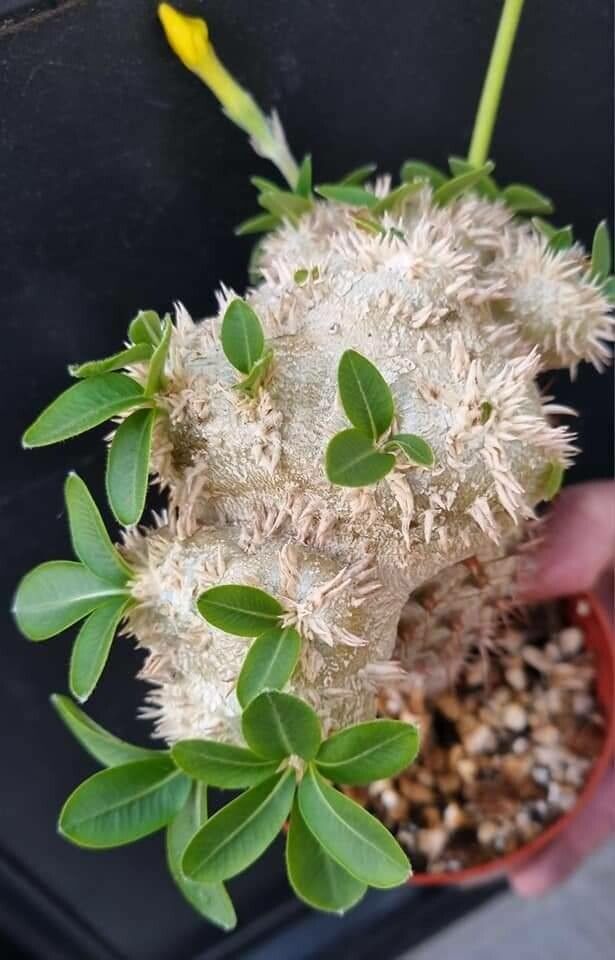
Pachypodium lealii is a succulent plant species that belongs to the family Apocynaceae. Native to Madagascar, it can grow up to 3 meters tall. The plant has a thick, woody stem that stores water, enabling it to survive in arid environments.
The leaves of Pachypodium lealii are long, narrow, and dark green. During the summer months, the plant produces beautiful white flowers with yellow centers.
Pachypodium lealii is often grown as an ornamental plant in gardens and as a houseplant due to its unique appearance. It requires well-draining soil and plenty of sunlight but can also tolerate partial shade.
The species is listed as endangered due to habitat loss caused by deforestation for agricultural purposes in Madagascar. Conservation efforts are underway, supported by organizations such as the IUCN Red List of Threatened Species and local communities who recognize the plant's medicinal value, among other uses.
Overall, Pachypodium lealii is a fascinating succulent that adds beauty wherever it grows while also playing an important role in biodiversity conservation efforts within Madagascar's unique ecosystem.
Bottle tree has moderate disease resistance and is relatively more sensitive to humidity and overwatering. It is also more prone to illness when it receives insufficient light and is overwatered. Regarding care, Bottle tree tolerates drought and can endure extended periods without watering. It requires little fertilizer and only occasional pruning. For these reasons it is suitable for people at any experience level, particularly those who prefer to spend less time on plant care or who may be away from home for long stretches. It’s a good option for anyone who does not want to invest a lot of time in maintenance but still wants an easy-to-care-for plant.
How to keep Pachypodium Lealii.
Light
Originating in arid regions, the bottle tree flourishes in full sun; its native habitat features intense sunlight and minimal shade. It will also tolerate partial sun, giving it some flexibility in its growth.
Water
The Bottle tree, native to arid regions, is highly drought-tolerant and requires watering only once every three weeks. Its succulent structure allows it to store water efficiently, making it an excellent choice for xeriscaping across different climates. Usually grown outdoors because of its size and resilience, the Bottle tree is well-suited to withstand challenging environmental conditions.
Temperature
The bottle tree does best in warm conditions and needs higher temperatures during the growing season to promote growth and metabolism. It prefers plenty of sunlight, proper moisture levels, and good ventilation. However, it can be damaged by excessively low temperatures and by overwatering. It’s important to maintain balance and avoid both overly high temperatures and very dry conditions.
Fertilizer
For a Bottle tree, light applications of fertilizer once or twice a year during the growing season are enough. Do not fertilize in winter or in summer when it is dormant. Cut back on fertilizer for recently repotted plants and wait a couple of months after repotting before feeding. Fertilizing promotes healthy growth and encourages blooms.
Botanical profile.
- Plant Type
- Succulent, Tree
- Life Cycle
- Perennial
- Genus
- Pachypodium
- Family
- Apocynaceae
- Hardiness Zone
- 10-12
- Mature Height
- 91 cm
- Mature Spread
- 49 cm
- Leaf Color
- Green, Dark Green
- Leaf Type
- Deciduous
- Flower Size
- 3.05 cm to 5.08 cm
- Bloom Time
- Fall
- Planting Time
- Spring, Autumn
- Harvest Time
- Late fall, Early winter, Mid winter
- Native Area
- Namibia, Angola, Botswana
Other names.