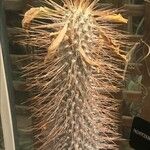
Pachypodium namaquanum
Elephant's Trunk · Cobas tree · Elephant’s trunk
Description
Source: leafsnapPachypodium namaquanum, also known as halfmens or elephants trunk, is a succulent plant of Southern Africa. The genus name Pachypodium is from the Greek for 'thick foot', an allusion to its swollen base, while the species name namaquanum is a reference to Namaqualand.
Care Guide
💧 Water
The elephant's trunk plant thrives in dry regions, showing remarkable tolerance to drought. It only needs to be watered every 2-3 weeks to prevent over-saturation. As a deciduous plant, it sheds its leaves during dry seasons to conserve water, underscoring its adaptation to environments where water is scarce.
☀️ Light Full sun
Originating from dry regions, Elephant's trunk performs best in full sun, as its native habitat has intense sunlight and very little shade. It can also tolerate partial sun, providing some flexibility in its growth.
What are the sunlight requirements for Elephant's trunk plants?
Elephant's trunk, known botanically as Pachypodium namaquanum, thrives in environments that provide full sun, which means they require more than 6 hours of sunlight daily. However, they can also tolerate partial sun, receiving about 3-6 hours of sunlight. These plants originate from open environments such as sunny meadows and forest edges, which offer ample light, allowing them to adapt well to various sunlight conditions. It's essential to watch how sunlight moves through your garden to find spots that offer the perfect balance of light and shade, ensuring the plants' happiness and health.
How can artificial lighting benefit indoor Elephant's trunk plants?
Indoor Elephant's trunk plants require adequate lighting for optimal growth, especially when natural sunlight is insufficient, such as during winter or in less sunny spaces. Artificial lights provide a vital solution by promoting faster, healthier growth. LED lights are a popular choice because they can be customized to provide specific wavelengths of light that plants need. For full sun plants, 30-50W/sq ft of artificial light is needed, while partial sun plants need 20-30W/sq ft, and full shade plants require 10-20W/sq ft. The light source should be placed 12-36 inches above the plant to mimic natural sunlight, and most plants need about 8-12 hours of light per day.
What are common symptoms of light deficiency in Elephant's trunk plants?
Elephant's trunk plants may exhibit several symptoms when they receive insufficient light. These include smaller new leaves compared to mature ones, leggy or sparse growth with longer spaces between leaves or stems, faster leaf drop as the plant conserves resources, halted or delayed growth indicating the plant has entered survival mode, and lighter-colored or irregularly patterned new leaves signifying a lack of chlorophyll and essential nutrients. Addressing these symptoms promptly by adjusting the plant's light exposure is crucial for its health and growth.
What adverse effects can excessive sunlight have on Elephant's trunk plants?
Excessive sunlight can cause several problems for Elephant's trunk plants, including chlorosis, where leaves lose their green color, sunscald resulting in pale or necrotic areas on plant tissue, leaf curling as a defense mechanism to minimize water loss, wilting due to increased water loss through transpiration, and leaf scorching characterized by brown, dry edges on leaves. These symptoms indicate that the plant is receiving too much direct sunlight, and measures should be taken to provide some shade and reduce exposure.
How can you improve light conditions for Elephant's trunk plants?
To optimize growth for Elephant's trunk plants, gradually move them to sunnier locations until they receive at least 6 hours of direct sunlight daily. For indoor plants, use a south-facing window and keep curtains open during the day. Additionally, consider using artificial light sources for at least 8 hours daily. For outdoor plants, avoid sudden changes in light intensity to prevent sunburn. Minimize obstructions like tree branches if they block sunlight, and consider transplanting smaller plants to sunnier spots during their dormant period for ample sunlight and good drainage. Remember, parts of the plant affected by insufficient sunlight might not recover, but new growth will be healthy with proper light exposure.
🌡️ Temperature 20–37.8°C
Although Elephant's trunk can tolerate some heat, it mainly thrives and grows in the cooler months and becomes dormant during summer. In hot summer conditions, provide shade to prevent scorching from strong sunlight. Watering should also be reduced or stopped in the hottest season to avoid root rot. Elephant's trunk shows vigorous growth in winter and spring, and as long as temperatures do not fall too low, it will continue to grow steadily.
What is the common name for Pachypodium namaquanum?
Pachypodium namaquanum is commonly known as Elephant's Trunk.
💨 Humidity
🪴 Soil 6-7
🌱 Fertilizer
For Elephant's trunk, small amounts of fertilizer given 1-2 times a year during the growing season are enough. Do not fertilize in winter or in summer when the plant is dormant. Use less fertilizer for repotted plants and wait a couple of months after repotting before you start feeding. Fertilizing helps maintain healthy growth and promotes flowering.
🪴 Pot & Repot Every 3 years
✂️ Pruning
The Elephant's Trunk plant is characterized by its unique trunk and spiny branches, requiring minimal pruning. It is important to focus on removing any damaged branches and shaping the plant for aesthetic purposes during its dormancy period, which occurs from early to late winter. Use clean tools to prevent infections, and consult reliable horticultural sources for additional care tips.
🌿 Propagating
🐛 Diseases & pets
☠️ Toxicity
Characteristics
- Plant Type
- Shrub, Succulent
- Life Cycle
- Perennial
- Genus
- Pachypodium
- Family
- Apocynaceae
- Hardiness Zone
- 10-11
- Mature Height
- 2.44 m
- Mature Spread
- 46 cm
- Leaf Color
- Green
- Leaf Type
- Evergreen
- Flower Color
- Yellow, Green, Red
- Flower Size
- 3.05 cm to 5.08 cm
- Bloom Time
- Early fall, Mid fall
- Planting Time
- Spring, Summer, Autumn
- Harvest Time
- Late fall, Early winter
- Native Area
- South Africa, Namibia