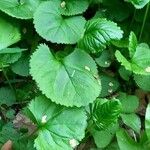
Packera aurea
Golden Groundsel · Golden Ragwort · Golden Squaw-weed · Heart-leaf Groundsel · Liferoot
Description
Source: leafsnapPackera aurea, commonly known as golden ragwort, is a perennial herbaceous plant belonging to the Asteraceae family. Native to North America, it thrives in wetlands, meadows, and along stream banks. The plant can grow up to 2 feet tall and features basal leaves that are heart-shaped with toothed edges. These green leaves have a slightly hairy texture. In the spring, Packera aurea produces clusters of bright yellow flowers on tall stems that rise above the foliage. These daisy-like flowers have yellow petals encircling a central disk of small florets. Native Americans have used the plant for medicinal purposes for centuries. It contains compounds with anti-inflammatory properties, making it useful for treating wounds and skin irritations. Packera aurea is also vital for pollinators like bees and butterflies, which are attracted by its bright yellow, nectar-rich flowers. Overall, Packera aurea is an attractive native plant that adds aesthetic value to gardens and natural areas while serving important ecological functions, such as providing habitat for pollinators.
🌳 Frequently underrated, golden ragwort's versatility reaches beyond its striking look in damp forests. Attractive to certain insects, it acts as a nursery for many moth varieties, nurturing their young. In spring, deer often feed on its foliage. Possibly its most intriguing trait is its role in environmental healing: it tolerates soil pollutants such as zinc and copper, making it an ally in mine spoil restoration efforts.
🎭 Security
Care Guide
💧 Water Every 7 days
Golden ragwort thrives in moist environments and requires consistent hydration to support its growth and lush foliage. Ideally, it should be watered weekly. As an herbaceous perennial, it flourishes outdoors and needs adequate soil moisture to produce vibrant flowers. While it has some drought resistance, it's important to maintain a balance to meet its moisture needs.
How should I water my Golden ragwort?
To properly water the Golden ragwort, it is recommended to use filtered water at room temperature. Tap water may contain harmful particles that can negatively affect the plant's health. It is important to use water that is not too cold, as the Golden ragwort is adapted to warm environments and cold water can be stressful for it. Instead of overhead watering, it is best to apply the filtered room temperature water directly to the soil until it is completely soaked. This method is beneficial as it helps moisten the roots and allows them to spread and absorb the necessary nutrients from the soil.
What should I do if I give too much or too little water to my Golden ragwort?
Overwatering is a common issue that can harm your Golden ragwort. When this happens, the stems and leaves may wilt and turn yellow. Overwatering for a long time can also cause diseases like root rot, mold, and mildew, which can kill the plant. Underwatering is less common, but it can happen. In this case, the leaves become brown and brittle. It's important to notice the signs of overwatering early because some diseases cannot be fixed if you wait too long. If you see these signs, reduce your watering schedule right away and check the soil. If it drains poorly, replace it with a well-draining potting mix. If you notice signs of underwatering, water more regularly until the signs go away.
How often should I give water to my Golden ragwort?
If your Golden ragwort is in a pot, the most precise way to determine if it needs water is by checking the soil moisture. Simply plunge your finger into the soil and if the top two to three inches are dry, then it's time to water it. For those growing Golden ragwort outdoors in the ground, a similar method can be used. When you find that the first few inches of soil have dried out, it's time to give it some water. During the spring and early fall, watering once a week is generally sufficient. However, during extremely hot weather, it may be necessary to water twice or more per week. It's worth mentioning that mature, well-established Golden ragwort plants have a remarkable ability to tolerate drought.
How much water does my Golden ragwort require?
When watering your Golden ragwort, don't be afraid to give it plenty of water. Make sure the top two to three inches of soil are dry before watering, and then give it a thorough watering that saturates the entire soil. You should add enough water that it flows out of the drainage holes at the bottom of the pot. If you don't see any excess water draining, it means you haven't watered enough. However, be careful not to let water accumulate in the soil, as this can harm the plant. If water isn't draining properly, it may indicate poor soil drainage, which is harmful to the plant's health. If the plant is outside, about an inch of rain per week should be enough.
How do I water my Golden ragwort as it grows?
The watering needs of the Golden ragwort can vary depending on its growth stages. In its first few years or after being transplanted, it requires more water than usual because it is focusing on growing new roots to support future growth. These roots need extra moisture. Once it reaches maturity, it requires less water. Additionally, during the bloom period, the Golden ragwort may need more water due to the significant amount of moisture used for flower development.
☀️ Light Full sun
Golden ragwort performs best in full sun but can also tolerate partial sun or full shade. Its native habitats reflect this range of light conditions. Too little light can slow its growth, while too much can impair its vigor.
What are the sunlight requirements for Golden Ragwort?
Golden Ragwort thrives best under full sun conditions, requiring more than 6 hours of sunlight daily. It can also grow in partial sun to full shade areas, where it would receive about 3-6 hours of sunlight. Keeping an eye on the movement of sunlight through your garden allows you to select spots that provide the ideal balance of light and shade, ensuring your plants grow happily and healthily.
How does the natural habitat of Golden Ragwort influence its light needs?
The natural habitats of Golden Ragwort are diverse, varying from full sun exposure to partially sunlit or fully shaded areas. This range demonstrates the plant's adaptability to different amounts of sunlight. In conditions of insufficient light, Golden Ragwort may experience slower growth, while excessive light can harm the plant's vitality. To mitigate light variations indoors, particularly in less sunny spaces or during winter, artificial lighting can be utilized to provide optimal growth conditions. LED lights are commonly used, with suggested intensities of 30-50W/sq ft for full sun plants, 20-30W/sq ft for partial sun, and 10-20W/sq ft for full shade plants.
What are the signs of improper lighting on Golden Ragwort?
When Golden Ragwort does not receive adequate lighting, several symptoms may appear. These include smaller new leaves, leggy or sparse growth due to stretched stems and leaves, premature leaf drop to conserve resources, delayed or halted growth, and symptoms of excessive light exposure like chlorosis, sunscald, leaf curling, wilting, and leaf scorching. Indoor solutions include gradually moving the plant to sunnier locations, ensuring at least 6 hours of direct sunlight daily, or using artificial light. For outdoor plants, avoid sudden changes in light exposure to prevent sunburn. Observe and reduce obstructions in the plant's environment to improve light access.
🌡️ Temperature 0–32.2°C
Golden ragwort does best in temperatures of 32 to 90 ℉ (0 to 32℃). It is usually found in temperate regions, though it can also grow in warmer areas. In cooler seasons, be sure the plant is not exposed to temperatures below freezing, because that can damage the foliage.
What are the essential care requirements for Golden Ragwort?
Golden Ragwort thrives in temperatures ranging from 32 to 90 °F (0 to 32°C), making it well-suited for temperate climates as well as warmer environments. Despite its strong cold resistance, care should be taken to prevent exposure to temperatures below freezing to avoid foliage damage. During colder seasons, if temperatures are expected to drop significantly, providing cold protection by covering the plant with soil or straw is advisable. Additionally, watering the plant abundantly before the first freeze of autumn to keep the soil moist is recommended. This preparation helps prevent drought and water scarcity during winter and early spring.
How does low temperature affect Golden Ragwort, and what are the solutions?
Golden Ragwort is quite cold-tolerant, preferring temperatures to remain above a certain minimum threshold during winter to ensure its survival and growth. If temperatures fall below this threshold, the plant may not show immediate distress, but there could be a noticeable decrease in sprouting or even a complete lack of sprouting come springtime. The solution for any parts of the plant that have failed to sprout due to low temperature exposure is simply to remove those parts in the spring.
What impact does high temperature have on Golden Ragwort, and how can these issues be mitigated?
During the summer, it's important to ensure that the temperatures surrounding Golden Ragwort do not exceed a certain maximum, as excessively high temperatures can cause the leaves to lighten in color, curl, become prone to sunburn, and, in severe cases, lead to the wilting and drying of the entire plant. To mitigate these issues, trim away the sunburned and dried-up parts of the plant. Moving the plant to a shaded location or using a shade cloth can protect it from the harsh midday and afternoon sun. Additionally, watering the plant in the morning and evening will help keep the soil moist and further protect the plant from high temperature stress.
💨 Humidity
🪴 Soil 5-6
🌱 Fertilizer
Usually one fertilizer application in spring is enough for Golden ragwort, although multiple feedings can maximize its growth. Feed every month to six weeks. Fertilizing improves the leaves' appearance and function, helping maintain even color and a healthy texture. It also promotes root development and nutrient uptake for the plant's long-term health.
🪴 Pot & Repot
✂️ Pruning
Golden ragwort is a plant with yellow flowers that thrives in damp, shaded areas. For the best results, prune it from early to late spring after it has bloomed. This will encourage healthy growth, improve air circulation, and enhance the quality of the blooms. Be sure to remove spent flowers and damaged stems to control its spread. If you have any questions or want more detailed advice, consult horticultural experts for optimal care.
🌿 Propagating
🐛 Diseases & pets
☠️ Toxicity
Characteristics
- Plant Type
- Herb
- Life Cycle
- Perennial
- Genus
- Packera
- Family
- Asteraceae
- Hardiness Zone
- 3-8
- Mature Height
- 30 cm to 61 cm
- Mature Spread
- 15 cm to 46 cm
- Leaf Color
- Green
- Leaf Type
- Semi-evergreen, Evergreen
- Flower Color
- Yellow
- Flower Size
- 2.54 cm
- Bloom Time
- Mid spring, Late spring, Early summer
- Planting Time
- Spring
- Harvest Time
- Early summer, Mid summer