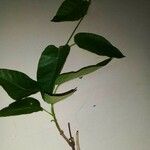
Paederia foetida
Skunkvine · Stinkvine · Chinese fever vine · Chinese moon creeper · Lesser Malayan stinkwort
Description
Source: leafsnapPaederia foetida, commonly known as skunk vine or stink vine, is a perennial plant belonging to the Rubiaceae family. Native to Southeast Asia, it thrives in tropical and subtropical regions. The plant emits a strong odor reminiscent of skunk or garlic, which is how it earned its common names. The leaves of Paederia foetida are opposite, simple, and have a glossy texture. Its small, white flowers, each with four petals, cluster at the ends of branches. The fruit is a small capsule containing numerous seeds. Used for centuries in traditional medicine, Paederia foetida is valued for its anti-inflammatory, analgesic, and antipyretic properties. Additionally, it contains compounds with demonstrated anti-cancer properties. However, the plant can become invasive if not properly controlled, as it spreads through underground rhizomes or seed dispersal via birds and animals that consume its fruit. Despite its less than pleasant odor, Paederia foetida offers notable medicinal potential and makes for an intriguing addition to any garden due to its unique characteristics.
🌳 Known for its striking two-toned flowers and strong, unpleasant-smelling leaves, stinkvine was a popular addition to U.S. gardens in the 19th century due to its vigorous growth. However, it has proven to be potentially damaging and invasive. The plant spreads quickly, covers large areas, and can kill the trees it uses for support. For these reasons, stinkvine is not recommended for landscaping outside its native range—and even within its native habitat, it can behave like a weed. If you spot stinkvine on your property, it's best to remove it promptly to prevent further issues.
🎭 Inebriating,
Care Guide
💧 Water Every 7 days
Stinkvine, native to tropical rainforests, thrives in high humidity and requires regular weekly watering to mimic its natural environment. Although it prefers consistent moisture, it can withstand short periods of dryness. Ideally suited for outdoor growth, stinkvine benefits from natural rainfall and well-draining soil.
How should I water my Stinkvine plant?
To properly water the Stinkvine plant, it is best to use filtered water at room temperature or slightly warmer. Tap water may contain harmful particles, so filtering is important. The Stinkvine plant prefers water that is not too cold, as it is native to warmer climates and cold water can be stressful for it. It is also advised to avoid watering the foliage from above, as this can cause issues. Instead, it is recommended to water the soil directly until it is completely soaked. This helps to moisturize the roots and promote their growth, allowing them to absorb essential nutrients from the soil.
What should I do if I give my Stinkvine plant too much or too little water?
Overwatering and underwatering can harm your Stinkvine plant, but overwatering is more common. When your Stinkvine gets too much water, its stems and leaves may wilt and turn yellow. Overwatering for a long time can also cause root rot, mold, and mildew, which can kill the plant. Underwatering is less likely since the Stinkvine can tolerate drought, but it can still happen. When underwatering occurs, the leaves may become brittle and brown. It is important to spot signs of overwatering early when caring for your Stinkvine. Diseases like root rot may not be fixable if you wait too long. If you see early signs of overwatering, reduce watering immediately. Check the soil quality too. If the soil doesn't drain well, replace it with loose and well-draining potting mix. If you notice signs of underwatering, increase watering until the signs go away.
How much should I water my Stinkvine?
If you have a potted Stinkvine plant, the most accurate way to determine if it needs water is to put your finger in the soil. If the top two to three inches of soil are dry, then it's time to add water. The same method can be used for Stinkvine plants grown outdoors in the ground. When the top few inches of soil have dried out, it's time to water them. Typically, during the spring and early fall, watering once a week is sufficient. However, in extremely hot weather, you may need to water twice a week or even more. It's worth noting that mature and well-established Stinkvine plants have a remarkable ability to withstand drought.
How much water does my Stinkvine plant require?
When watering your Stinkvine, don't hold back on the amount of water you give. Make sure the top two to three inches of soil are dry before watering, and then provide a thorough watering to fully saturate the soil. You should add enough water that it flows out of the drainage holes at the bottom of the pot. If you don't see any excess water draining, it means you haven't given enough water. However, be careful not to let water accumulate in the soil, as this can be harmful to the plant. On the other hand, if water does not drain properly from the pot, it could mean that the soil is not draining well, which is not good for the plant's health. If the plant is outdoors, it should receive about 1 inch of rain per week, which will be enough for its needs.
How do I water my Stinkvine at different times as it grows?
The water needs of the Stinkvine can vary depending on its growth stages. When the Stinkvine is young or has just been transplanted, it requires more water than usual because it is focusing on growing new roots. These roots need extra moisture to support future growth. As the Stinkvine matures, it will require less water. Another stage that may require additional water is during the bloom period, as the development of flowers uses up a lot of moisture. Therefore, it is important to provide adequate water during this time.
☀️ Light Full sun
Stinkvine does best with full sun, although it can tolerate a little shade. It comes from and thrives in habitats with plentiful sunlight; both too much and too little light can impede its healthy growth. Throughout its growth cycle it prefers an adequate supply of sunlight.
What are the sun requirements for Stinkvine?
Stinkvine requires full sun exposure, which means it needs above 6 hours of sunlight daily to thrive optimally. However, it can also manage growth with partial sun, about 3-6 hours of sunlight a day. It's essential to observe how sunlight moves through your garden to choose spots that offer the right balance of light and shade for your plants, ensuring they grow healthy and happy.
How important is sunlight for the growth of Stinkvine?
Sunlight is crucial for the growth of Stinkvine, as it thrives best under maximum sun exposure. Originating from environments rich in sunlight, Stinkvine needs adequate solar energy throughout its growth cycle for healthy development. Both overexposure and underexposure to sunlight may inhibit its growth. In less sunny spaces or during winter, artificial lighting can be used to supplement natural sunlight, ensuring optimal growth.
What artificial lighting requirements do indoor Stinkvine plants have?
For indoor Stinkvine plants where natural sunlight is insufficient, especially during winter or in less sunny spaces, artificial lighting offers a vital solution. LED lights are recommended as they can provide the specific wavelengths needed by the plants. Full sun plants need 30-50W/sq ft, partial sun plants need 20-30W/sq ft, and full shade plants need 10-20W/sq ft of artificial light. The light source should be placed 12-36 inches above the plant, mimicking natural sunlight, for about 8-12 hours per day.
What are the symptoms of light deficiency in Stinkvine?
Symptoms of light deficiency in Stinkvine include smaller new leaves, leggy or sparse growth, faster leaf drop, slower or no new growth, lighter-colored new leaves, and conditions like chlorosis, sunscald, leaf curling, wilting, and leaf scorching. These signs indicate that the plant is not receiving adequate sunlight, leading to various growth issues and health problems.
What solutions are available for light deficiency in Stinkvine?
To address light deficiency in Stinkvine, gradually move the plants to a sunnier location until they receive at least 6 hours of direct sunlight daily. Indoor plants can benefit from artificial light, keeping a lamp on for at least 8 hours daily or using professional grow lights. Outdoors, adapt plants to sunlight by moving them gradually to the best spot and avoid sudden changes in light intensity. Reduce obstructions such as branches or leaves to allow more sunlight, and for smaller plants, consider transplanting during the dormant period to a location with adequate sunlight and good drainage.
🌡️ Temperature 10–37.8°C
Stinkvine is best adapted to areas where temperatures fall between 50 and 100 °F (10 to 38 ℃). Native to temperate zones, it favors cooler conditions but is able to tolerate heat.
What is the ideal temperature range for growing Stinkvine?
Stinkvine, also known as Paederia foetida, thrives best in temperature ranges between 50 to 100 °F (10 to 38 °C). Originating from temperate regions, it prefers cooler climates but is capable of tolerating higher temperatures as well. This plant has a strong resistance to cold, meaning special frost protection measures are not usually required during winter. Nonetheless, in situations where temperatures are anticipated to drop below -25°C, protective measures should be taken, such as covering the plant with soil or straw to insulate it. Additionally, watering the plant abundantly before the first freeze in autumn is recommended to keep the soil moist and reduce the risk of drought and water shortage during the colder months.
How does Stinkvine react to low temperatures?
Stinkvine is notably cold-tolerant and ideally should be exposed to temperatures above 10°C. During the winter season, ensuring the temperature stays above -15°C is advisable. If the temperature plunges below -25°C, while there may be no immediate visible effects during winter, you may observe a decrease in sprouting, or in some cases, no sprouting at all come spring. To counteract this, any parts of the plant that have failed to sprout in spring should be removed. This care helps in maintaining the health and vitality of the Stinkvine.
How should Stinkvine be cared for during high temperatures?
In the warmer months, it is crucial to ensure that Stinkvine's exposure to temperatures remains below 38°C. Should the temperatures soar above 43°C, the plant may exhibit signs of stress such as leaves becoming lighter in color, curling, susceptibility to sunburn, or in severe cases, the entire plant might wilt and dry out. To mitigate these issues, sunburned and dried-up portions of the plant should be trimmed away. Moving the plant to a shaded location or using a shade cloth can provide protection against the harsh midday and afternoon sun. Additionally, watering the plant in the morning and evening can help in keeping the soil consistently moist, aiding in the plant's overall health during high-temperature periods.
💨 Humidity
🪴 Soil 5-7
🌱 Fertilizer
Usually a single fertilizer application in spring is enough for Stinkvine, though repeated feedings can maximize growth. Feed every month to six weeks. Fertilizing improves leaf appearance and function, helping maintain even color and a healthy texture. It also encourages root development and nutrient uptake, supporting long-term plant health.
Why should I put fertilizer on my Stinkvine?
The main structure of the Stinkvine is made up of its leaves. Fertilization is essential for maintaining healthy and vibrant leaves. It not only improves the appearance of the leaves, but also supports their function. Proper fertilization ensures consistent leaf color and a healthy texture. Additionally, fertilization benefits the Stinkvine below the surface by promoting the growth of new roots and maintaining existing ones. This not only keeps the plant healthy in the present, but also enhances its ability to absorb soil nutrients in the future.
When should I fertilize my Stinkvine for optimal growth?
If you grow your Stinkvine outdoors each year, in early spring, new growth will shoot out. This is a sign that it's time to start fertilizing for the year. Usually, a single application of fertilizer in the spring is enough for a Stinkvine to do well. But if you want maximum growth, you can fertilize multiple times throughout the spring and early summer. In this case, you should feed your Stinkvine about once every month to a month and a half.
When is it best to not put fertilizer on my Stinkvine?
During the late fall and winter, your Stinkvine will go into a dormant phase and stop producing new growth. Therefore, you should avoid fertilizing it during this time. In the spring and summer, if you decide to fertilize, gradually reduce the frequency as summer approaches because the growth rate of the Stinkvine will slow down. In general, it is not advisable to fertilize the Stinkvine when the weather is extremely hot or the soil is very dry as it can stress the plant and cause it to die prematurely.
What kind of fertilizer does my Stinkvine plant need?
Choosing the best fertilizer for a Stinkvine is luckily a simple task. These plants thrive on a garden fertilizer with equal amounts of nitrogen, phosphorus, and potassium. A fertilizer with a ratio like 10-10-10 will work well. Avoid fertilizers with high nitrogen levels when unsure. The best fertilizers for a Stinkvine usually come as slow-release granules, making them easy to apply to the soil. Additionally, using organic soil amendments like compost can be beneficial for feeding your Stinkvine.
How do I make my Stinkvine plant grow better?
1. Wait for your Stinkvine to poke its first leaves through the soil in early spring. 2. Once the leaves are visible, apply a granular slow-release fertilizer with a balanced formula to the soil around the base of your Stinkvine. 3. You can repeat this process later in the season if desired. 4. When reapplying fertilizer, ensure it goes into the soil at the base of the plant, not onto the plant itself. Move any leaves that may be blocking access to the soil. 5. It's a good idea to water your Stinkvine before and after fertilizing.
🪴 Pot & Repot
✂️ Pruning
🌿 Propagating
🐛 Diseases & pets
☠️ Toxicity
Characteristics
- Plant Type
- Herb, Vine
- Life Cycle
- Perennial
- Genus
- Paederia
- Family
- Rubiaceae
- Hardiness Zone
- 6-12
- Mature Height
- 7.62 m to 9.14 m
- Mature Spread
- 2.13 m to 7.01 m
- Leaf Color
- Green
- Leaf Type
- Evergreen, Deciduous
- Flower Color
- White
- Flower Size
- 2.54 cm to 5.08 cm
- Bloom Time
- Late spring, Early summer, Mid summer
- Planting Time
- Spring, Summer, Autumn
- Harvest Time
- Mid summer, Late summer, Early fall
- Native Area
- Nepal, Sri Lanka, India, Malaysia, Philippines, Bangladesh, Laos, Brunei, Indonesia, Cambodia, Vietnam, Myanmar, Japan, Koppen, Bhutan, Singapore, South Korea, Thailand