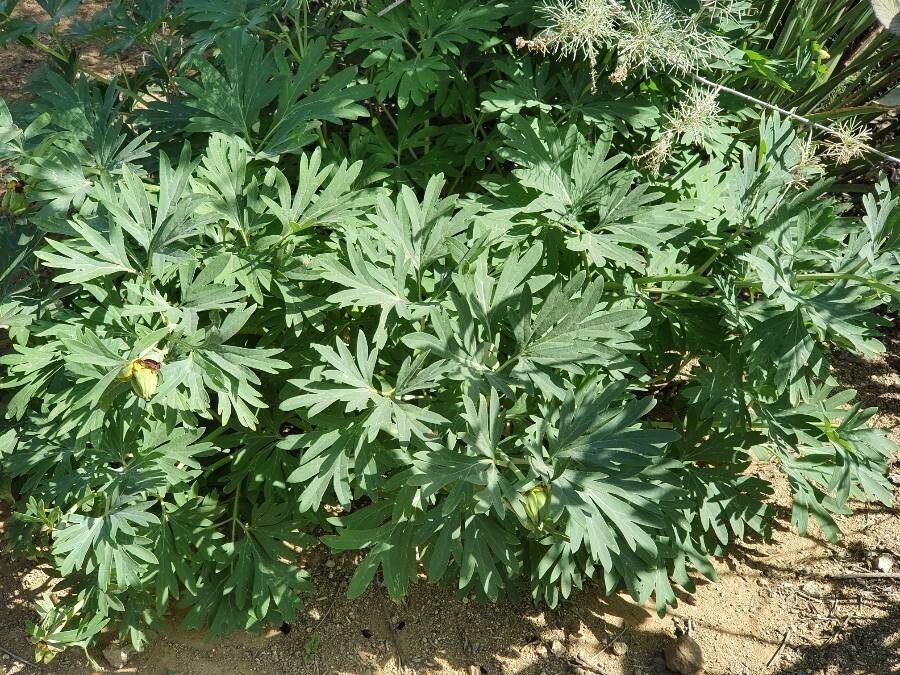
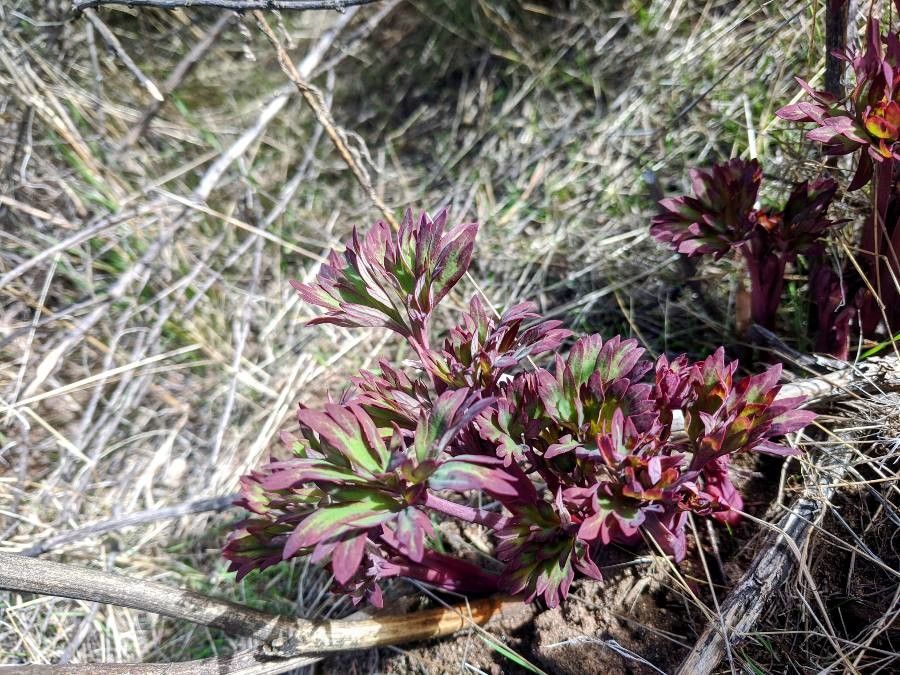
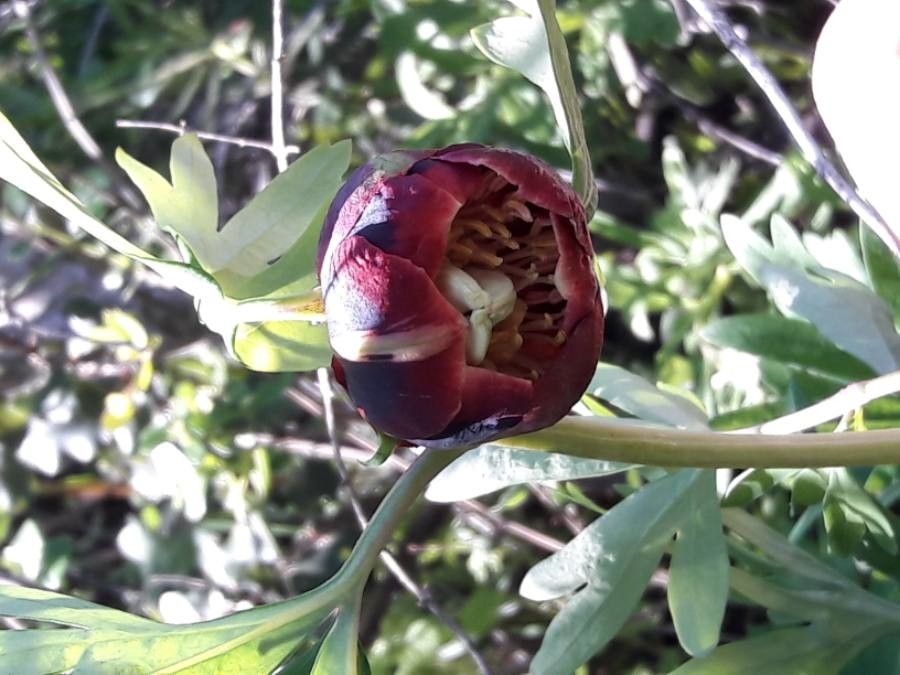
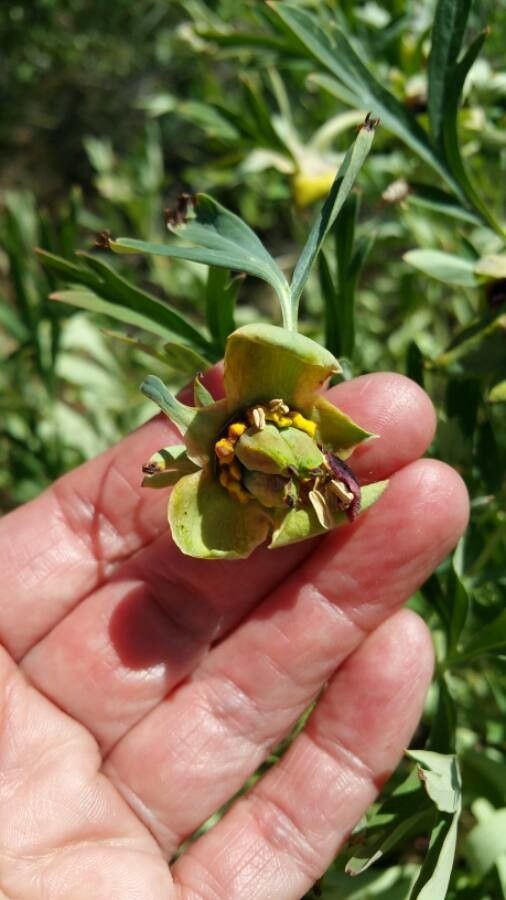
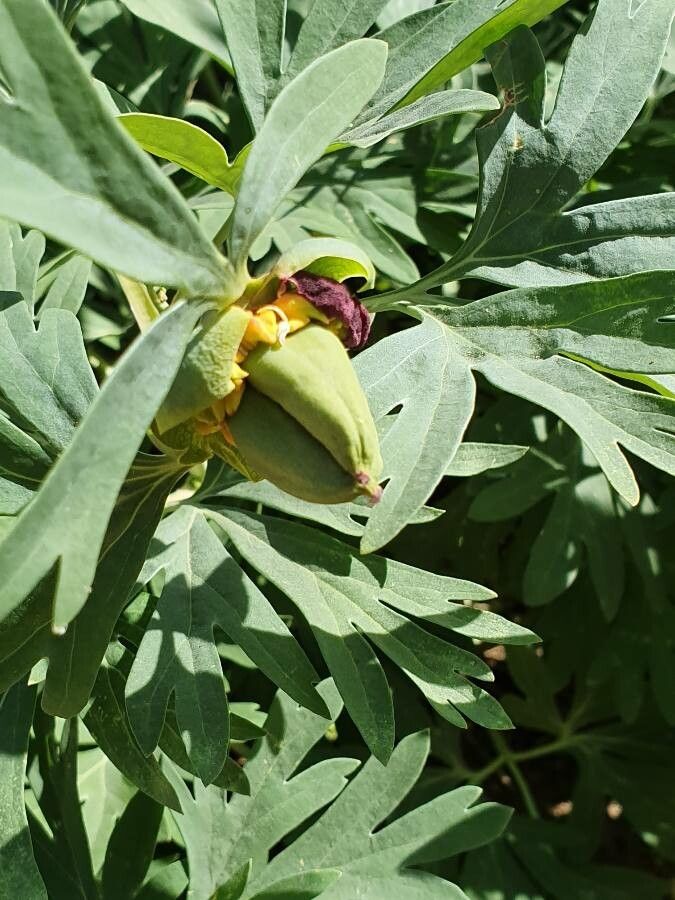
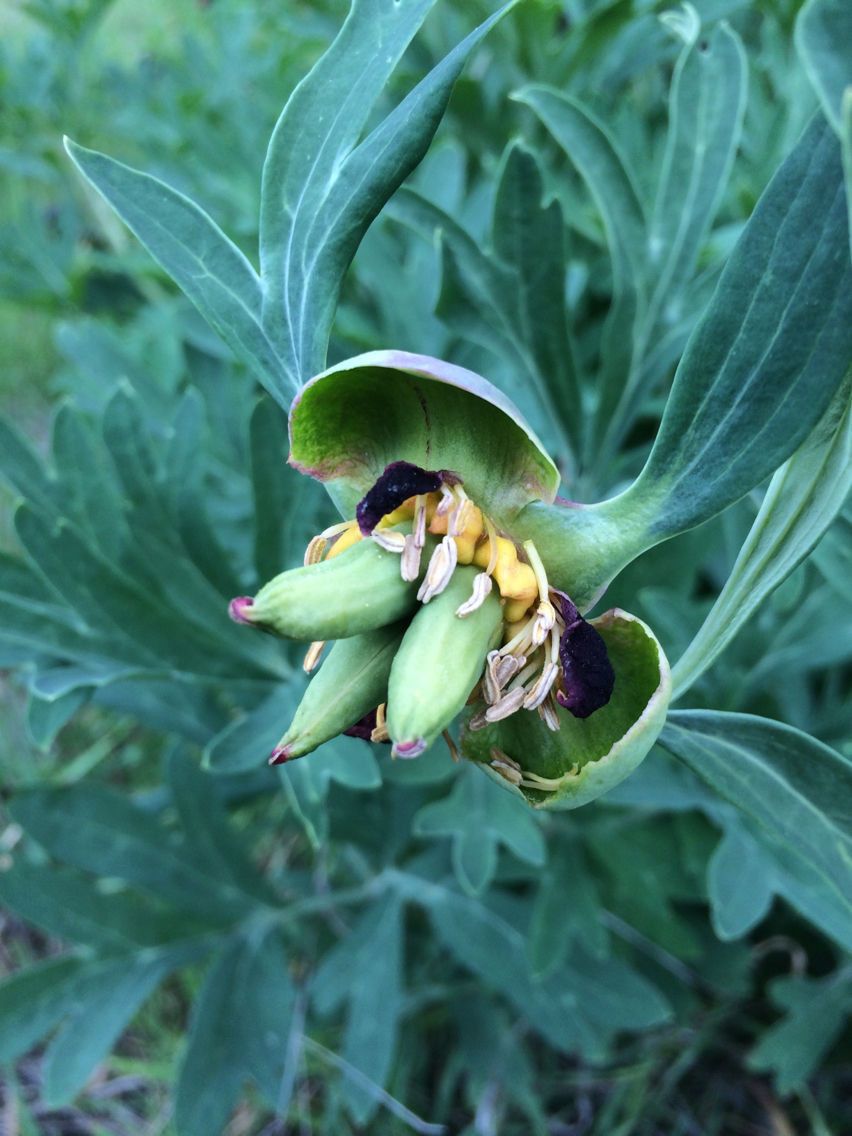
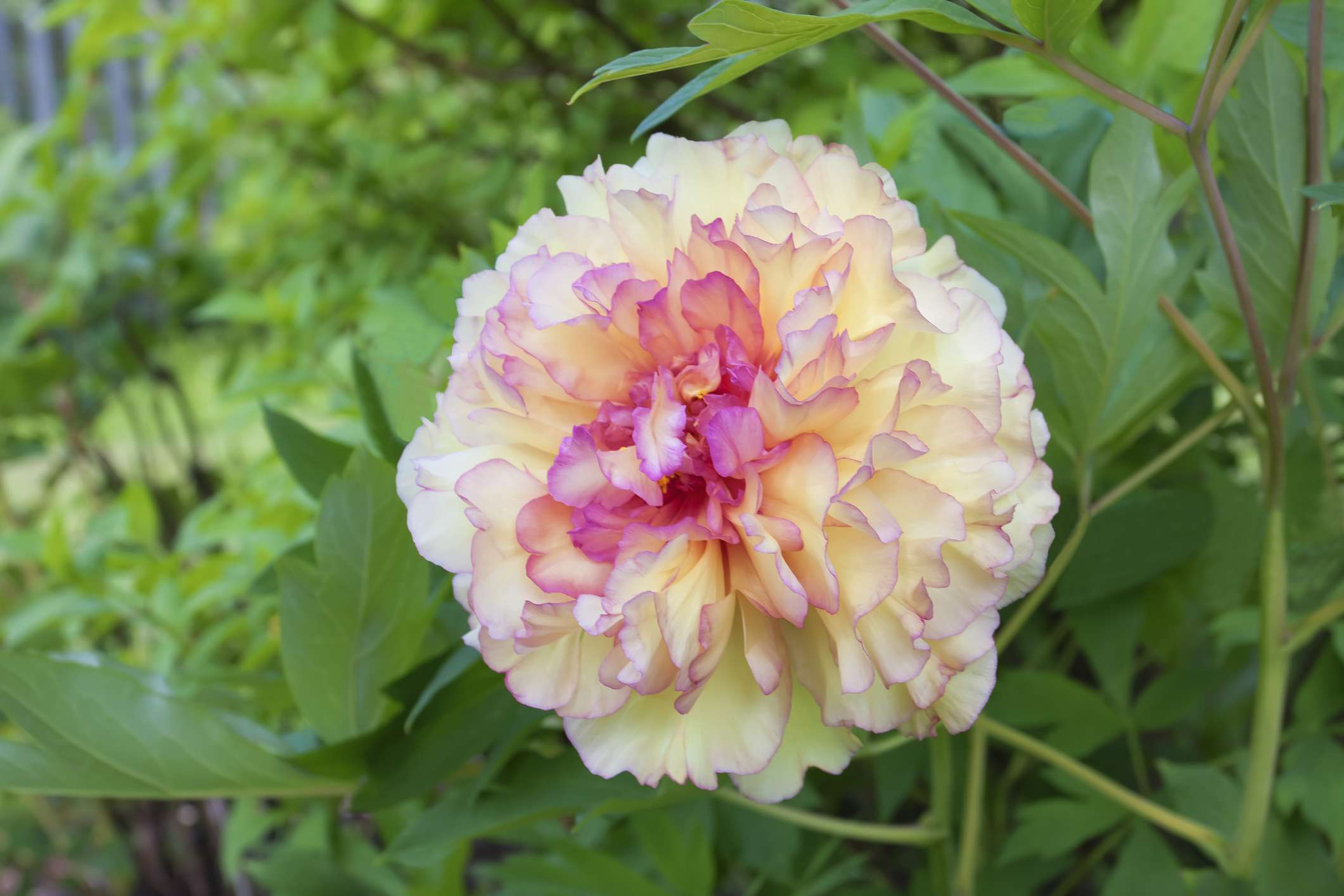
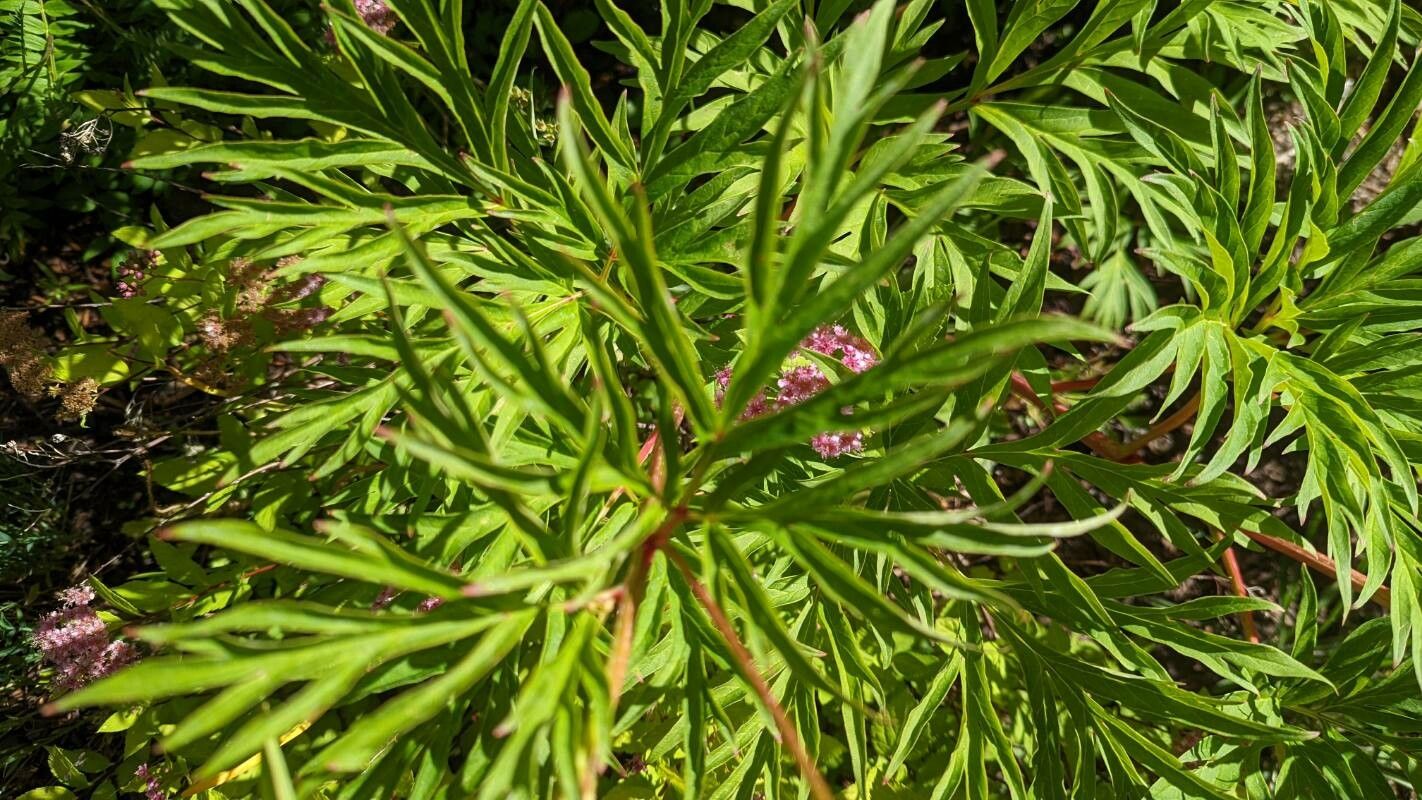
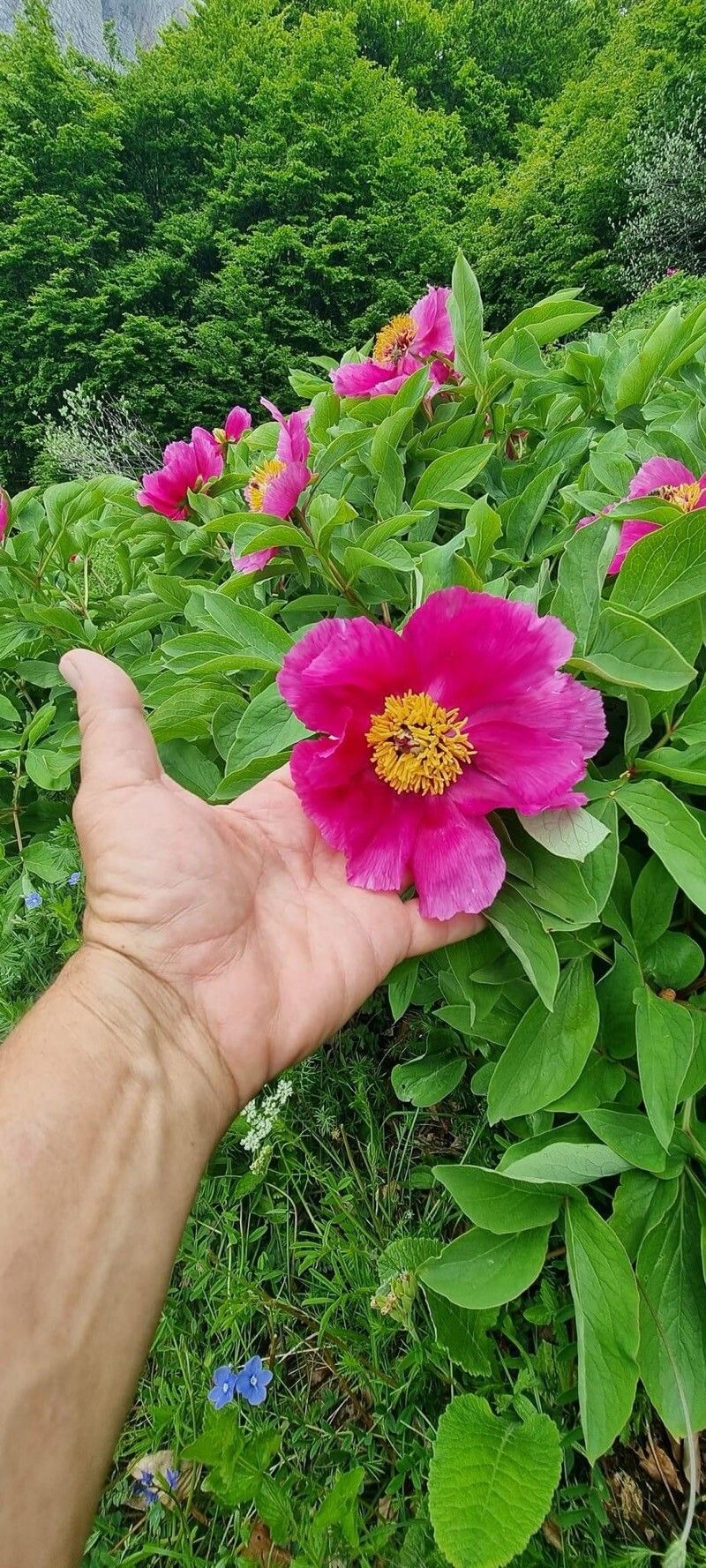
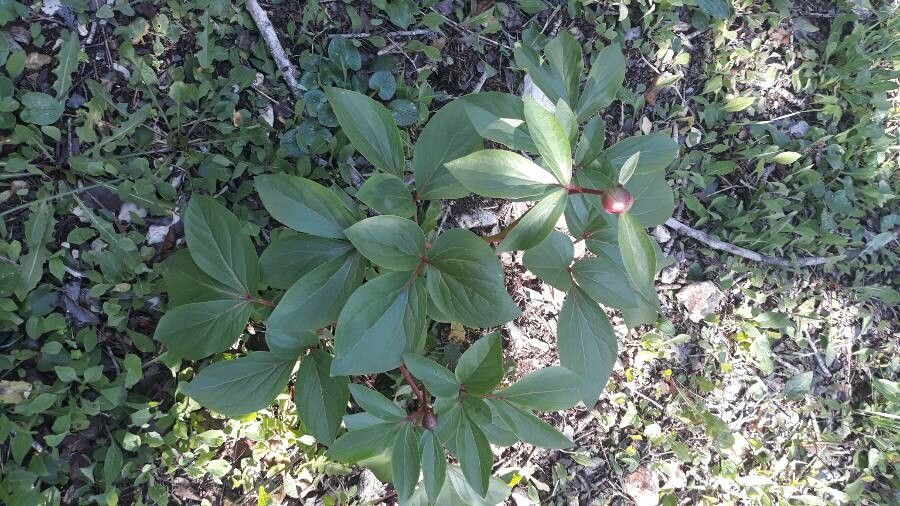
Paeonia californica is a perennial herbaceous plant of 35–70 cm high, that retreats underground in summer, and reoccurs with the arrival of the winter rains. It has lobed leaves, elliptic (cup-shaped) drooping flowers with dark maroon-colored petals, and many yellow anthers. It flowers mostly from January to March (or sometimes as early as December or as late as May), and later develops two to five fruits per flower. Its common name is California peony and it is sometimes also referred to as wild peony. This peony is an endemic of southwestern California (USA), where it is not rare, and northernmost Baja California (Mexico). It grows on dry hillsides in the coastal sage scrub and chaparral communities of the coastal mountains of Southern and Central California, often as an understory plant. It is sometimes considered a subspecies of the other Paeonia species native to North America, Paeonia brownii.
California Peony is fairly disease-resistant and typically not prone to illnesses. Still, it can be affected by pests and diseases present in its environment. Such infections are usually mild. Regarding care, this plant needs moderate maintenance. Regular pruning is necessary to keep a neat appearance and encourage healthy growth. Applying fertilizer can also help promote flowering. California Peony is suitable for anyone with an outdoor area, such as a garden or patio, and doesn't require much gardening experience. It may need more attention when grown indoors.
How to keep Paeonia Californica.
Light
The California peony grows best when it receives abundant sunlight. Not enough light harms its healthy development, causing slow growth and poor-quality blooms. While the plant generally tolerates sun exposure, too much can scorch its leaves. Its native habitat's conditions have shaped it to prefer plentiful daylight.
Water
The California Peony thrives in chaparral ecosystems and is moderately drought-tolerant. For optimal growth, water it weekly. As a seasonal outdoor plant, it conserves water during its dormancy period following flowering, making it well-suited to its native Mediterranean-like climate.
Temperature
California Peony is native to areas with mild temperatures, preferring a range of 41 to 95 °F (5 to 35 ℃). During extreme weather, it is recommended to adjust its surrounding temperature to keep it within that preferred range.
Fertilizer
The best time to fertilize a California Peony is in early spring as it comes out of dormancy and begins active growth. Fertilization supplies essential nutrients needed for healthy development. Although California Peony has fairly low fertilizer requirements, giving it fertilizer annually can improve its survival and encourage better, longer-lasting blooms.
Pruning
To help California Peony flourish, prune the plant in early spring. This involves cutting back dead stems to encourage healthy growth and vibrant blooms. You can trim up to one-third of the plant to maintain its shape. Always use clean, sharp tools to prevent disease, which will support robust growth and increase flower production, resulting in a vibrant display.
Pot & Repot
The California Peony needs excellent drainage when grown in pots to thrive. Proper drainage is essential to prevent root rot and support healthy growth.
Botanical profile.
- Plant Type
- Herb
- Life Cycle
- Perennial
- Genus
- Paeonia
- Family
- Paeoniaceae
- Hardiness Zone
- 5-9
- Mature Height
- 10 cm to 49 cm
- Mature Spread
- 30 cm to 49 cm
- Leaf Color
- Dark Green
- Leaf Type
- Deciduous
- Flower Color
- Pink
- Flower Size
- 3.81 cm
- Bloom Time
- Early spring, Mid spring
- Planting Time
- Spring, Autumn
- Harvest Time
- Late spring, Early summer
- Native Area
- Mexico
Other names.
Reader questions.
How should I water my California Peony?
To properly water the California Peony, it's best to use filtered water at room temperature. Filtered water is preferable because tap water may contain harmful particles. The water should be at room temperature or slightly warmer because the California Peony is accustomed to a warm environment, and cold water can be a shock to its system. Avoid overhead watering, as it can lead to problems with the foliage. Instead, water the plant by applying filtered room temperature water directly to the soil until it is completely soaked. This method benefits the plant by moisturizing the roots and aiding their spread through the soil to collect necessary nutrients.
What are the sunlight requirements for the California Peony?
The California Peony requires full sun exposure, meaning it should receive more than 6 hours of sunlight daily, but it can also tolerate partial sun, which amounts to about 3-6 hours of sunlight. It's essential to observe how sunlight moves through your garden to ensure that you're providing the ideal balance of light and shade, which is crucial for the plant's happiness and vigorous growth.
What is the ideal temperature range for growing California Peony?
The California Peony thrives in moderate climates, with an ideal temperature range between 41 to 95 °F (5 to 35 °C). This plant exhibits strong cold resistance, indicating that special frost protection measures are typically unnecessary. However, it is crucial to ensure the ambient temperature is moderated to fall within its preferred range, especially during extreme weather conditions.
What should I do if I give too much or too little water to my California Peony?
It's important to avoid both overwatering and underwatering your California Peony, but overwatering is more common and damaging. Overwatering can cause wilting, yellowing leaves, and diseases like root rot, mold, and mildew. Underwatering is less likely, but can cause brittle, brown leaves. It's crucial to recognize the signs of overwatering early. If you see them, reduce watering immediately and check the soil quality. If the soil drains poorly, replace it with a well-draining mix. If your plant is receiving too little water, simply water more regularly until the signs subside.
What are the essentials for growing a healthy California Peony?
To grow a robust California Peony, it's crucial to expose it to generous amounts of daylight. Lack of sufficient sunlight can lead to slow growth and poor-quality blooms, while too much exposure can cause foliage scorch. Originating from environments with abundant daylight, the California Peony has adapted to thrive under such conditions. If natural sunlight is inadequate, especially during winter or in less sunny locations, artificial lighting such as LED lights can be used to provide the necessary wavelengths of light. Depending on the plant's sunlight needs, the artificial light should be of appropriate wattage and placed at the right distance and duration to mimic natural sunlight effectively.
How should California Peony be protected from extreme cold?
While California Peony is noted for its cold resistance, in regions where winter temperatures are expected to plummet below -25°C, protective measures are advisable. Covering the plant with soil or straw can offer sufficient cold protection. Additionally, watering the plant abundantly before the first freeze of autumn to keep the soil moist is beneficial. This practice helps prevent drought and ensures the plant has access to water during the colder months, aiding in its survival and growth.
How frequently do I need to water my California Peony?
To determine if your California Peony needs water, there are different methods depending on whether your plant is potted or planted in the ground. For potted plants, simply stick your finger into the soil and if the top 2-3 inches are dry, it's time to water. The same method applies for plants in the ground, where you should water when the first few inches of soil are dry. During spring and early fall, watering once a week is usually sufficient, but during extremely hot weather, watering twice or more per week may be necessary. However, it's worth noting that mature and well-established California Peonies are quite resilient and can tolerate periods of drought.
What symptoms indicate insufficient light for California Peony, and how can I address them?
Symptoms of insufficient light in California Peonies include smaller new leaves, leggy or sparse growth, faster leaf drop, slowed or halted growth, lighter-colored new leaves, chlorosis (yellowing), sunscald, leaf curling, wilting, and leaf scorching. To address these issues, gradually move your plant to a sunnier location each week until it reaches at least 6 hours of direct sunlight daily. Use south-facing windows to maximize sunlight exposure. If moving the plant isn't feasible, consider using artificial lighting, like plant grow lights, ensuring they're on for at least 8 hours daily. For outdoor plants, avoid sudden changes to prevent sunburn. Remember, parts of the plant already affected may not recover, but new growth should be healthy once the light exposure is corrected.
What symptoms indicate that California Peony is experiencing too low temperatures, and what are the solutions?
California Peony shows exceptional tolerance to cold, flourishing best in temperatures above 5°C and requiring maintenance of temperature above -20°C during winter. When temperatures fall below -25°C, while immediate effects may not be noticeable, a significant decrease in sprouting or lack thereof in spring may occur. The recommended solution for such cases is to remove any parts of the plant that fail to sprout in the spring.
How much water does my California Peony require?
To water your California Peony effectively, don't be afraid to give it a generous amount of water. Make sure the top layer of soil is dry, about two to three inches, before watering. Give the plant a thorough watering, making sure to soak the soil entirely. The water should be enough to cause excess water to flow out of the drainage holes at the bottom of the pot. If you don't see any excess water draining, you might have not provided enough water. However, be careful not to let the water accumulate inside the soil, as this can harm the plant. On the other hand, if water doesn't drain out of the pot, it may indicate that the soil doesn't drain well, which can be harmful to the plant's health. If the plant is outdoors, it should receive about 1 inch of rain per week, which should be enough.
What solutions can I implement for my California Peony if the sunlight is insufficient or excessive?
For insufficient sunlight, indoor solutions include gradually moving the plant to sunnier spots and using artificial lighting if necessary. For outdoor plants, find the best sun exposure spot and make adjustments gradually to prevent shock. If sunlight is obstructed, consider reducing obstructions or transplanting smaller plants to sunnier locations during their dormant period. In case of excessive sunlight leading to symptoms like chlorosis, sunscald, and leaf scorch, it's crucial to ensure that the plant's exposure is balanced. Adapting plant placement according to the sun's intensity throughout the day or season can help mitigate adverse effects.
What symptoms indicate that California Peony is experiencing too high temperatures, and what are the solutions?
When summer temperatures exceed the California Peony's comfort zone, remaining below 35°C is crucial. Temperatures surpassing 38°C can lead to lighter colored leaves, likelihood of curling, increased susceptibility to sunburn, and, in severe cases, the plant wilting and drying out. The advised response includes trimming away sunburnt and dried portions, relocating the plant to a shaded area or utilizing a shade cloth to protect it from midday and afternoon sun, and ensuring the soil remains moist by watering in the morning and evening.