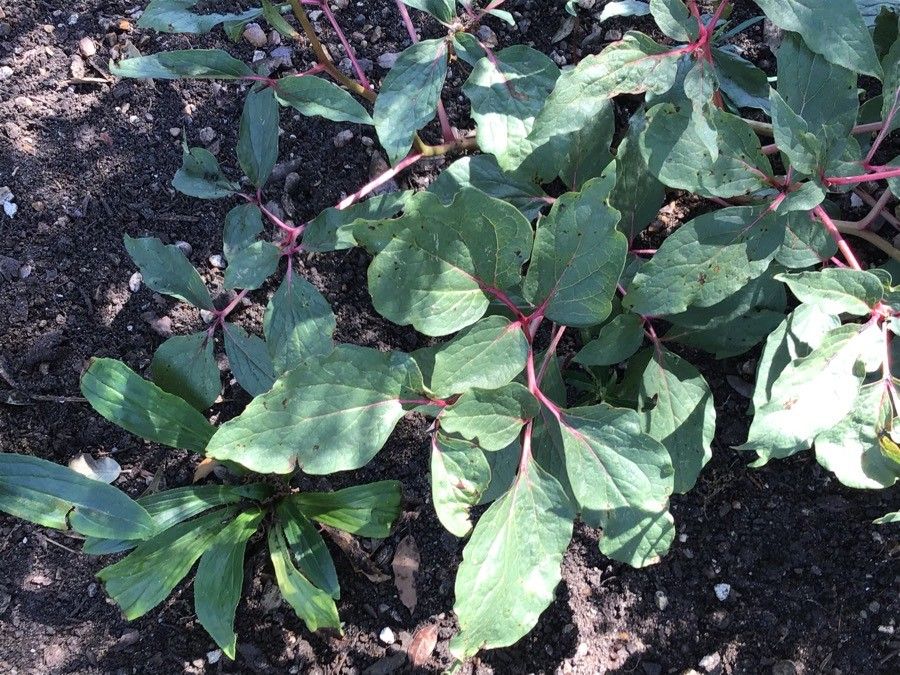
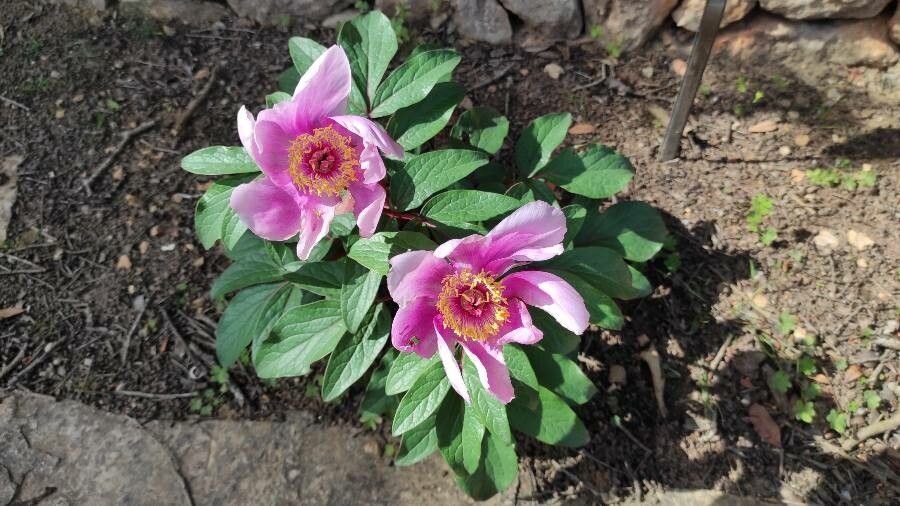
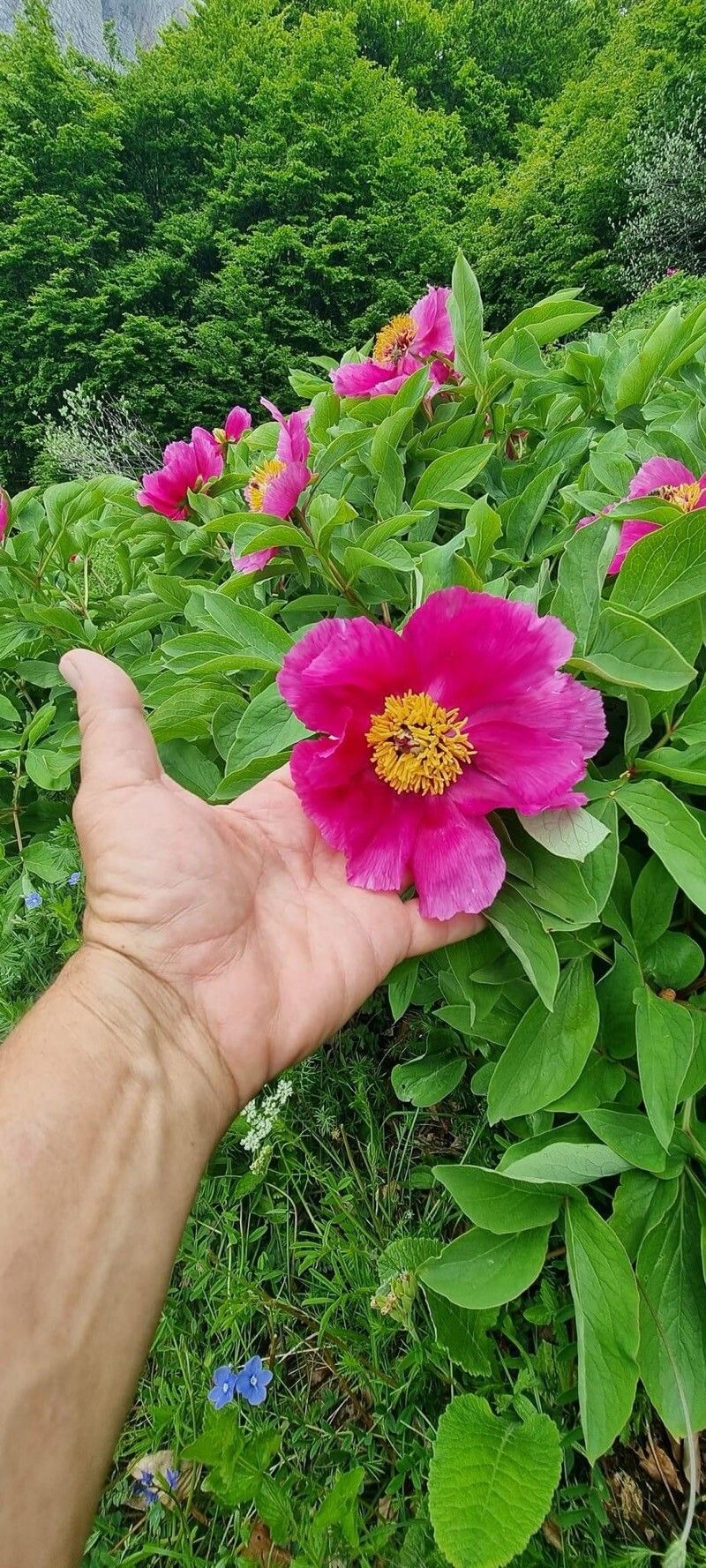
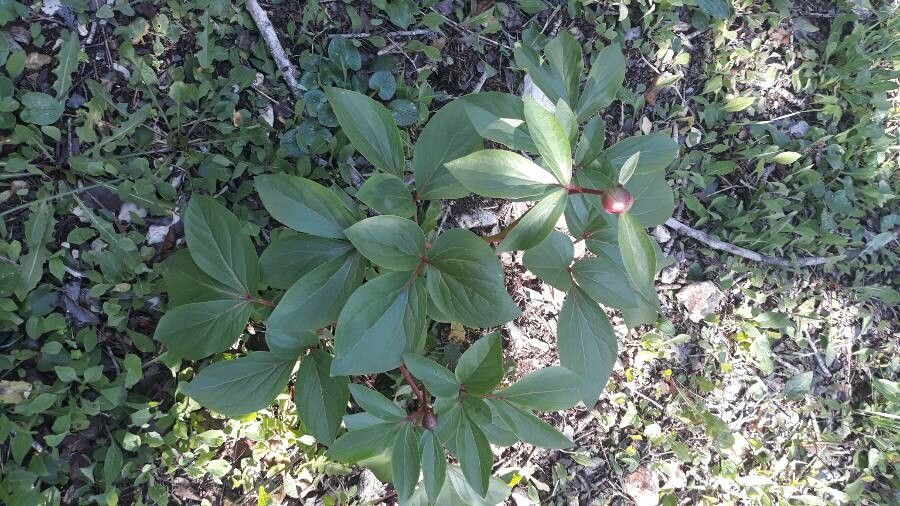
Paeonia cambessedesii is a perennial herbaceous species of peony about 45 cm high. It has pink flowers. The stems, major veins and undersides of the leaves remain purple red, while the upper surface of the leaves turns into a metallic bluish green when fully grown and its lower leaves consist of no more than nine leaflets or segments. This endemic of the Balearic Islands is now limited to parts of northeastern and northwestern Majorca. In English it is sometimes called Balearic peony or Majorcan peony.
The Majorcan peony is fairly resistant to disease and is usually not prone to problems. That said, it can be vulnerable to pests and diseases present in its environment. These issues are typically not serious. As for care, the plant requires a moderate level of maintenance. It should be pruned regularly to keep a neat appearance and support healthy growth. Fertilizing can also help encourage flowering. The Majorcan peony is suitable for anyone with outdoor space, such as a garden or patio, and does not demand extensive gardening experience. It may need more attention when grown indoors.
How to keep Paeonia Cambessedesii.
Light
Majorcan peony is a sun-loving perennial herbaceous plant native to open habitats, frequently occurring in meadows and grasslands. It prefers full sun but can tolerate partial sun.
Water
The Majorcan peony thrives in a Mediterranean climate. It prefers to be watered infrequently, about every 1 to 2 weeks, which allows it to withstand short periods of drought. This plant flourishes outdoors, particularly due to the natural seasonal rainfall. As an herbaceous perennial, it requires consistent moisture during the growing season to ensure optimal blooming and maintain its health.
Temperature
Majorcan peony can tolerate a wide range of temperatures, but its distribution may still be restricted by different combinations of moisture and heat. It does best in warm summer climates with sufficient rainfall or watering. Long periods of cloudy, rainy weather, as well as extended high temperatures, can raise the chance of Majorcan peony dying. In winter, adequate protection from cold can increase the plant's survival rate.
Fertilizer
The primary time to fertilize a Majorcan peony is in early spring when the flowers are forming. The proper fertilizer promotes better blooms and helps the Majorcan peony produce attractive flowers. Fertilizing in early spring ensures strong flowers during the season and supplies energy for dormant growth phases.
Pruning
The Majorcan peony features vibrant blooms and a compact growth habit. To promote better air circulation and flowering, prune the plant in early spring by removing dead or crowded stems. Trim back any leggy growth to maintain the desired shape. For more detailed pruning guidance, consider consulting resources such as the Royal Horticultural Society (RHS).
Botanical profile.
- Plant Type
- Herb
- Life Cycle
- Perennial
- Genus
- Paeonia
- Family
- Paeoniaceae
- Hardiness Zone
- 6-9
- Mature Height
- 49 cm
- Mature Spread
- 49 cm
- Leaf Color
- Green, Purple
- Leaf Type
- Deciduous
- Flower Color
- Pink
- Flower Size
- 7.62 cm to 11.43 cm
- Bloom Time
- Early spring, Mid spring
- Planting Time
- Spring
- Harvest Time
- Early summer, Mid summer
Other names.
Reader questions.
What are the sunlight requirements for the Majorcan peony (Paeonia cambessedesii)?
The Majorcan peony (Paeonia cambessedesii) needs specific amounts of sunlight depending on the condition. For full sun exposure, it requires above 6 hours of sunlight daily. If it's under partial sun, about 3-6 hours of sunlight is needed. It's important to observe the movement of sunlight through your garden to find spots that offer a good balance of light and shade, which is essential for the wellbeing of your plants.
What is the Majorcan peony?
The Majorcan peony, known botanically as Paeonia cambessedesii, is a specific plant species within the peony family. Despite the brief information provided, this peony is distinguished by its unique name indicating a geographical association with Majorca (Mallorca), suggesting it is either endemic or has a significant presence on the island.