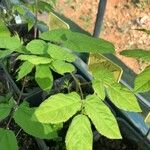
Panax ginseng
Asian ginseng · Asiatic ginseng · Chinese ginseng · Korean ginseng · Manchurian ginseng
Description
Source: leafsnapPanax ginseng, ginseng, also known as Asian ginseng, Chinese ginseng, or Korean ginseng, is a species of plant whose root is the original source of ginseng. It is a perennial plant that grows in the mountains of East Asia. It is among the longest living of plants.
🎭 Affection, Hopes, Recovery
Care Guide
💧 Water
Chinese ginseng flourishes with consistent moisture, needing weekly watering to stay healthy. It thrives in soil that is evenly moist but not waterlogged, particularly during its growing season, mimicking its natural habitat in the forest understory. Maintaining this balance helps support its adaptation and medicinal properties.
☀️ Light Partial sun
Chinese ginseng grows best in moderate light and prefers locations where the sunlight is diffused rather than continuous. Too much sun can scorch it, while too little light can limit its growth. Originally flourishing in forests with gentle sun exposure, it can tolerate a range of light conditions.
What are the sunlight requirements for Chinese ginseng?
Chinese ginseng needs about 3-6 hours of sunlight daily to thrive. It prefers moderate light intensity and can adapt to varying degrees of sunlight. Originally, it grew in forests where sunlight was scattered, making it capable of enduring both partial shade and areas with brighter light. However, direct exposure to too much sun can cause scorching, whereas too low light might impede growth. Observing how sunlight moves through your garden and choosing spots that offer a balance of light and shade is critical for the plant's health.
How can artificial lighting support Chinese ginseng growth indoors?
Indoor Chinese ginseng plants require adequate lighting for optimal growth, especially in conditions where natural sunlight is insufficient, like during winter or in less sunny spaces. Artificial lights, such as LED lights, are recommended because they can be customized to provide specific wavelengths needed by the plant. The requirements vary depending on the type of plant; full sun plants need 30-50W/sq ft, partial sun plants need 20-30W/sq ft, and full shade plants need 10-20W/sq ft of artificial light. The light source should be placed 12-36 inches above the plant, mimicking natural sunlight conditions, and the plants generally need 8-12 hours of light per day.
What are the indications of insufficient light for Chinese ginseng?
Insufficient light can lead to several symptoms in Chinese ginseng, including smaller new leaves, leggy or sparse growth, faster leaf drop, slower or no new growth, and lighter-colored new leaves. These symptoms indicate the plant's struggle to adapt to low light conditions, possibly leading to reduced health and vitality. Conditions such as chlorosis, sunscald, leaf curling, wilting, and leaf scorching can occur due to inappropriate light levels, whether too low or too high.
What solutions can help Chinese ginseng adapt to light conditions indoors and outdoors?
To optimize Chinese ginseng's growth in varying light conditions, a gradual adaptation strategy is suggested. For indoor plants, gradually moving them to sunnier spots each week until achieving 3-6 hours of direct sunlight daily helps, as does considering the use of artificial light for plants that are large or not easily movable, keeping a lamp on for at least 8 hours a day. For outdoor plants, a similar gradual relocation to sunnier spots helps prevent sunburn. Reducing obstructions like tree branches can improve sunlight access. If necessary, transplanting smaller plants during their dormant period to a location with better sunlight and drainage is advised. It's important to note that parts of the plant already affected by insufficient light might not recover, but new growth should be healthy with improved light conditions.
🌡️ Temperature 0–32.2°C
Chinese ginseng is native to temperate regions and prefers temperatures between 32 to 90 °F (0 to 32 ℃). It does best in cooler conditions. In warmer seasons, supplying enough shade and moisture can help it acclimate and flourish.
What is the native temperature range for Chinese ginseng, and how does it adapt to different seasons?
Chinese ginseng, botanically known as Panax ginseng, thrives in temperate regions with temperatures ranging from 32 to 90 °F (0 to 32 °C). Its growth is optimal in cooler conditions, making it highly cold-tolerant and able to survive without extra frost protection in winter. To help it adjust and thrive in warmer seasons, adequate shade and moisture are crucial. Before the first freeze of autumn, it's recommended to water the plant generously to ensure the soil remains moist and enters a frozen state. This precaution helps to prevent drought and water scarcity during winter and early spring.
How does Chinese ginseng respond to low temperatures, and what measures should be taken if temperatures drop significantly?
Chinese ginseng is extremely cold-tolerant and can endure winter temperatures above -35°C. However, if temperatures fall below this threshold, the plant may not show immediate signs of distress during winter, but there could be a reduction in sprouting, or it might not sprout at all come springtime. To address this, any parts that have failed to sprout in the spring should be removed to encourage healthy growth.
What steps should be taken to protect Chinese ginseng from high temperatures?
Chinese ginseng struggles in high temperatures, especially when the mercury soars above 32°C. Excessive heat halts its growth and increases its vulnerability to rot. To protect the plant, sunburned and dried-up parts should be trimmed away. It's advisable to relocate the plant to a spot that offers shade during the midday and afternoon sun, or alternatively, use a shade cloth to provide necessary shade. Additionally, watering the plant in the morning and evening will help keep the soil consistently moist, aiding in its survival and thriving under high temperature conditions.
💨 Humidity high (>60%)
This plant needs special care because it loves high humidity levels of 60-80% or more. The best way to achieve this is by placing a humidifier near the plant. Daily misting is also essential! Make sure the room has good ventilation.
🪴 Soil 5-6
🌱 Fertilizer
One fertilizer application in spring is generally enough for Chinese ginseng, though repeated feedings can optimize growth. Apply fertilizer every one to one and a half months. Fertilization improves the leaves' appearance and function, helping maintain uniform color and a healthy texture. It also promotes root development and nutrient uptake, supporting the plant's long-term health.
🪴 Pot & Repot
✂️ Pruning
To maintain healthy Chinese ginseng, it's important to carefully prune the plants from early to late spring. Focus on removing dead or diseased stems and reducing overcrowding to improve air circulation. Be cautious not to prune too heavily, as this can stress the plants. Pruning offers several benefits, such as enhanced root strength and increased yield. Always use sharp, sterilized tools to prevent infections.
🌿 Propagating
🐛 Diseases & pets
☠️ Toxicity
Characteristics
- Plant Type
- Herb
- Life Cycle
- Perennial
- Genus
- Panax
- Family
- Araliaceae
- Hardiness Zone
- 3-7
- Mature Height
- 61 cm
- Mature Spread
- 20 cm to 40 cm
- Leaf Color
- Dark Green, Forest Green
- Leaf Type
- Deciduous
- Flower Color
- White
- Flower Size
- 0.25 cm to 0.51 cm
- Bloom Time
- Early summer, Mid summer
- Planting Time
- Spring
- Harvest Time
- Late summer, Early fall, Mid fall
- Native Area
- Russia, Koppen, South Korea, China