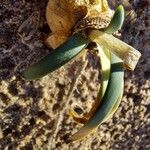
Pancratium maritimum
نرگس دریایی · نرگس دریایی (FA) · Sand Lily · Sea-daffodil
Description
Source: leafsnapPancratium maritimum, commonly known as the sea daffodil or sand lily, is a perennial bulbous plant in the Amaryllidaceae family. Native to the Mediterranean region, it typically thrives in sandy coastal areas and dunes. This plant features long, strap-like leaves that can grow up to 60 cm in length and a tall stem reaching up to 80 cm in height. The stem produces clusters of fragrant white flowers, each with six petals, that bloom from July through September. Although each flower lasts only one day, new ones continuously replace them throughout the blooming season. The sea daffodil has been used medicinally since ancient times for its antibacterial properties and as an aphrodisiac. However, it's important to note that all parts of the plant are toxic if ingested. Pancratium maritimum is also popular among gardeners because of its attractive flowers and ability to withstand harsh coastal conditions, such as salt spray and strong winds. It requires full sun exposure and well-drained soil but can tolerate drought conditions once established. Overall, Pancratium maritimum is a beautiful yet hardy coastal plant with significant historical medicinal and cultural value throughout the Mediterranean region.
🌳 The sea daffodil serves an ecological purpose beyond its appearance; it frequently signals the nesting sites of endangered sea turtles. Conservationists sometimes rely on the presence of sea daffodils to find and protect these important habitats, thereby playing an indirect but significant role in the conservation of sea turtle populations.
Care Guide
💧 Water Every 7 days
The sea daffodil, known for thriving in coastal sand dunes, is well adapted to saline and dry conditions. Watering it once a week helps maintain its health. Its strong root system efficiently extracts moisture from sandy soils, making it an excellent choice for xeriscaping.
How should I water my Sea daffodil to keep it healthy?
To properly water the Sea daffodil, it is best to use filtered water at room temperature. Tap water may contain harmful particles, so filtered water is the safer choice. The water should be at room temperature or slightly warmer to prevent shocking the plant, as it originates from a warm environment. It is important to avoid overhead watering as it can cause issues with the foliage. Instead, simply apply the filtered room temperature water to the soil until the soil is completely soaked. This helps to ensure the roots are moistened and allows them to continue spreading through the soil to collect the necessary nutrients.
What if I give my Sea daffodil too much or too little water?
Overwatering and underwatering can harm your Sea daffodil, but overwatering is more common. Too much water can cause wilting and yellowing of the stems and leaves. It can also lead to harmful diseases like root rot, mold, and mildew, which can kill the plant. Underwatering is less likely, as Sea daffodils can tolerate drought fairly well. However, it is still possible, and in this case, the leaves may become brittle and brown. It is important to quickly notice and address signs of overwatering. Diseases like root rot may become irreversible if left untreated for too long. So, if you see early signs of overwatering, reduce your watering schedule immediately. Additionally, check the soil quality. If it drains poorly, replace it with a loose, well-draining potting mix. Alternatively, if you notice signs of underwatering, increase your watering frequency until the symptoms improve.
How often should I water my Sea daffodil plant?
To determine if your Sea daffodil needs water, check the soil. If it's in a pot, stick your finger in and if the top two to three inches are dry, water it. If it's planted in the ground, do the same test and water it when the top few inches are dry. In the spring and early fall, you'll likely need to water it once a week. In really hot weather, water it twice a week or more. However, mature and well-established Sea daffodils can tolerate drought well.
How much water does my Sea daffodil require?
To properly water your Sea daffodil, make sure to give it a generous amount of water. When the top two to three inches of soil are dry, it's time to water thoroughly. This means you should provide enough water to completely saturate the soil. The water should even flow out through the drainage holes at the bottom of the pot. If you don't see any excess water draining out, it means you haven't watered enough. However, be careful not to let the water accumulate in the soil, as this can be harmful to the plant. On the other hand, if the water doesn't drain well from the pot, it may indicate that the soil doesn't drain properly, which is bad for the plant's health. If the plant is outside, receiving 1 inch of rain per week should be enough.
How should I give water to my Sea daffodil at different stages of growth?
The water requirements of the Sea daffodil can vary based on its growth stages. When the plant is in its early years or has recently been transplanted, it will need more water than usual. During this time, the Sea daffodil focuses on sprouting new roots to support future growth, and these roots need extra moisture. As the plant matures, it will require less water. Another stage that may require increased watering is during the blooming period when the flower development requires a significant amount of moisture.
☀️ Light Full sun
The sea daffodil does best in locations that receive abundant sunlight throughout the day. Hailing from a region with intense sun, it is adapted to tolerate strong light. Insufficient sun can impede its growth, while excessive exposure is generally not harmful.
What are the sunlight requirements for Sea Daffodil?
Sea Daffodil, or Pancratium maritimum, requires above 6 hours of sunlight daily to thrive, ideally in full sun conditions. It's a plant that flourishes in intense sunlight, akin to its origins in regions with strong light exposure. Observing your garden's sunlight patterns can help you find the optimal spot that offers a balance of light and shade, ensuring the plant's well-being. Insufficient sunlight can hinder its growth, but it generally handles excessive sun exposure well.
How can artificial lighting be used for Sea Daffodil indoors?
For Sea Daffodils grown indoors where natural sunlight is scarce, especially during winter or in less sunny spaces, artificial lighting serves as an essential alternative for optimal growth. LED lights are recommended for their ability to provide specific light wavelengths. The amount of artificial light needed varies: full sun plants require 30-50W/sq ft, partial sun plants 20-30W/sq ft, and full shade plants 10-20W/sq ft. Position the light source 12-36 inches above the plant to mimic natural sunlight conditions and keep it on for 8-12 hours per day, adjusting to mimic natural day length for your particular plant species.
What symptoms indicate insufficient light for Sea Daffodil?
Symptoms of insufficient light in Sea Daffodils include smaller new leaves, leggy or sparse growth with longer spaces between leaves or stems, early dropping of older leaves to conserve resources, delayed or stopped growth, pale or irregularly colored new leaves indicating nutrient deficiency, chlorosis (yellowing of leaves), sunscald characterized by pale or necrotic spots on leaves, leaf curling as a defense mechanism against extreme sunlight, wilting from excessive water loss, and leaf scorching with brown or crispy leaf edges. These symptoms showcase the plant's struggle in inadequate lighting.
What solutions are available for Sea Daffodil facing light deficiency indoors and outdoors?
To address light deficiency in Sea Daffodils, the following solutions can be applied: For indoor plants, gradually move them each week towards a sunnier spot until they receive at least 6 hours of direct sunlight daily, ideally through a south-facing window. Provide artificial light by keeping a lamp on for 8 hours daily or using professional grow lights if the plant is large. Outdoors, gradually acclimate plants to sunnier locations to avoid sunburn. Obstructions blocking sunlight can be addressed by pruning or transplanting the plant to a brighter area during its dormant period for better sunlight access. Note that parts of the plant affected by insufficient sunlight may not recover, but new growth will be healthier with improved light exposure.
🌡️ Temperature 15–35°C
Sea daffodil is native to habitats with temperatures ranging from 59 to 95 °F (15 to 35 ℃). Its preference for warmer climates must be reproduced, especially during winter. Temperature adjustments may be necessary to ensure its healthy growth.
What is the native environment of the Sea daffodil?
The Sea daffodil, known botanically as Pancratium maritimum, is native to environments where the temperature ranges between 59 to 95 °F (15 to 35 °C). It thrives in warmer climates, which must be replicated, especially during the winter seasons to ensure its healthy growth. Despite its strong cold resistance, temperature adjustments might be necessary to maintain optimal conditions for its survival.
Does the Sea daffodil need protection from frost during winter?
Usually, the Sea daffodil does not require special frost protection measures due to its strong cold resistance. However, if winter temperatures are expected to drop below -15°C, it is still important to protect the plant from the cold. This can be done by covering the plant with materials such as soil or straw. Additionally, before the first freeze in autumn, it's recommended to water the plant abundantly to keep the soil moist and in a frozen state throughout the winter and early spring, which helps prevent drought and water scarcity.
How does low temperature affect the Sea daffodil and what are the solutions?
Sea daffodil is cold-tolerant and prefers temperatures above 15°C. In winters, it should be maintained above -10°C. When the temperature falls below -15°C, the plant may not show noticeable changes during the winter, but there might be a decrease in sprouting or even no sprouting at all come springtime. The solution for affected plants in spring is to remove any parts that have failed to sprout, promoting healthier growth for the upcoming season.
What should you do for a Sea daffodil when the temperature gets too high?
During summer, it is crucial to keep the Sea daffodil below 35°C. Temperatures exceeding 41°C can cause the plant's leaves to lighten in color, become prone to curling, susceptible to sunburn, and in severe cases, lead to wilting and drying out of the entire plant. To mitigate this, trim away the sunburned and dried parts of the plant, move the plant to a shaded location from the midday and afternoon sun, or use a shade cloth. Furthermore, water the plant in the morning and evening to maintain soil moisture and protect it from heat stress.
💨 Humidity
🪴 Soil 6-7
🌱 Fertilizer
The best time to fertilize a Sea daffodil is in early spring, as it is coming out of dormancy and beginning active growth. Fertilization supplies essential nutrients for healthy growth. Although the Sea daffodil has relatively low fertilization requirements, applying fertilizer annually can improve its survival and encourage better, longer-lasting flowers.
🪴 Pot & Repot 2-3 years
Repot sea daffodils every 2 to 3 years in early spring, using a larger container to support their growth. Choose well-draining soil and water sparingly to avoid rot. Full sun exposure helps the plant recover, and its resilience makes the post-repotting process straightforward.
✂️ Pruning
The sea daffodil benefits from pruning between early and late spring. By removing spent flowers and damaged leaves, you can promote growth and enhance flowering. This practice also improves air circulation and reduces the risk of disease. Be sure to use clean, sharp tools for precise cuts to maintain the health and appearance of the sea daffodil.
🌿 Propagating
🐛 Diseases & pets
☠️ Toxicity
Characteristics
- Plant Type
- Herb
- Life Cycle
- Perennial
- Genus
- Pancratium
- Family
- Amaryllidaceae
- Hardiness Zone
- 7-10
- Mature Height
- 46 cm to 61 cm
- Mature Spread
- 61 cm
- Leaf Color
- Green, Blue
- Leaf Type
- Evergreen
- Flower Color
- White
- Flower Size
- 12.70 cm to 15.24 cm
- Bloom Time
- Mid summer
- Planting Time
- Spring
- Harvest Time
- Mid summer, Late summer
- Native Area
- Libya, Egypt, Tunisia, Turkey, Montenegro, Cyprus, Bulgaria, Greece, Croatia, Morocco, Lebanon, Portugal, Italy, Spain, Albania, Algeria, France