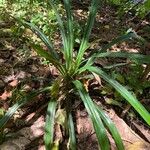
Pandanus macrocarpus
Bakong
Description
Source: leafsnapPandanus dubius, commonly known as bakong or knob-fruited screwpine, is a species of Pandanus (screwpine) native to Island Southeast Asia, New Guinea, and the Western Pacific islands (Melanesia and Micronesia), and possibly also to the Andaman and Nicobar Islands.
Care Guide
💧 Water
☀️ Light Full sun
Bakong is native to open habitats, such as sunny meadows and forest margins, which offer abundant light. It performs best in Full Sun but can also tolerate Partial Sun, adjusting well to different sunlight conditions.
🌡️ Temperature 20–37.8°C
Bakong comes from tropical regions, where the climate is generally warm and humid. Consequently, it is well suited to high temperatures and humidity. It does not tolerate sudden temperature swings and prefers a stable thermal environment, so avoiding indoor temperature fluctuations is important. It typically cannot withstand cold and requires warmer conditions to grow. If the surrounding temperature falls too low, the plant may stop growing or even die.
💨 Humidity
🪴 Soil 5-7
🌱 Fertilizer
Fertilizing is essential for Bakong care. Regular feeding during the growing season maintains the energy required for its showy leaves and supports overall growth. If fertilization is neglected, leaves can become unhealthy, the plant’s ornamental value may decline, and growth can be stunted or weak and prone to breaking.
🪴 Pot & Repot
✂️ Pruning
🌿 Propagating
🐛 Diseases & pets
☠️ Toxicity
Characteristics
- Plant Type
- Tree, Palm
- Life Cycle
- Perennial
- Genus
- Pandanus
- Family
- Pandanaceae
- Hardiness Zone
- 10-11
- Mature Height
- 10.06 m to 14.94 m
- Mature Spread
- 4.88 m to 7.92 m
- Leaf Color
- Dark Green
- Leaf Type
- Evergreen
- Bloom Time
- Summer
- Planting Time
- Spring, Summer, Autumn
- Harvest Time
- Fall
- Native Area
- Solomon Islands, India, Malaysia, Indonesia, Vanuatu, Philippines, Papua New Guinea, Fiji