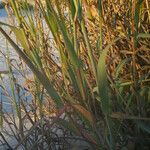
Panicum amarum
Bitter beach grass · Bitter panic grass · Coastal panic grass · Bitter Panicum · Dune panicgrass
Description
Source: leafsnapPanicum amarum is a species of grass known by the common name bitter panicum. It is native to North America, where it is found in coastal regions along the East Coast and Gulf Coast of the United States and into northeastern Mexico. It also occurs in The Bahamas and in Cuba.This perennial grass grows from a thick rhizome. It has stems up to 2.5 meters tall and 1 centimeter thick. It may grow erect or bent over. The thick, firm leaves are up to half a meter long. They are bluish in color. The inflorescence is a narrowed panicle up to 80 centimeters long by 17 wide. Some seed is produced but most reproduction is vegetative, with new plants sprouting from tillers and the rhizome.This grass is commonly used for dune stabilization projects. It is used to prevent erosion. The aboveground plant parts act as a windbreak, preventing the sand from being blown away, and the large root system stabilizes the sand in place. It can also be used in revegetation projects at other areas, such as mine spoils. Specifically, var. amarulum is valuable for these projects. The roots grow six feet deep. The cultivar 'Atlantic' is available.A cultivar of P. amarum called 'Dewey Blue' is also used for ornamental purposes.
Care Guide
💧 Water Twice per week
Bitter panicgrass flourishes in coastal dunes and sandy soils due to its drought tolerance. It needs to be watered twice a week and prefers well-drained environments to avoid waterlogged conditions. Its growth aligns with seasonal rainfall, allowing the plant to maximize water absorption during wet periods and conserve moisture during dry spells.
☀️ Light Full sun
Bitter panicgrass does best in settings with substantial exposure to the Sun’s rays. It flourishes in locations where sunlight covers the landscape throughout the day. Although the plant can tolerate a variety of conditions, diminished light can hinder its growth. Its native habitats receive abundant sunlight, which promotes its vigorous health and development.
What are the sunlight requirements for Bitter Panicgrass?
Bitter Panicgrass requires full sun, which means it needs above 6 hours of sunlight daily for optimal growth. It's crucial to observe how sunlight interacts with your garden throughout the day and select spots that ensure a proper balance of light and shade. This plant thrives best in environments where sunlight is abundant throughout the day, reminiscent of its origin habitats which benefit from ample sunlight. However, in conditions where natural sunlight is scarce, especially during winter or in less sunny spaces, artificial lighting can be a beneficial supplement. LED lights, for example, can be adjusted to provide specific wavelengths necessary for the plant's growth, requiring about 30-50W/sq ft for full sun plants, 20-30W/sq ft for partial sun plants, and 10-20W/sq ft for full shade plants.
What are the symptoms of insufficient sunlight for Bitter Panicgrass?
When Bitter Panicgrass lacks sufficient sunlight, several symptoms might occur, including small new leaves, leggy or sparse growth, faster leaf drop, slower or halted new growth, lighter-colored new leaves, chlorosis (leaves turning yellow due to a lack of chlorophyll), sunscald (damage from intense sun exposure), leaf curling (leaves curling or twisting to minimize sun exposure), wilting (loss of turgor pressure causing the plant to droop), and leaf scorching (brown, dry edges on leaves due to excessive sunlight). These signs indicate the plant's struggle with the current light conditions, which could impede its growth and overall health.
How can you address sunlight-related issues for Bitter Panicgrass both indoors and outdoors?
To address sunlight-related issues for Bitter Panicgrass, follow these solutions: Indoors, progressively relocate the plant to receive at least 6 hours of direct sunlight daily, utilizing a south-facing window for natural light or artificial lights for at least 8 hours daily if moving the plant isn't feasible. For outdoor plants, gradually move them to sunnier locations each week to prevent sunburn, ensuring they adapt without experiencing sudden changes in light intensity. To improve sunlight access, reduce obstructions like overhanging branches and, if necessary, transplant smaller plants during their dormant period to a location with better sunlight and drainage. Note that while affected parts of the plant might not recover, new growth should be healthy once light exposure is adequately increased.
🌡️ Temperature 0–35°C
Bitter panicgrass tolerates temperatures from 32 to 95 °F (0 to 35 ℃). Native to temperate areas, it favors cooler conditions. In summer, however, it can acclimate to warmer temperatures if adequate water is available.
What are the optimal temperature conditions for bitter panicgrass?
Bitter panicgrass thrives in a temperature range from 32 to 95 °F (0 to 35 °C). Native to temperate regions, it favors cooler climates but can adapt to summer heat with adequate water supply. It has significant cold resistance, so it normally does not require special frost protection measures. However, in regions where winter temperatures may fall below -40°C, it's crucial to safeguard it with cold protection methods like covering the plant with soil or straw. Additionally, ensuring the soil is moist before the first freeze can help prevent winter and early spring drought.
How does bitter panicgrass respond to low temperatures?
Bitter panicgrass is cold-tolerant and performs best when temperatures stay above 0°C during winter. It should be maintained above -35°C to avoid damage. Exposed to temperatures below -40°C without noticeable changes during winter could lead to a decrease in spring sprouting or possibly no sprouting. If parts of the plant fail to sprout in spring, these should be removed to encourage new growth.
What should be done if bitter panicgrass experiences high temperatures?
During the summer, it is advised to keep bitter panicgrass below 35°C. Exposure to temperatures exceeding 38°C can cause the leaves to lighten in color, curl, become prone to sunburn, or in severe cases, lead to the wilting and drying of the entire plant. To mitigate these effects, trim away sunburned and dried parts. Moving the plant to a shaded area or using a shade cloth during the midday and afternoon sun can provide relief. Moreover, watering the plant in the morning and evening helps maintain soil moisture and supports plant health.
💨 Humidity
🪴 Soil 6-8
🌱 Fertilizer
Bitter panicgrass needs extra nutrients to encourage healthy new growth. In spring, placing compost around the plant’s base can effectively supply the nutrition it requires. Fertilizing helps support vigorous growth and aids the plant in resisting diseases and pests.
🪴 Pot & Repot
✂️ Pruning
Bitter panicgrass is a resilient perennial grass that flourishes in sandy soils and helps prevent erosion with its robust root system. To promote growth, improve air circulation, reduce the risk of disease, and maintain the plant's health, prune it in early spring by cutting it back to a height of 6 to 12 inches. Be careful not to over-prune, as excessive cutting can be harmful.
🌿 Propagating
🐛 Diseases & pets
☠️ Toxicity
Characteristics
- Plant Type
- Grass
- Life Cycle
- Perennial
- Genus
- Panicum
- Family
- Poaceae
- Hardiness Zone
- 2-9
- Mature Height
- 0.91 m to 1.22 m
- Mature Spread
- 61 cm to 91 cm
- Leaf Color
- Green, Blue
- Leaf Type
- Deciduous
- Flower Color
- Yellow, Green
- Flower Size
- 15.24 cm to 30.48 cm
- Bloom Time
- Late summer, Early fall
- Planting Time
- Spring, Summer
- Harvest Time
- Early fall, Mid fall
- Native Area
- Bahamas, Belize, Cuba, Honduras, Mexico