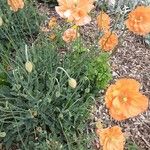
Papaver rupifragum
Spanish poppy
Description
Source: leafsnapPapaver rupifragum is a species of flowering plant in the poppy family, Papaveraceae. It is native to Morocco and Spain.
Care Guide
💧 Water
The Spanish poppy flourishes in arid environments due to its high drought tolerance. For optimal health, it needs to be watered weekly. This plant is deciduous, meaning it sheds its leaves during dry seasons to conserve water.
☀️ Light Full sun
The Spanish poppy is a sun-loving, perennial herbaceous plant that originates from open habitats and is commonly found in meadows and grasslands. It prefers full sun but can also tolerate partial sun.
What are the sunlight requirements for a Spanish poppy?
A Spanish poppy, botanically known as Papaver rupifragum, thrives in varying amounts of sunlight. For optimal growth, it's important to place your Spanish poppy in a location that receives full sun, which is categorized as having above 6 hours of sunlight daily. However, it can also do well in partial sun, defined by about 3-6 hours of sunlight. It's essential to observe how sunlight moves through your garden throughout the day. This observation allows you to choose the best spots that offer a healthy balance of light and shade, ensuring your Spanish poppy's health and happiness.
🌡️ Temperature 5–35°C
Spanish poppy can adapt to a wide range of temperature conditions, but its distribution may still be limited by different combinations of water and heat. It does best in warm summers with adequate rainfall or watering. Extended periods of cloudy, rainy weather and prolonged high temperatures can raise the likelihood of the Spanish poppy dying. In winter, appropriate protection from cold can increase the plant's chances of survival.
💨 Humidity
🪴 Soil 6-7
🌱 Fertilizer
One fertilizer application in spring is typically adequate for Spanish poppy, although repeated feedings can help maximize growth. Apply fertilizer every month to every month and a half. Fertilizing improves the appearance and function of the leaves, encouraging even color and a healthy texture. It also encourages root development and nutrient uptake, supporting long-term plant health.
🪴 Pot & Repot 2-3 years
When repotting Spanish poppy, select a pot 1–2 inches (2.5–5.1 cm) larger with ample drainage. Use a well-draining potting mix. Repot in spring or fall, making sure the root ball is positioned slightly lower than the rim of the flower pot. Water thoroughly after repotting and place it in a warm spot with indirect sunlight.
✂️ Pruning
The Spanish poppy is a plant known for its delicate orange flowers and requires regular care. Prune the plant from early to late spring, concentrating on removing dead or overgrown stems to encourage more blossoms. Make sure to clean your tools to prevent the spread of disease. Proper pruning improves airflow and promotes healthier, more vibrant growth.
🌿 Propagating
🐛 Diseases & pets
☠️ Toxicity
Characteristics
- Plant Type
- Herb
- Life Cycle
- Perennial
- Genus
- Papaver
- Family
- Papaveraceae
- Hardiness Zone
- 5-9
- Mature Height
- 30 cm to 46 cm
- Mature Spread
- 20 cm to 30 cm
- Leaf Color
- Green Yellow, Olive Drab
- Leaf Type
- Deciduous
- Flower Color
- Orange
- Flower Size
- 5.08 cm to 6.35 cm
- Bloom Time
- Late spring, Summer
- Planting Time
- Spring, Summer, Autumn
- Harvest Time
- Mid summer, Late summer, Early fall, Mid fall
- Native Area
- Morocco, Spain