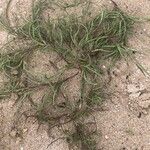
Parapholis incurva
Curved Hard-grass · Stickle-grass · Curved sicklegrass · Coast barb grass · Curly-ryegrass
Description
Source: leafsnapParapholis incurva, commonly known as curved grass, is a species within the Poaceae family. This perennial plant can grow up to 50 cm in height and features slender stems with narrow, green leaves. The slightly curved shape of its leaves gives the plant its common name. Curved grass is native to Europe and Asia but has been introduced as an ornamental plant to other parts of the world. It thrives in moist soils and is commonly found in meadows, pastures, alongside roadsides, or on disturbed grounds. The flowers of Parapholis incurva are small and inconspicuous, with spikelets arranged on slender stems. These flowers bloom from June to August. This grass species serves as a food source for grazing animals such as sheep and cattle. Additionally, it can be used for erosion control, thanks to its extensive root system that helps stabilize the soil. Overall, Parapholis incurva is an attractive ornamental plant that also plays important ecological roles in its native habitats.
Care Guide
💧 Water Every 7 days
Curved hardgrass thrives in coastal areas with high salt and drought tolerance. It is well-suited to saline environments and prefers to be watered thoroughly but infrequently, ideally once a week. When planted along shorelines, this outdoor plant retains moisture in its leaves during high-salinity conditions, which enhances its resilience.
What do I do if I give my Curved hardgrass too much or too little water?
Proper watering is crucial for the performance of this beautiful ornamental grass. When planted in the ground, watering problems can be resolved. However, in a container, too much or too little water will quickly kill the Curved hardgrass. Insufficient water can cause the grass to stop growing, resulting in drooping leaves, weak seed head production, and browned leaves. On the other hand, overwatering can cause yellow leaves with brown tips. If you suspect improper watering, the first step is to determine if there is too much or too little water. Immediately stop watering if there is excessive water. Be patient for heavy soils to dry out, which can take weeks. Once new growth appears, test the soil moisture and decide if more water is needed. If the grass has received too little water, simply give it a deep drink to see if it improves. It is important to remember that a long, deep watering is always better than frequent shallow waterings. This encourages the grass to develop deep roots, making it more resistant to drought and watering-related problems.
How often should I water my Curved hardgrass? How often do I need to water my Curved hardgrass?
The watering requirements of Curved hardgrass depend on various factors. In general, it should be watered every week. However, in hot climates, it may need to be watered once or twice per week during the summer. In moderate climates, watering once every seven days or more may be sufficient. Grass in containers typically requires more frequent watering compared to grass planted in the ground. Additionally, the sun exposure and shade of the location can also affect the watering needs. Shaded grass requires less frequent watering compared to grass planted in the ground. To determine when to water the Curved hardgrass, there are a few cues to look for. Checking the soil moisture by pressing a finger a few inches into the soil can indicate if it is dry. For potted grass, the weight of the pot can also be an indicator, as a lighter pot suggests a lack of water. The grass blades may appear folded and thinner than usual when the roots are lacking water. Despite its drought tolerance, regular and deep waterings will result in a beautiful color. Although Curved hardgrass is drought resistant, it still requires care and attention. Even in harsh and dry conditions, consistent watering is beneficial. When newly planted, it requires more frequent watering until it establishes deep roots. In pots, the soil dries out quickly, especially in direct sun. Therefore, the soil should be tested every 3 to 4 days, and watering should only occur when it feels dry. Hardgrass planted in the ground generally requires less watering, but this depends on the type of soil. Clay soil retains water for longer periods, so it may still retain moisture even if it feels dry at the surface. Sandy soils drain quickly and may require more frequent watering.
What should I watch out for when I water my Curved hardgrass at different times of the year, in different weather, or during different stages of growth?
To determine if you are watering enough, pay attention to how quickly your grass is growing. Curved hardgrass, for example, tends to double in size in a year during the hottest months. If it's hot outside and your grass isn't growing vigorously, consider adjusting your watering schedule. In the winter, you may only need to water once a month, but it's still important to check the soil for moisture. During the warmest months when the grass is actively growing, it will require more water. However, during the winter and cooler months, the water needs will significantly decrease. Remember, for Curved hardgrass, it's crucial to let the soil dry out completely before watering again.
☀️ Light Full sun
Curved hardgrass comes from bright, open habitats where it does best in full sun. It can tolerate some partial shade but favors direct sunlight for optimal growth. This annual or biennial plant is known for its preference for sun.
What are the sunlight requirements for Curved hardgrass?
Curved hardgrass (Parapholis incurva) thrives in environments with full sun, needing above 6 hours of sunlight daily for optimal growth. It can also tolerate partial sun, which is about 3-6 hours of sunlight. When planning your garden, it's important to observe how sunlight moves through the area to ensure your Curved hardgrass is planted in a spot that provides the right balance of light and shade, ensuring the plant's happiness and health.
How does artificial lighting benefit indoor Curved hardgrass plants?
Indoor Curved hardgrass plants require adequate lighting for optimal growth, especially when natural sunlight is insufficient, such as in winter or less sunny spaces. Artificial lights, particularly LED lights, offer a vital solution by providing the specific wavelengths of light that plants need. For full sun plants, 30-50W/sq ft of artificial light is recommended, while partial sun plants need 20-30W/sq ft. The light source should be placed 12-36 inches above the plant, mimicking the natural sunlight's distance, and it should be on for 8-12 hours per day to simulate natural daylight hours, promoting faster, healthier plant growth.
What are the signs of insufficient light in Curved hardgrass?
When Curved hardgrass is not receiving enough light, especially indoors, it may show several symptoms, including small new leaves, leggy or sparse growth, rapid leaf drop, slower or halted growth, lighter-colored or chlorotic new leaves, sunscald, leaf curling, wilting, and leaf scorching. These symptoms indicate a light deficiency and the need to increase the plant's exposure to light to ensure its health and vitality.
How can I address light deficiency in Curved hardgrass?
To address light deficiency in Curved hardgrass, you can gradually move indoor plants to sunnier locations, aiming for at least 6 hours of direct sunlight daily, using a south-facing window for maximum exposure. If the plant is too large or not easily movable, consider using artificial lighting, keeping a lamp on for at least 8 hours a day or investing in grow lights. For outdoor plants, carefully transition them to sunnier spots over several weeks to prevent sunburn. If sunlight is blocked by obstacles like trees, consider pruning to improve light filtration or transplanting smaller plants to sunnier areas during their dormant period for better growth and health. Note, while these steps can promote new healthy growth, parts of the plant that were already affected may not recover.
🌡️ Temperature 15–35°C
Curved hardgrass is a plant native to fairly warm climates. It grows best at temperatures between 68 and 95 °F (20 and 35 ℃). For the best year-round growth, keep the temperature within this range and avoid extreme conditions.
What is Curved Hardgrass and where is it native to?
Curved Hardgrass, scientifically named Parapholis incurva, is a plant native to environments characterized by fairly warm climates. It's an adaptable species thriving best within a temperature range of 68 to 95 °F (20 to 35 °C), ideally suited to conditions where these temperatures are consistent throughout the year. The plant exhibits some level of cold tolerance, making it a resilient choice for various landscapes.
What are the optimal growing conditions for Curved Hardgrass?
For optimal growth, Curved Hardgrass requires temperatures between 68 to 95 °F (20 to 35 °C). This range ensures the plant can thrive without the need for extreme measures. Although Curved Hardgrass has a moderate level of cold tolerance, it's advisable to protect it when temperatures drop below 0 °C by using protective measures such as wrapping the plant with plastic film, fabric, or other suitable materials. These precautions help maintain its health and growth rate throughout colder months.
How does Curved Hardgrass react to low and high temperatures?
At low temperatures, especially when the thermometer drops below 0°C and approaches -10°C, Curved Hardgrass exhibits tolerance to a degree. Nevertheless, its leaves might droop and, in severe cases, wilt and fall off due to frost damage. To mitigate this, trimming frost-damaged parts and employing cold-protective measures such as wrapping with non-woven fabric or erecting a wind barrier are effective solutions. Conversely, high temperatures above 35°C, particularly surpassing 41°C, lead to symptoms like lighter leaf color, dry and withered tips, and increased susceptibility to sunburn. Managing this involves trimming sunburned areas, relocating the plant to shaded locations or utilizing shade cloths, and maintaining soil moisture through regular watering during cooler parts of the day.
💨 Humidity
🪴 Soil 6-7
🌱 Fertilizer
🪴 Pot & Repot
✂️ Pruning
Curved hardgrass has a dense, tufted appearance similar to grass. To encourage new growth and keep it compact, prune it in early to late spring by trimming up to one-third of the plant. Be sure to use sharp, sanitized tools to prevent the spread of disease. For more detailed information, consider consulting resources from the Royal Horticultural Society (RHS) and university horticultural departments.
🌿 Propagating
🐛 Diseases & pets
☠️ Toxicity
Characteristics
- Plant Type
- Grass
- Life Cycle
- Annual
- Genus
- Parapholis
- Family
- Poaceae
- Hardiness Zone
- 8-10
- Mature Height
- 10 cm to 40 cm
- Mature Spread
- 5 cm to 15 cm
- Leaf Color
- Light Green
- Leaf Type
- Deciduous
- Flower Color
- Yellow, Green, Purple, Brown
- Flower Size
- 4.06 cm to 10.16 cm
- Bloom Time
- Late spring, Early summer
- Planting Time
- Spring, Summer
- Harvest Time
- Mid summer, Late summer
- Native Area
- Libya, Turkey, India, United Arab Emirates, Pakistan, Morocco, Uzbekistan, Russia, Iraq, France, Portugal, Saudi Arabia, Tajikistan, Tunisia, Cyprus, Bulgaria, Greece, Lebanon, Afghanistan, Syria, Italy, Spain, Iran, Albania, Azerbaijan, United Kingdom, Algeria, Kuwait, Turkmenistan