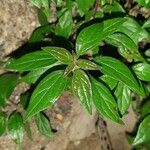
Parietaria officinalis
Upright pellitory · Pellitory-of-the-wall · Wall pellitory · Eastern pellitory-of-the-wall · Erect pellitory-of-the-wall
Description
Source: leafsnapParietaria officinalis, the eastern pellitory-of-the-wall, also known as upright pellitory and lichwort, is a plant of the nettle family. Its leaves, however, are non-stinging. The plant grows on rubbish and on walls, hence the name. The pollen is a cause of allergy.
Care Guide
💧 Water
Pellitory-of-the-wall flourishes in moist environments, needing regular hydration without being overwatered. It is best to water this plant weekly to align with its natural growth patterns. Although it is usually grown outdoors, pellitory-of-the-wall effectively regulates soil moisture throughout its active growing season. This helps maintain sufficient hydration while preventing waterlogging.
How should I water my Pellitory-of-the-wall plant?
To keep your Pellitory-of-the-wall healthy, it's best to use filtered water at room temperature. Tap water may contain harmful particles, so filtering it is important. The plant comes from a warm environment, so avoid using cold water as it can be stressful for it. Instead of watering from above, water the soil until it's completely soaked. This benefits the plant by moisturizing the roots and helping them spread and absorb nutrients.
What should I do if I give my Pellitory-of-the-wall plant too much water or too little water?
Overwatering is a more common issue than underwatering for the health of your Pellitory-of-the-wall plant. When overwatered, the leaves may wilt, turn yellow, and it can lead to diseases like root rot, mold, and mildew. Underwatering is less common but can still happen, causing brittle and brown leaves. It's crucial to notice signs of overwatering quickly as some diseases may not be fixable if left too long. Reduce watering immediately if overwatering is suspected and consider replacing poorly draining soil. If underwatering is a concern, simply water more regularly until the signs subside.
How often should I water my Pellitory-of-the-wall plant?
If your Pellitory-of-the-wall plant is in a pot, the most accurate way to determine if it needs water is by sticking your finger into the soil. If the top two to three inches of soil feel dry, then it is time to water it. If you grow the plant outdoors in the ground, you can use the same method to test the soil. Once the first few inches of soil have dried out, it's time to water it. Usually, during the spring and early fall, you should water the plant about once a week using this method. However, during extremely hot weather, you may need to water it two or more times per week. Despite this, mature and well-established Pellitory-of-the-wall plants have a remarkable ability to withstand drought.
How often should I water my Pellitory-of-the-wall plant?
When watering your Pellitory-of-the-wall, don't hold back on the amount of water you give. Make sure the first two to three inches of soil are dry before watering, and then give it a thorough watering that completely soaks the soil. The water should be enough that it flows out through the drainage holes at the bottom of the pot. If you don't see excess water draining, you may have not given enough water, but be careful not to let the water accumulate in the soil as this can harm the plant. On the other hand, if water doesn't drain through the pot, it could be a sign of poorly draining soils, which is bad for the plant's health. If the plant is outdoors, about 1 inch of rain per week should be sufficient.
How should I water my Pellitory-of-the-wall as it grows?
The water needs of the Pellitory-of-the-wall vary depending on its growth stages. When the plant is in its early years or recently transplanted, it requires more water. During these stages, the plant is focused on developing new roots to support future growth, and these roots perform best with extra moisture. As the plant matures, it will require less water. Additionally, during the bloom period, the plant may need more water due to the energy used in flower development.
☀️ Light Full sun
Pellitory-of-the-wall does best with a generous amount of daily sunlight and can tolerate less light, though it still needs a considerable amount to stay vigorous. This reflects its native, well-lit habitats. Too much or too little sun can both harm its health.
What are the sunlight requirements for Pellitory-of-the-wall?
Pellitory-of-the-wall requires a generous amount of sunlight daily to thrive, ideally being placed in full sun, which means above 6 hours of direct sunlight daily, or partial sun, about 3-6 hours of sunlight. The plant is adaptable and can manage with less sun but still necessitates a good amount to remain healthy. This preference stems from its natural habitat, which is typically well-lit environments. Observing how sunlight moves through your garden and selecting spots that provide an ideal balance of light and shade is crucial for ensuring the plant's vigor and happiness.
How can artificial lighting support Pellitory-of-the-wall's growth indoors?
Indoor Pellitory-of-the-wall plants require adequate lighting for optimal growth, especially when natural sunlight is insufficient, like in winter or in less sunny spaces. Artificial lighting serves as a vital solution for promoting healthier and faster growth. LED lights, being a popular choice, can be customized to supply specific wavelengths needed by the plants. The general guidance suggests that full sun plants need 30-50W/sq ft, partial sun plants require 20-30W/sq ft, and full shade plants need 10-20W/sq ft of artificial light. Additionally, setting the artificial light source 12-36 inches above the plant and ensuring it mimics natural daylight duration, typically 8-12 hours per day, can greatly benefit the plant's growth.
What are the symptoms of insufficient or excessive light exposure in Pellitory-of-the-wall?
Symptoms of light deficiency in Pellitory-of-the-wall can be subtle, including smaller new leaves, leggy or sparse growth, faster leaf drop, slower or ceased new growth, lighter-colored new leaves, and general weakness. Conversely, excessive sunlight can cause chlorosis (leaves turning yellow), sunscald (damaged areas on leaves or stems), leaf curling as a defense mechanism, wilting due to increased water loss, and leaf scorching characterized by brown, dry edges on leaves. Both insufficient and excessive sunlight hinder the plant's health, affecting its ability to photosynthesize and its overall vigor.
How can I improve light exposure for indoor and outdoor Pellitory-of-the-wall plants?
To optimize growth for Pellitory-of-the-wall, gradually increase sunlight exposure until the plant receives at least 6 hours of direct sunlight daily. For indoor plants, use a south-facing window and keep curtains open during the day, or consider artificial light if the plant is large or not easily movable, keeping the lamp on for at least 8 hours daily. Outdoors, move plants gradually to sunnier spots to avoid sunburn, adapting them to stronger light gradually. Minimize obstructions by pruning branches that block sunlight or by transplanting smaller plants to sunnier locations during their dormant period for ample sunlight and good drainage. Note that parts of the plant that were initially affected by insufficient light might not recover, but new growth should be healthy with improved light conditions.
🌡️ Temperature 10–32.2°C
Pellitory-of-the-wall originates from temperate regions. It prefers temperatures between 50 and 89.6 °F (10 and 32 ℃). In colder seasons, move it to a warmer location, and in hot seasons place it somewhere cooler to help maintain its health.
What is the ideal temperature range for Pellitory-of-the-wall?
Pellitory-of-the-wall thrives in temperate climate regions, with an ideal temperature range between 50 to 89.6 °F (10 to 32 °C). To ensure the plant remains healthy, it's advisable to move it to a warmer location during the colder seasons and find a cooler spot during the hotter parts of the year.
How does Pellitory-of-the-wall react to cold seasons?
Pellitory-of-the-wall is remarkably tolerant to cold temperatures and requires no extra frost protection during the winter. However, to help the plant through winter and early spring, it is recommended to water it generously before the first freeze in autumn. This ensures the soil stays moist and enters a frozen state, preventing drought and water scarcity.
What should be done if Pellitory-of-the-wall experiences temperatures below -25°C?
Despite Pellitory-of-the-wall's high cold tolerance, it is important to maintain winter temperatures above -25°C. If temperatures fall below this, you might not observe immediate changes, but there could be a decrease in sprouting or even a complete lack of sprouting in spring. Should this occur, remove any parts of the plant that have failed to sprout as a solution to encourage new growth.
How should Pellitory-of-the-wall be cared for in high temperatures?
Pellitory-of-the-wall is not tolerant of high temperatures. Exposure to temperatures above 32°C halts its growth and increases the risk of rot. To protect the plant, trim away any sunburned or dried parts and move it to a shaded location, especially from the midday and afternoon sun. Utilizing a shade cloth can also be effective. Additionally, watering the plant in the morning and evening helps keep the soil moist and supports its health.
💨 Humidity normal (40-60%)
This plant will thrive in moderate humidity, which is probably the level in your home. However, misting it a few times a week can be very beneficial. Make sure the room has good ventilation.
🪴 Soil 6-7
🌱 Fertilizer
One application of fertilizer in spring is generally enough for Pellitory-of-the-wall, though repeated feedings can maximize growth. Apply fertilizer about once every month to six weeks. Fertilization improves the leaves' appearance and function, encouraging uniform color and a healthy texture. It also promotes root development and nutrient uptake, supporting long-term plant health.
🪴 Pot & Repot
✂️ Pruning
To keep Pellitory-of-the-wall healthy and attractive, regular pruning is key. Focus on removing dead stems and shaping the plant to improve its appearance. The best time to prune is from early to late spring, as this helps increase air circulation, prevent disease, and encourage new growth. Consistent maintenance is vital for ensuring your plants remain strong and resilient.
🌿 Propagating
🐛 Diseases & pets
☠️ Toxicity
Characteristics
- Plant Type
- Herb
- Life Cycle
- Perennial
- Genus
- Parietaria
- Family
- Urticaceae
- Hardiness Zone
- 6-7
- Mature Height
- 61 cm
- Mature Spread
- 20 cm to 40 cm
- Leaf Color
- Dark Green
- Leaf Type
- Deciduous
- Flower Color
- White, Green
- Flower Size
- 0.20 cm to 0.25 cm
- Bloom Time
- Mid spring, Late spring, Early summer, Mid summer
- Planting Time
- Spring, Autumn
- Harvest Time
- Summer, Early fall
- Native Area
- Turkey, Austria, Czech Republic, Slovakia, Montenegro, Cyprus, Bulgaria, Armenia, Greece, Croatia, Slovenia, Ukraine, Serbia, Russia, Hungary, Germany, Italy, Switzerland, Denmark, France, Iran, Albania, Azerbaijan, Romania, Belgium, Moldova, Turkmenistan, Netherlands