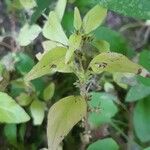
Parietaria pensylvanica
Pennsylvania pellitory · American Pellitory
Description
Source: leafsnapParietaria pensylvanica, commonly known as Pennsylvania pellitory or allergy weed, is a herbaceous plant in the nettle family. This plant is native to North America and thrives in various habitats, including fields, meadows, and disturbed areas. The plant can grow up to 1 meter tall and features a branching stem adorned with small, oval-shaped green leaves that have toothed edges. Its flowers are small and greenish-white, arranged in clusters at the stem tips. Native Americans have historically used Parietaria pensylvanica for medicinal purposes, treating ailments such as respiratory problems and skin irritations. However, the plant's pollen can cause allergic reactions in some individuals. Often viewed as a weed by gardeners, Pennsylvania pellitory spreads rapidly through self-seeding. It can be managed with regular weeding or herbicide application. In summary, Parietaria pensylvanica is a fascinating plant with medicinal properties and potential allergenic effects. Those with sensitivities should approach it with caution.
🌳 Pennsylvania pellitory's value also extends to environmental science, where it is used as a bioindicator of air quality. Certain species in this genus have been examined for their ability to take up heavy metals from the air, indicating pollution levels. Researchers use Pennsylvania pellitory to monitor urban environmental conditions.
Care Guide
💧 Water Every 7 days
Pennsylvania pellitory flourishes in moisture-rich environments, preferring consistent hydration and adapting well to regular rainfall. Providing water weekly simulates its natural habitat, helping to maintain its drought resistance and humidity requirements. When grown outdoors, this plant benefits from natural rain cycles, which promote its growth with minimal need for additional watering.
How should I water my Pennsylvania pellitory plant?
Pennsylvania pellitory can be watered using various tools like a garden hose with a spray nozzle, a watering can, or any other common watering tool. This plant is not particularly selective about the type of water it receives, as it can thrive on rainwater, tap water, or filtered water. It is generally advised to avoid watering this plant from above, as it can harm the leaves and flowers and potentially lead to disease. The most effective method for watering is typically setting up a drip irrigation system, which distributes water evenly and directly to the soil. For container-grown Pennsylvania pellitory, you can use a cup, watering can, or tap water to water it directly into the soil.
What should I do if I give my Pennsylvania pellitory plant too much or too little water?
If your Pennsylvania pellitory plant lacks moisture, the solution is simple - water it more regularly. However, overwatering can be a more serious problem if not identified early. Excessive water can cause diseases that lead to the plant's decline and death. To prevent this, choose a proper location with ample sunlight to dry the soil and good drainage to prevent water from pooling and causing waterlogged soil. If you have overwatered a potted Pennsylvania pellitory, consider changing it to a new pot with better drainage. When repotting, use loose soils and a pot that drains efficiently.
How many times per week should I water my Pennsylvania pellitory?
Pennsylvania pellitory requires regular watering throughout the growing season. In the spring, water the plant once per week. As the season progresses and becomes warmer, you may need to water two to three times per week. However, be careful not to exceed this watering rate as it can harm the plant. Regardless of watering frequency, make sure the soil remains moist but not wet. When it comes to watering Pennsylvania pellitory in a pot, you will usually need to water more frequently. Potted soil tends to heat up and dry out faster than ground soil. As a general guideline, water container-grown Pennsylvania pellitory a few times per week, compared to just once per week for plants in the ground.
How many water does my Pennsylvania pellitory plant need?
There are a few different ways to determine how much water to give to your Pennsylvania pellitory. One method is to feel the soil for moisture and water until the first six inches are moist. Another option is to use a set measurement, such as two gallons per week, depending on the temperature and how quickly the soil dries. However, following strict guidelines may result in overwatering if the plant needs less water. For pellitory in a container, you should moisten all layers of dry soil and check for moisture by sticking your finger in the soil or until excess water trickles out of the drainage holes.
How can I know if I'm giving enough water to my Pennsylvania pellitory?
Avoiding overwatering your Pennsylvania pellitory can be somewhat challenging. These plants have deep roots that need to be watered weekly, but they are also prone to root rot and browning if overwatered. Underwatering is less of a concern as these plants can survive without additional watering for a while. However, if you wait too long to water them, they will start to wilt and have dry leaves.
☀️ Light Partial sun
Pennsylvania pellitory grows best with moderate sunlight but can tolerate very bright light or deep shade. Its adaptability comes from its native habitat, which experiences varying levels of sunlight. However, excessive light can harm its health and growth.
What are the sunlight requirements for Pennsylvania Pellitory?
Pennsylvania Pellitory requires about 3-6 hours of sunlight, classified as partial sun conditions, but can also thrive in conditions of full sun or full shade, which means above 6 hours of sunlight. It is important to observe how sunlight moves through your garden to find spots that offer a perfect balance for your plants, ensuring they flourish under the right light conditions.
How does Pennsylvania Pellitory adapt to different light conditions?
Pennsylvania Pellitory is highly adaptable and thrives best under moderate levels of sunlight, though it can withstand intense light or dense shadow. This adaptability comes from its native environment, which experiences fluctuating sunlight conditions. However, too much direct sunlight can be harmful, affecting the plant's health and growth.
What artificial lighting requirements do indoor Pennsylvania Pellitory plants have?
Indoor Pennsylvania Pellitory plants require adequate artificial lighting to compensate for insufficient natural sunlight, especially in winter or less sunny spaces. LED lights, which can be customized to provide specific light wavelengths, are recommended. Full sun plants need 30-50W/sq ft, partial sun plants 20-30W/sq ft, and full shade plants 10-20W/sq ft of artificial light. The light source should be placed 12-36 inches above the plant for 8-12 hours per day.
What are the symptoms of Pennsylvania Pellitory when it gets inadequate light?
When Pennsylvania Pellitory receives inadequate light, several symptoms may appear, including smaller new leaves, leggy or sparse growth, faster leaf drop, slower or halted growth, lighter-colored new leaves, chlorosis, sunscald, leaf curling, wilting, and leaf scorching. These symptoms indicate the plant's struggle with adapting to insufficient light.
What solutions exist for Pennsylvania Pellitory experiencing insufficient light?
To address insufficient light for Pennsylvania Pellitory, you can gradually introduce it to sunnier spots each week to receive the needed 3-6 hours of direct sunlight. If relocation is not feasible, such as for large or stationary plants, consider using artificial light, keeping it on for at least 8 hours daily. For plants outdoors, move them to sunnier locations gradually to avoid sunburn. Reducing obstructions and transplanting during dormant periods can also help increase light exposure for your plants.
🌡️ Temperature 15–32.2°C
Pennsylvania pellitory is indigenous to habitats where temperatures commonly range from 68 to 95°F (20 to 35℃). It prospers at these temperatures and adapts well to seasonal variations within that span.
What is the native environment temperature range for Pennsylvania pellitory?
Pennsylvania pellitory, or Parietaria pensylvanica, is native to environments that typically have a temperature range between 68 to 95°F (20 to 35°C). It thrives well within this temperature range and adjusts well to the seasonal changes it entails.
Does Pennsylvania pellitory require frost protection during winter?
Pennsylvania pellitory has strong cold resistance, and special frost protection measures are usually not necessary during winter. However, if winter temperatures are expected to drop below its growth temperature limit, it's important to provide cold protection by covering the plant with materials such as soil or straw. Additionally, watering the plant abundantly before the first freeze in autumn helps the soil remain moist and enter a frozen state, preventing drought and water scarcity for the plant during winter and early spring.
How does Pennsylvania pellitory respond to low temperatures?
Pennsylvania pellitory is cold-tolerant and thrives best when the temperature is above its suitable growth temperature minimum. During winter, it should be kept above its tolerable growing temperature minimum. When the temperature falls below its growth temperature limit, there may not be any noticeable changes during winter, but a decrease in sprouting or even no sprouting during springtime may occur. In spring, it's recommended to remove any parts of the plant that have failed to sprout.
What are the effects of high temperature on Pennsylvania pellitory and how can they be mitigated?
During summer, it's important to keep Pennsylvania pellitory below its suitable growth temperature maximum to avoid stress. When the temperature exceeds its tolerable growing temperature maximum, the leaves may become lighter in color, prone to curling, susceptible to sunburn, and in severe cases, the entire plant may wilt and become dry. To mitigate these effects, trim away the sunburned and dried-up parts. Move the plant to a location that provides shade from the midday and afternoon sun, or use a shade cloth. Watering the plant in the morning and evening can also help keep the soil moist.
💨 Humidity
🪴 Soil 6-7
🌱 Fertilizer
Pennsylvania pellitory responds well to regular, light applications of fertilizer to encourage healthy foliage development. Fertilize Pennsylvania pellitory about once a month during the summer. Nitrogen is essential for the leaves, and providing nitrogen-rich supplements helps Pennsylvania pellitory thrive.
🪴 Pot & Repot
✂️ Pruning
🌿 Propagating
🐛 Diseases & pets
☠️ Toxicity
Characteristics
- Plant Type
- Herb
- Life Cycle
- Annual
- Genus
- Parietaria
- Family
- Urticaceae
- Hardiness Zone
- 7-8
- Mature Height
- 15 cm to 46 cm
- Mature Spread
- 25 cm
- Leaf Color
- Green
- Leaf Type
- Deciduous
- Flower Color
- Green, White
- Flower Size
- 2.54 cm
- Bloom Time
- Late spring, Early summer, Mid summer
- Planting Time
- Spring
- Harvest Time
- Early summer, Mid summer
- Native Area
- Mexico, Guatemala