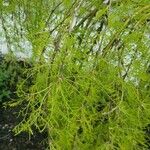
Parkinsonia aculeata
درمان عقرب · Palo Verde · Jerusalem-thorn · Horse-bean · Barbados flowerfence
Description
Source: leafsnapParkinsonia aculeata, commonly known as Jerusalem thorn or Mexican palo verde, is a small to medium-sized tree from the pea family. It originates from the southwestern United States, Mexico, and Central America. The tree is easily recognizable by its green bark and thorny branches that produce small yellow flowers during the spring and summer. Its bipinnate leaves, consisting of tiny leaflets, give it a feather-like appearance. The Jerusalem thorn is drought-tolerant and adaptable to various soil types, though it prefers well-drained soils. It can grow up to 30 feet tall but often remains smaller in urban settings due to pruning. This plant is versatile, serving multiple purposes such as providing shade for livestock and being used as an ornamental plant in landscaping due to its distinctive look. Its wood is also utilized for fuelwood and charcoal production. However, it's important to note that Parkinsonia aculeata can become invasive in non-native areas like Australia and South Africa, where it competes with local vegetation for resources. In summary, Parkinsonia aculeata is a fascinating species with unique characteristics that make it suitable for various uses. Nonetheless, careful management is necessary when introducing it outside its natural habitat to prevent it from becoming invasive.
🌳 The Jerusalem thorn is commonly viewed as merely an ornamental plant, but its pods and flowers are important food sources for a variety of animals. People do not typically eat it; however, cattle, goats, and sheep browse its foliage, and in periods of scarcity its seeds can provide supplemental feed. The nectar in its bright yellow flowers attracts pollinators, giving it a modest yet essential role in local ecosystems as a food provider.
🎭 Charming, though sometimes prickly.
Care Guide
💧 Water Every 7 days
The Jerusalem thorn is well-suited for arid environments, demonstrating excellent drought tolerance thanks to its deep root system. Watering it every one to two weeks is sufficient. This plant prefers well-draining soil and is usually grown outdoors because of its size and growth habit.
☀️ Light Full sun
Jerusalem thorn grows best in places that receive uninterrupted sunlight throughout the day. It can, however, tolerate a moderate reduction in light intensity. Both insufficient and excessive sunlight can impair healthy growth, which reflects its origin in habitats with plentiful daily sunlight.
What are the sunlight requirements for Jerusalem Thorn?
Jerusalem Thorn requires specific conditions regarding sunlight to thrive. It needs full sun, which entails more than 6 hours of direct sunlight daily for optimal growth. However, it can also grow in partial sun conditions, which means it can manage with about 3-6 hours of sunlight. It's crucial to observe how sunlight moves through your garden to select spots that offer a good balance of light and shade, ensuring your plants remain happy and healthy.
How does the Jerusalem Thorn adapt to different lighting conditions?
The Jerusalem Thorn is best suited to areas that receive continuous exposure to the sun throughout the day. It is capable of tolerating a moderate reduction in light intensity, thanks to its origin in environments with abundant sunlight. However, a lack of or excessive sunlight might negatively impact its growth. In cases where natural sunlight is not sufficient, such as during winter or in less sunny spaces indoors, artificial lighting can be a vital solution. Optimal growth can be achieved by using artificial lighting effectively, with considerations for the type of light, distance from the plant, and duration of exposure according to the plant's needs.
What are the signs of insufficient sunlight in Jerusalem Thorn?
When Jerusalem Thorn does not receive enough sunlight, several symptoms can manifest, signaling distress. These include the emergence of smaller leaves, leggy or sparse growth, accelerated leaf drop, slower or stopped new growth, lighter-colored new leaves, chlorosis, sunscald, leaf curling, wilting, and leaf scorching. Each of these symptoms indicates that the plant is struggling with light deficiency or overexposure and requires immediate attention to correct light exposure.
What solutions can assist Jerusalem Thorn in achieving optimal growth?
To ensure optimal growth for Jerusalem Thorn, it's important to gradually adjust its exposure to sunlight. For indoor plants, increasing sunlight exposure by moving them closer to a south-facing window or using artificial lighting like desk or ceiling lamps for at least 8 hours daily can make a significant difference. Outdoor plants also benefit from a gradual move to sunnier locations. If sunlight blockage is an issue, reducing obstructions by pruning or relocating plants to sunnier spots can help. Remember, while you can encourage new healthy growth by increasing light exposure, parts of the plant that have been severely affected by insufficient light may not recover.
🌡️ Temperature 15–37.8°C
Jerusalem thorn grows best in temperatures between 59 and 100 ℉ (15 and 38 ℃). It naturally occurs in arid and semi-arid zones that have hot summers and mild winters. In summer, make sure the plant receives enough water and is kept from excessive heat. In winter, keep it safe from frost and refrain from overwatering.
What is the preferred temperature range for Jerusalem Thorn?
Jerusalem Thorn (Parkinsonia aculeata) thrives in temperatures ranging from 59°F to 100°F (15°C to 38°C). It is well-suited to arid and semi-arid regions, where it can endure hot summers and mild winters. To ensure the plant's health, it is important to water it adequately during summer and protect it from excessive heat. In winter, safeguarding the plant from frost and avoiding overwatering are key, as the Jerusalem Thorn does have some tolerance for cold, particularly in temperatures above -5°C. Protection measures against cold are necessary only if temperatures are expected to drop below -5°C.
What should I do if the Jerusalem Thorn experiences low temperatures?
Jerusalem Thorn has moderate tolerance to low temperatures, performing best when temperatures remain above 15°C and showing resilience down to -5°C. When the temperature drops below -10°C, the leaves may begin to droop, potentially recovering in mild cases but will wilt and fall off in severe cases. To manage frost damage, trim away the affected parts. To prepare for cold spells, wrap the plant in insulating materials such as non-woven fabric or cloth and erect a wind barrier to shield it from cold winds.
How do I care for Jerusalem Thorn during high temperatures?
In the summer, it's crucial to ensure the Jerusalem Thorn is kept at temperatures below 38°C. Exceeding 43°C can lead to lighter leaf colors, dry and withered leaf tips, leaf curling, and increased susceptibility to sunburn. If such symptoms appear, remove the sunburned and dried parts. To protect the plant, relocate it to a shaded area during the intense midday and afternoon sun, or use a shade cloth. Watering the plant in the morning and evening will help keep the soil moist and further mitigate heat stress.
💨 Humidity normal (40-60%)
This plant will thrive in moderate humidity, which is probably the level in your home. However, misting it a few times a week can be very beneficial. Make sure the room has good ventilation.
🪴 Soil 6-7
🌱 Fertilizer
Proper timing matters when fertilizing the Jerusalem thorn. Fertilize in early spring and then every month until early summer. Fertilizer promotes attractive blooms and supplies energy both during dormant periods and active growth.
🪴 Pot & Repot 2-3 years
When repotting Jerusalem thorn, select a container 1-2 inches (2.5–5.1 cm) larger that provides good drainage. Use a well-draining potting mix. Repot in spring or fall, making sure the root ball sits slightly below the rim of the flower pot. Water thoroughly after repotting and place the plant in a warm location with indirect sunlight.
✂️ Pruning
The Jerusalem thorn has thorny branches and bright yellow flowers. It should be pruned in early spring to shape the plant, remove dead branches, and improve air circulation. Regular pruning encourages new growth and more abundant flowering. Be sure to wear protective gloves to avoid the sharp thorns. For additional maintenance tips, consult trusted sources.
🌿 Propagating
🐛 Diseases & pets
☠️ Toxicity
Characteristics
- Plant Type
- Tree, Shrub
- Life Cycle
- Perennial
- Genus
- Parkinsonia
- Family
- Fabaceae
- Hardiness Zone
- 8-11
- Mature Height
- 2.13 m to 10.06 m
- Mature Spread
- 4.57 m to 6.1 m
- Leaf Color
- Green
- Leaf Type
- Deciduous
- Flower Color
- Yellow
- Flower Size
- 2.03 cm
- Bloom Time
- Late spring, Early summer, Mid summer
- Planting Time
- Summer
- Harvest Time
- Summer
- Native Area
- Honduras, Guatemala, Peru, Panama, Jamaica, Uruguay, Colombia, Bahamas, Paraguay, Argentina, Bolivia, Venezuela, Brazil, El Salvador, Nicaragua, Ecuador, Suriname, Costa Rica