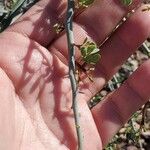
Parkinsonia florida
Blue paloverde
Description
Source: leafsnapParkinsonia florida, commonly known as the blue palo verde, is a small to medium-sized tree native to the southwestern United States and northern Mexico. It belongs to the Fabaceae family and is distinguished by its green bark, blue-green leaves, and bright yellow flowers that bloom in the spring. The tree can reach heights of up to 30 feet, with a spread of 20-30 feet. The blue palo verde thrives in full sun and well-drained soil. It is capable of withstanding drought conditions but requires occasional watering during prolonged dry spells. Its deep root system allows it to access water from deep within the soil. In landscaping, the blue palo verde is popular for several uses, including as an ornamental shade tree and as a key component in xeriscaping designs due to its drought tolerance. Its wood is also commonly used for firewood and fence posts. Moreover, Parkinsonia florida has been utilized for medicinal purposes by indigenous peoples for centuries, primarily for its anti-inflammatory properties. Traditionally, its bark was also used as a dye source. Overall, Parkinsonia florida is an attractive and versatile plant that holds cultural significance in various communities throughout its range.
🌳 Blue palo verde is vital to desert ecosystems because it provides food for a wide range of animals. When it blooms, its flowers offer abundant nectar that attracts bees, birds, and other nectar-seeking creatures. Its nutrient-rich seed pods are a food source for many desert inhabitants, such as birds and rodents. Besides supplying nutrition, blue palo verde also creates shaded areas that are essential for protecting these animals from drying out and helping regulate their temperature in the hot desert.
Care Guide
💧 Water Every 7 days
☀️ Light Full sun
Blue palo verde does best in places that get abundant sunlight all day, as this constant light is crucial for its growth and flowering. Its native habitat reflects these conditions with continuous illumination. If it does not receive enough sun, it will likely show stunted development, highlighting that full light exposure is essential to its health.
🌡️ Temperature 15–35°C
Blue palo verde is native to habitats with moderate temperatures of 59 to 95 °F (15 to 35 °C). It performs best under these conditions, though it can tolerate slight seasonal temperature changes.
💨 Humidity normal (40-60%)
This plant will thrive in moderate humidity, which is probably the level in your home. However, misting it a few times a week can be very beneficial. Make sure the room has good ventilation.
🪴 Soil 6-8
🌱 Fertilizer
Timing is essential for fertilizing Blue palo verde. Start fertilizing in early spring and continue monthly until early summer. Fertilizer encourages attractive blooms and supplies energy during both dormant periods and times of active growth.
🪴 Pot & Repot
✂️ Pruning
🌿 Propagating
🐛 Diseases & pets
☠️ Toxicity
Characteristics
- Plant Type
- Tree
- Life Cycle
- Perennial
- Genus
- Parkinsonia
- Family
- Fabaceae
- Hardiness Zone
- 8-10
- Mature Height
- 10.06 m
- Mature Spread
- 7.92 m
- Leaf Color
- Light Green
- Leaf Type
- Deciduous
- Flower Color
- Yellow
- Flower Size
- 2.03 cm to 3.05 cm
- Bloom Time
- Late spring, Early summer, Mid summer
- Planting Time
- Spring, Summer, Autumn
- Harvest Time
- Mid summer