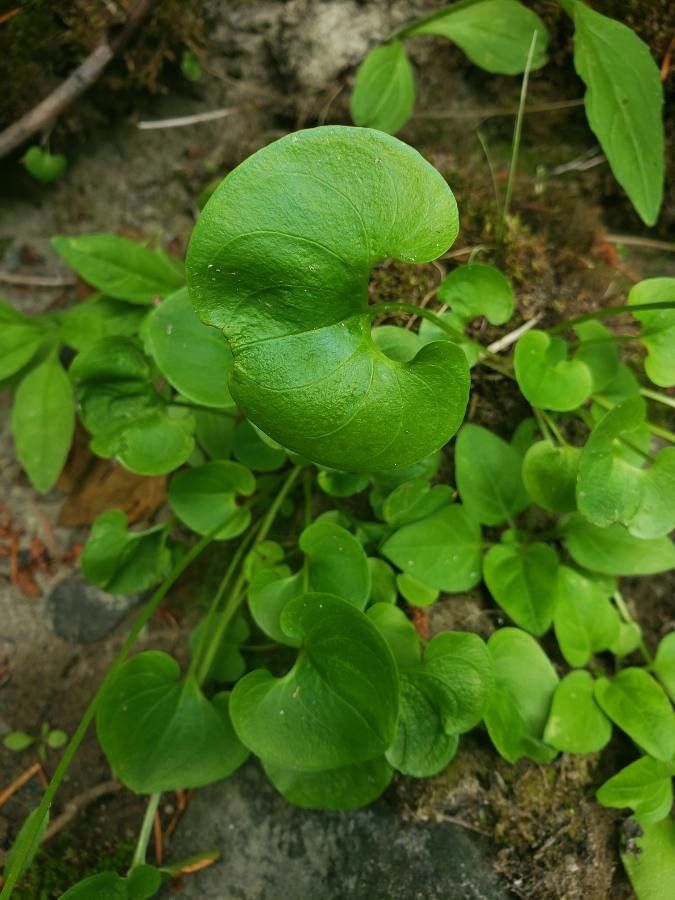
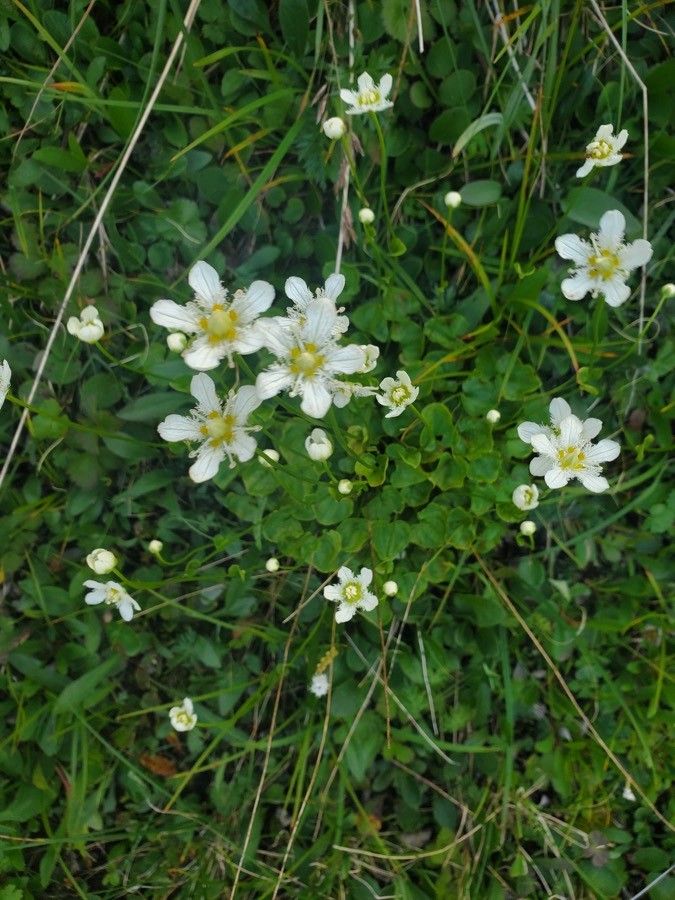
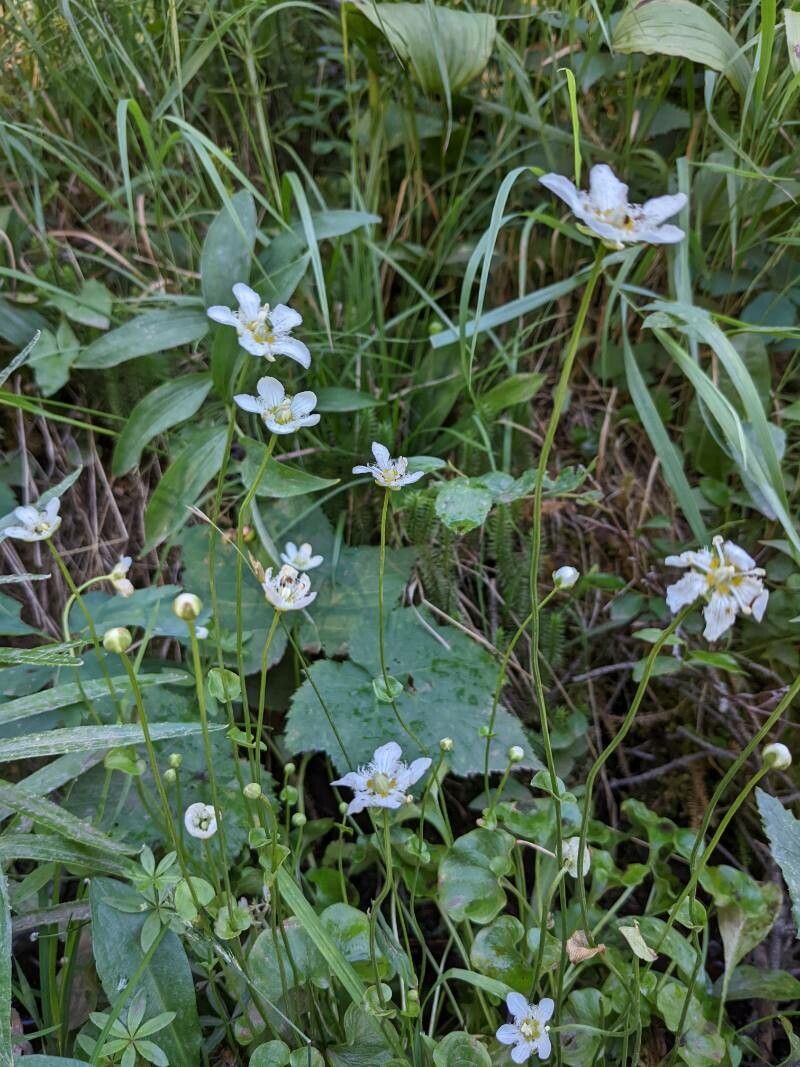
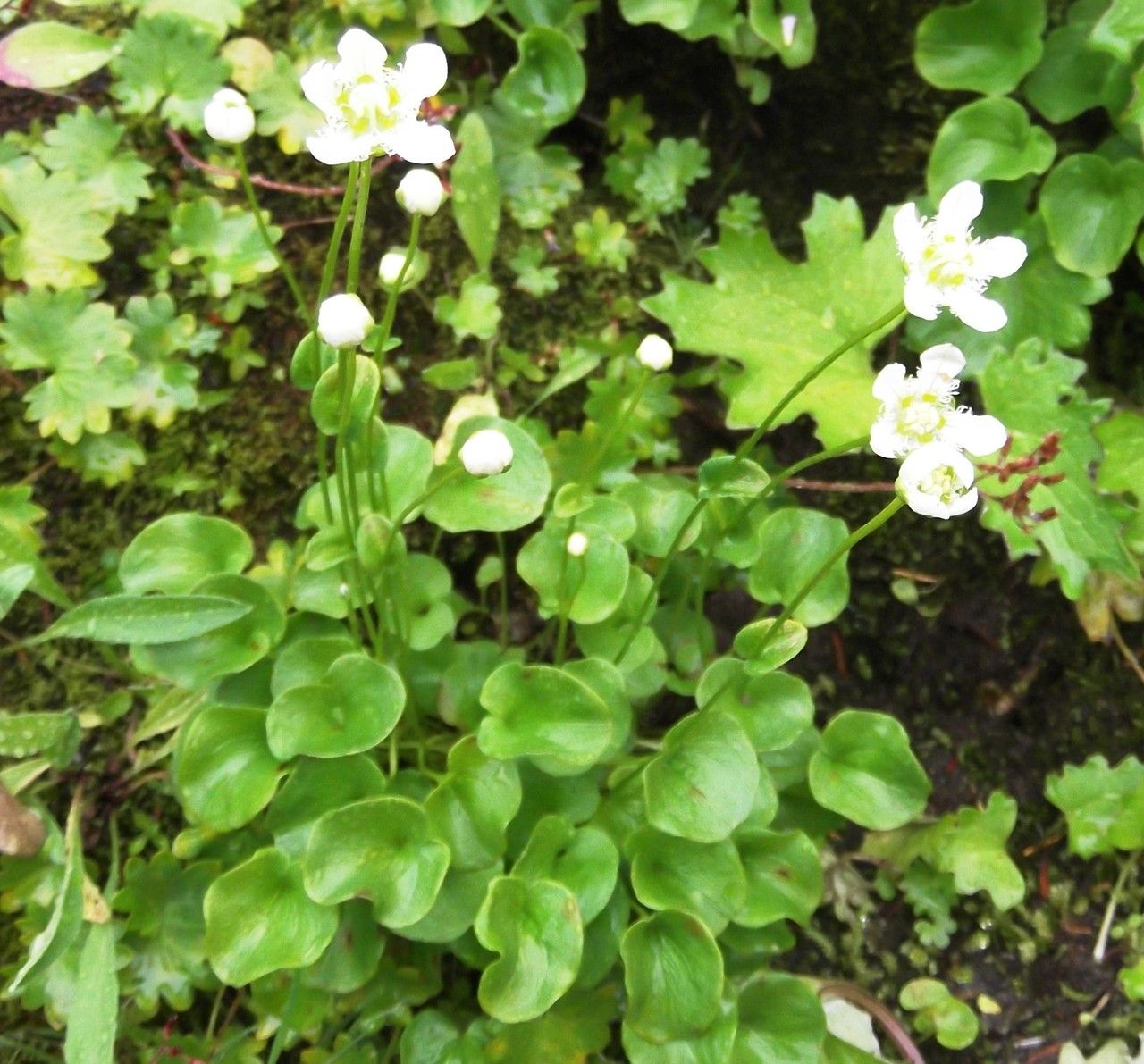
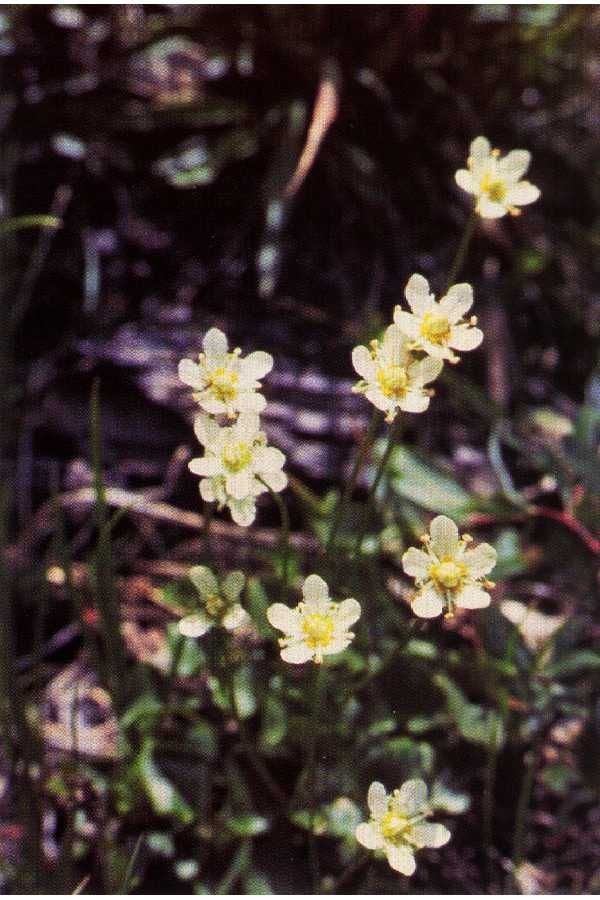
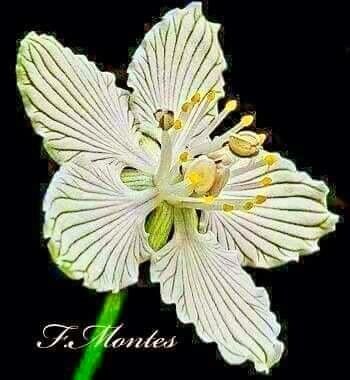
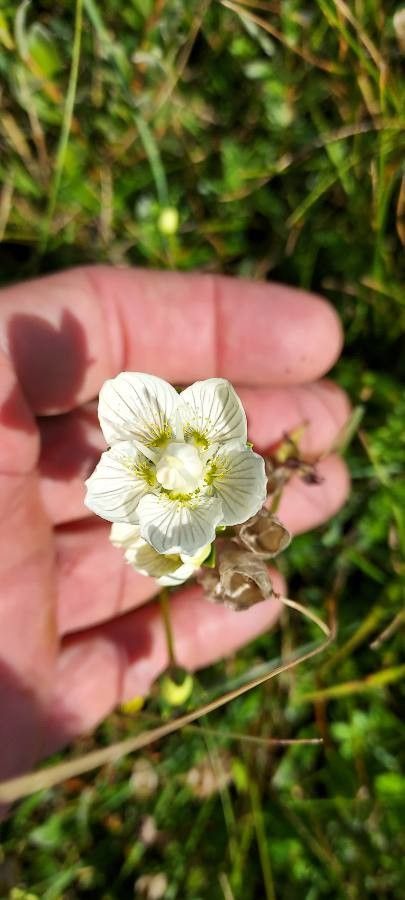
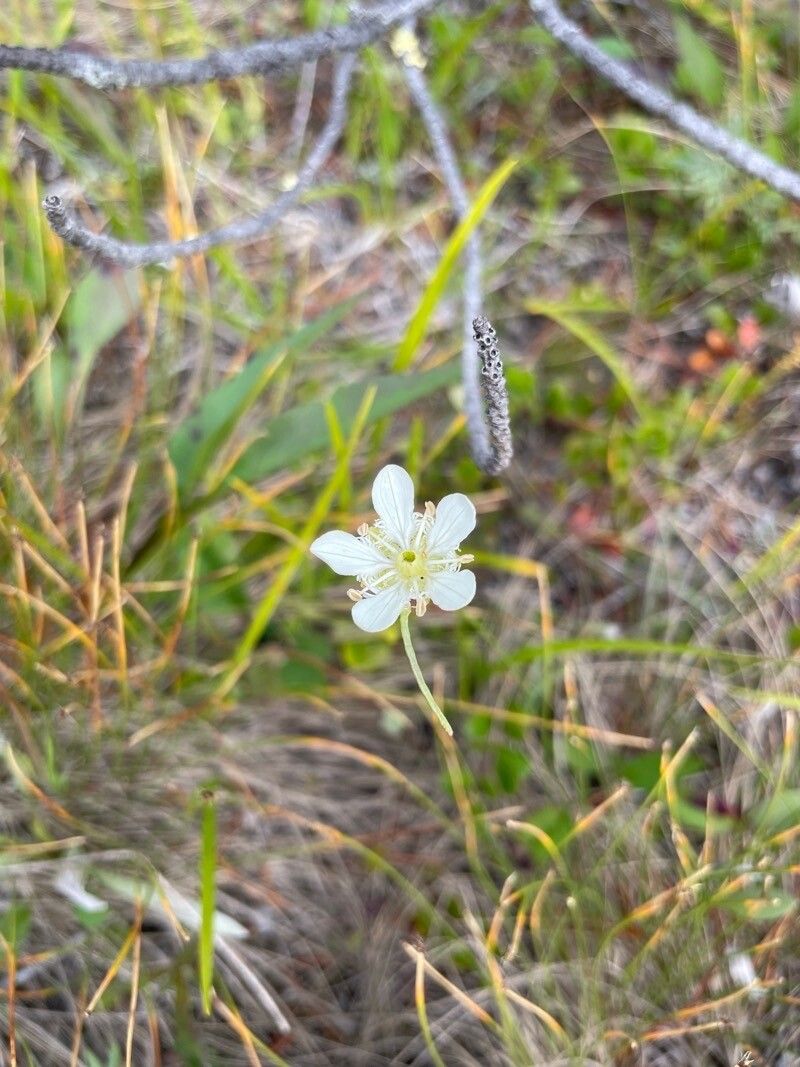
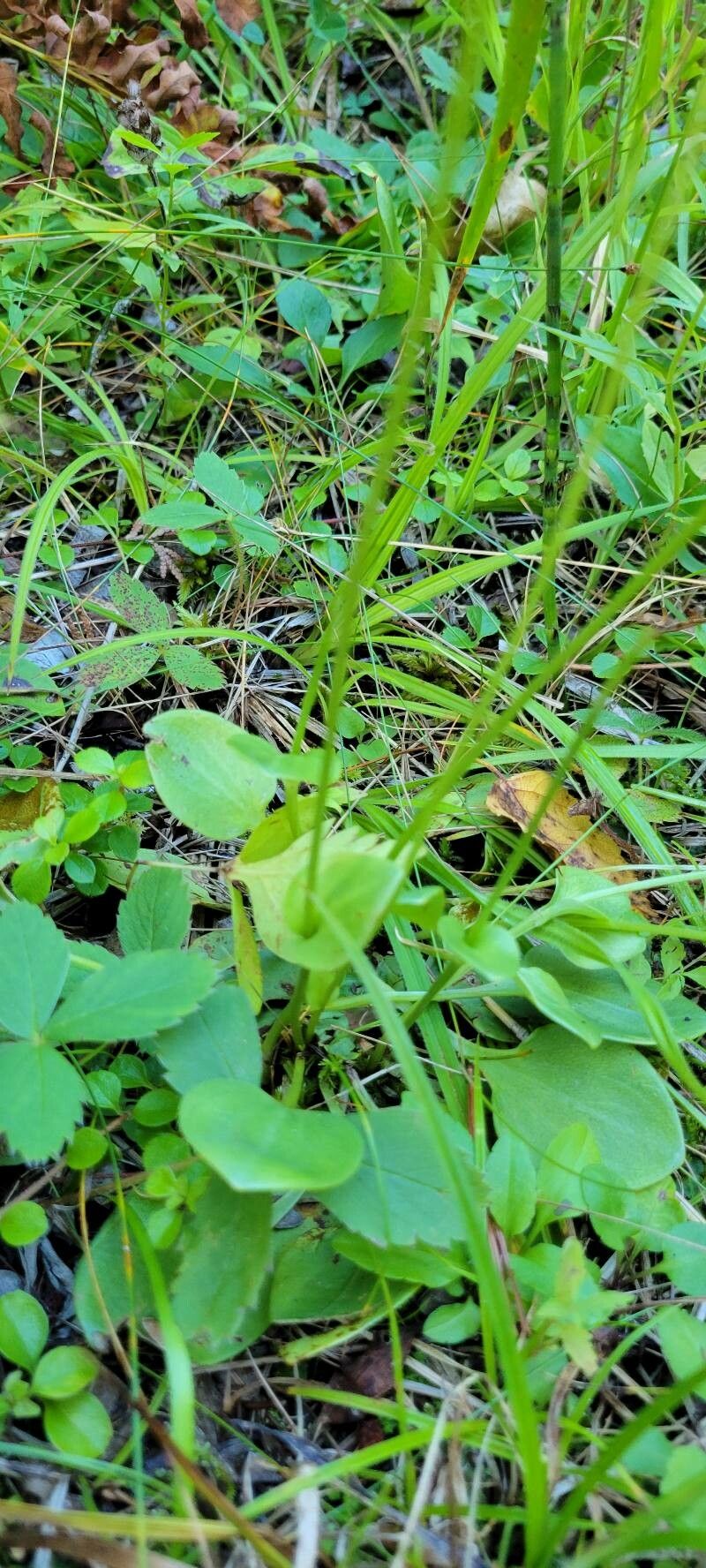
Parnassia fimbriata is a species of flowering plant in the family Celastraceae known by the common name fringed grass of Parnassus. It is native to western North America from Alaska and northwestern Canada to the southern Rocky Mountains, where it is a plant of alpine and subalpine environments. It is a perennial herb producing an erect flowering stem from a patch of basal leaves. The leaf has a rounded blade at the end of a long petiole, the leaf reaching a total of up to 16 centimeters long. The inflorescence may be up to 40 centimeters tall and consists of a mostly naked peduncle with one clasping bract midway up. The single flower has five small jagged sepals behind five veined, fringed white petals each roughly a centimeter long. At the center of the flower are five stamens and five staminodes with edges of many narrow, round-tipped lobes.
Fringed grass of parnassus is fairly disease-resistant and normally does not tend to get diseases. However, it can be vulnerable to pests and diseases present in its environment. These infections are typically not serious. For care, this plant requires a moderate level of maintenance. It should be pruned regularly to preserve a good appearance and support healthy growth. Fertilizing can also encourage flowering. Fringed grass of parnassus is suitable for anyone with outdoor areas like a garden or patio and does not demand extensive care experience. It may need more attention if grown indoors.
How to keep Parnassia Fimbriata.
Light
Fringed grass of parnassus is native to habitats such as forest understories or rocky areas, where it occurs in natural shade. It prefers partial sun but can tolerate full sun or full shade, demonstrating its versatile and hardy nature.
Fertilizer
Typically, a single spring application of fertilizer is enough for Fringed grass of parnassus, though several feedings can boost growth. Apply fertilizer every month to every month and a half. Fertilization improves the leaves' appearance and function, helping maintain even color and a healthy texture. It also promotes root development and nutrient uptake, supporting long-term plant health.
Pruning
The fringed grass of Parnassus is known for its delicate, fringed petals and thrives in moist, cool environments. Pruning in early spring is essential for removing dead foliage and promoting new growth. Additionally, trimming faded flowers encourages further blooming. Thinning out crowded areas helps improve air circulation, which supports the plant's overall health and vigor.
Botanical profile.
- Plant Type
- Herb
- Life Cycle
- Perennial
- Genus
- Parnassia
- Family
- Celastraceae
- Hardiness Zone
- 3-7
- Mature Height
- 10 cm to 30 cm
- Mature Spread
- 5 cm to 15 cm
- Leaf Color
- Green
- Leaf Type
- Deciduous
- Flower Size
- 1.02 cm to 2.03 cm
- Bloom Time
- Mid summer, Late summer
- Planting Time
- Spring, Summer, Autumn
- Harvest Time
- Early fall, Mid fall
Other names.