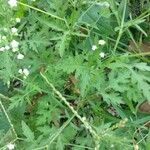
Parthenium hysterophorus
Congress grass · Carrot-grass · Santa Maria · Santa Maria feverfew · Ragweed parthenium
Description
Source: leafsnapParthenium hysterophorus, commonly known as Congress weed or carrot grass, is an invasive plant belonging to the Asteraceae family. Though native to Central and South America, it has spread to other continents, including Africa and Asia. The plant can grow up to 1 meter tall and features small white flowers that bloom in clusters. Its green leaves have serrated edges and are covered with fine hairs. Parthenium hysterophorus is considered a noxious weed due to its ability to outcompete native plants for essential resources such as water, nutrients, and sunlight. Additionally, it produces allelopathic chemicals that inhibit the growth of surrounding plants. This weed poses a significant threat not only to agriculture but also to human health, as it can cause severe allergic reactions upon contact. Efforts to control its spread have been made globally by governments and organizations such as the Food and Agriculture Organization (FAO). Various methods are being employed, including the introduction of biological control agents like insects or fungi that feed on the weed without affecting other crops or surrounding vegetation. In conclusion, Parthenium hysterophorus is an invasive species that poses a considerable threat to both agriculture and human health due to its aggressive growth and potential to cause severe allergic reactions.
🎭 Protection. Named for its ability to dispel fever, it is beneficial for healing.
Care Guide
💧 Water Every 7 days
Santa Maria feverfew thrives in tropical environments. While it requires consistent moisture, it becomes drought-tolerant once established. Ideally, it should be watered weekly, with increased watering during the growing season. Like many herbaceous plants, its growth and hydration depend on active growth phases.
How should I water my Santa Maria feverfew plant?
To water Santa Maria feverfew, you have several options. You can use a garden hose with a spray nozzle, a watering can, or any common watering tool. Santa Maria feverfew is not too picky about its water source and can survive with rainwater, tap water, or filtered water. However, it's best to avoid watering this plant from overhead to prevent leaf and flower damage as well as potential diseases. Instead, setting up a drip irrigation system is often the most effective method as it delivers water evenly and directly to the soil. If you have a container-grown Santa Maria feverfew, you can use a cup, watering can, or tap water to directly water the soil.
What should I do if I give my Santa Maria feverfew too much water or too little water?
If you notice that your Santa Maria feverfew lacks moisture, the solution is simple: water it more regularly. Overwatering, on the other hand, can be more problematic if not detected early. Overwatered plants are prone to diseases that can lead to their decline and death. To prevent this, choose a growing location with adequate sunlight to dry the soil and good drainage to prevent water from pooling. If your potted Santa Maria feverfew is overwatered, consider moving it to a new pot with proper drainage and loose soil during repotting.
How frequently do I need to water my Santa Maria feverfew plant?
To successfully care for your Santa Maria feverfew, it is important to water it regularly. During the growing season, which starts in spring, aim to water the plant once a week. As the weather gets warmer, you may need to increase this to two or three times a week, but be cautious not to overwater as it can harm the plant. Regardless of the frequency, it is essential to keep the soil relatively moist but not overly wet. Watering Santa Maria feverfew in a pot requires a slightly different approach. Since the soil in a pot can dry out faster, you will likely need to water it more frequently. In most cases, plan to water a potted Santa Maria feverfew a few times a week, compared to just once a week for one planted in the ground.
How much water does my Santa Maria feverfew plant need?
To determine how much water to give your Santa Maria feverfew, you have a few options. One approach is to feel the soil for moisture and water until the top six inches are moist. Another method is to use a set measurement, such as giving it about two gallons of water per week, adjusting based on the weather and soil dryness. However, be cautious with strict guidelines as they may cause overwatering. When growing in a container, check the soil moisture by sticking your finger in it or water until you see slight excess water draining from the pot.
How can I know if I'm giving enough water to my Santa Maria feverfew plant?
Santa Maria feverfew can be a bit tricky to water correctly. Although they need weekly watering to keep their deep roots nourished, these plants are highly prone to root rot, which can cause browning of the foliage. On the other hand, underwatering is not as much of a concern for Santa Maria feverfew, as they can withstand periods without additional watering. However, if you neglect to water them for too long, they may start to wilt and develop dry leaves.
☀️ Light Full sun
Santa Maria feverfew grows best when exposed to sunlight for most of the day. It can, however, tolerate less intense light. This need is due to the conditions of its native growing environment. Both too much and too little light can negatively affect the plant's growth and health.
What are the sunlight requirements for Santa Maria feverfew?
Santa Maria feverfew thrives best under full sun conditions, requiring more than 6 hours of sunlight daily. However, it can also tolerate partial sun, meaning it can grow well with about 3-6 hours of sunlight. It's essential to observe the movement of sunlight through your garden to find spots that offer the right balance of light and shade, ensuring the plant's well-being.
How does the origin of growth affect Santa Maria feverfew's sunlight needs?
The growth environment from which Santa Maria feverfew originates plays a crucial role in its sunlight needs. It flourishes when exposed to the sun for most of the day but can also endure less intense sunlight conditions. Both excessive and minimal light exposure can negatively impact the plant's growth, indicating its adaptable yet specific light requirements for optimal health.
What are some artificial lighting tips for indoor growth of Santa Maria feverfew?
Indoor plants, like Santa Maria feverfew, necessitate adequate lighting for optimal growth, especially when natural sunlight is insufficient. Artificial lights can significantly promote healthier growth. Some tips include choosing LED lights for their ability to provide specific light wavelengths, ensuring the artificial light covers 10-50W/sq ft based on the plant's sunlight needs, placing lights 12-36 inches above the plant, and mirroring natural daylight hours, generally between 8-12 hours per day.
What are some symptoms of inadequate light in Santa Maria feverfew?
When Santa Maria feverfew is grown indoors with insufficient light, it may display symptoms like smaller new leaves, leggy or sparse growth, accelerated leaf drop, halted new growth, paler new leaves, chlorosis, sunscald, leaf curling, wilting, and leaf scorching. These signs indicate that the plant isn't receiving the adequate light it requires to maintain its health.
What are the solutions for Santa Maria feverfew suffering from inadequate light?
To combat insufficient light, gradually relocate plants to sunnier spots, ensuring at least 6 hours of sunlight daily, and consider using a south-facing window. For indoor plants that cannot be moved easily, artificial lighting such as desk lamps or professional grow lights can be used for at least 8 hours a day. Outdoors, acclimate plants to sunnier locations slowly to prevent sunburn. If sunlight is blocked by trees, consider pruning to improve light exposure. For smaller plants, transplantation during their dormant period might be beneficial for better sun exposure and drainage.
🌡️ Temperature 20–37.8°C
In its native habitat, santa Maria feverfew prefers temperatures between 20 and 38 ℃ (68 to 100.4 ℉). However, it can tolerate temperatures as low as 10 ℃ (50 ℉) during winter. To keep it growing healthily, it is recommended to maintain the temperature within that preferred range.
What are the ideal growing conditions for Santa Maria feverfew?
Santa Maria feverfew thrives in temperatures ranging between 20 to 38°C (68 to 100.4°F), but it can also adjust to temperatures as low as 10°C (50°F) during the winter season. To maintain its healthy growth, keeping the temperature within this preferred range is suggested. The plant has some cold tolerance and does not generally require additional cold protection measures if temperatures are above the minimum tolerable limit. However, if temperatures are expected to drop below this minimum, temporary measures such as wrapping the plant in plastic film, fabric, or other materials are necessary, which should be removed once the temperature rises again.
How does Santa Maria feverfew react to low temperatures?
Santa Maria feverfew has moderate tolerance to low temperatures, performing best when kept above a certain minimum suitable growth temperature. During winter, it should remain above the minimum tolerable growing temperature. If the temperature falls below a certain limit, the plant's leaves may begin to droop; while they might recover in mild cases, severe cold can cause the leaves to wilt and eventually fall off. The recommended solution for frost damage includes trimming off the frost-damaged parts, wrapping the plant in protective materials such as non-woven fabric or cloth before anticipated low temperatures, and building a wind barrier to protect it from cold winds.
What effects do high temperatures have on Santa Maria feverfew?
During the summer, it's important to keep Santa Maria feverfew below a maximum suitable temperature. Exceeding a certain tolerable maximum temperature can lead to the leaves' color becoming lighter, the tips drying and withering, leaf curl, and increased susceptibility to sunburn. To mitigate damage from high temperatures, trim away sunburned and dried-up parts of the plant. Relocate the plant to a shaded location, particularly during midday and afternoon, or use a shade cloth. Additionally, watering the plant in the morning and evening helps keep the soil moist and supports the plant in high heat.
💨 Humidity
🪴 Soil 6-7
🌱 Fertilizer
Santa Maria feverfew benefits from regular, light feedings of fertilizer to encourage healthy leaf growth. You should feed Santa Maria feverfew about once a month during the summer. Nitrogen is important for foliage, and adding nitrogen-rich sources helps Santa Maria feverfew thrive.
🪴 Pot & Repot
✂️ Pruning
🌿 Propagating
🐛 Diseases & pets
☠️ Toxicity
Characteristics
- Plant Type
- Herb
- Life Cycle
- Annual
- Genus
- Parthenium
- Family
- Asteraceae
- Hardiness Zone
- 9-11
- Mature Height
- 61 cm to 91 cm
- Mature Spread
- 0.91 m to 1.22 m
- Leaf Color
- Green
- Leaf Type
- Deciduous
- Flower Color
- White
- Flower Size
- 2.54 cm
- Bloom Time
- Late spring, Summer
- Planting Time
- Autumn
- Harvest Time
- Summer, Early fall
- Native Area
- Belize, Honduras, Mexico, Guatemala, Dominican Republic, Trinidad and Tobago, Panama, Jamaica, Uruguay, Colombia, Bahamas, Paraguay, Argentina, Haiti, Bolivia, Venezuela, Brazil, Guyana, Nicaragua, Ecuador, Suriname, Costa Rica