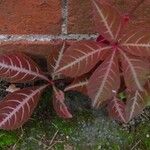
Parthenocissus henryana
Chinese Virginia-creeper
Description
Source: leafsnapParthenocissus henryana, commonly known as the Chinese Virginia creeper, is a deciduous climbing plant from the Vitaceae family. Native to China, this plant has gained popularity worldwide as an ornamental species due to its striking foliage and ease of cultivation. The leaves of Parthenocissus henryana are dark green with a distinctive network of white veins. In autumn, they transform into vibrant shades of red and purple, enhancing the plant's already impressive appearance. The woody stems can grow up to 20 meters long, making it an excellent choice for covering large areas. This creeper is adept at climbing walls or other structures, utilizing adhesive pads on its tendrils. It can also be used as ground cover or trained on trellises for added visual interest. Parthenocissus henryana thrives in well-drained soil with moderate moisture levels but is capable of tolerating dry conditions once established. It performs best in full sun or partial shade, though some protection from strong winds may be necessary. Overall, Parthenocissus henryana is an excellent choice for gardeners seeking an easy-to-grow climbing plant with attractive foliage that provides year-round color and texture.
Care Guide
💧 Water Every 7 days
The silvervein creeper originates from subtropical regions and thrives in moderate humidity with consistent moisture. It requires weekly watering to keep the soil evenly moist. As an outdoor climbing plant, the silvervein creeper efficiently captures rainwater during its growing season, which is essential for the development of its lush foliage.
☀️ Light Partial sun
Silvervein creeper does best in a spot with moderate sunlight, though it can adapt to locations with greater or lesser exposure. Its native habitat has variable light conditions in both intensity and duration. Insufficient sunlight can impede lush growth, while excessive light may cause leaf scorch.
What are the sunlight requirements for Silvervein creeper?
Silvervein creeper needs a moderate amount of sunlight to thrive, typically around 3-6 hours of sunlight per day. It can adapt to both more or less light exposure due to its origin in habitats with variable light conditions. Insufficient sunlight may hinder growth, while too much can cause leaf scorch. It's important to observe how sunlight moves through your garden, selecting spots that provide a good balance for the plant's needs.
How can artificial lighting be used for indoor Silvervein creeper plants?
Indoor Silvervein creeper plants require adequate lighting, especially when natural sunlight is limited. In such cases, artificial lights can promote healthier growth. LED lights are recommended as they can be customized for the plant's needs. Full sun plants need 30-50W/sq ft, partial sun plants require 20-30W/sq ft, and full shade plants need 10-20W/sq ft of artificial light. The light source should be placed 12-36 inches above the plant, and it's crucial to mimic natural daylight hours, typically 8-12 hours per day.
What are the signs of inadequate lighting for Silvervein creeper?
Inadequate lighting can lead to several symptoms in Silvervein creeper, such as smaller new leaves, leggy or sparse growth, faster leaf drop, slower or halted growth, and lighter-colored or irregularly patterned new leaves. Additionally, excessive sunlight can cause chlorosis, sunscald, leaf curling, wilting, and leaf scorching. These symptoms indicate the plant's struggle with light conditions, either too little or too much.
What solutions are available for Silvervein creeper facing inadequate sunlight?
To address inadequate sunlight for Silvervein creeper, gradually increase sunlight exposure by shifting the plant to sunnier spots each week until it gets 3-6 hours of direct sunlight daily. For large or immovable plants, use artificial lighting like desk or ceiling lamps for at least 8 hours a day or invest in grow lights. Outdoors, move plants progressively to sunnier locations to avoid sunburn. If sunlight is blocked by trees or buildings, consider pruning or relocating smaller plants to sunnier areas during their dormant period for better growth.
🌡️ Temperature 10–35°C
Silvervein creeper is native to milder climates, where temperatures typically range from 50 to 95 °F (10 to 35 ℃). During hotter seasons it may require extra watering to help it cool down. In the cooler months, protect it from freezing.
What is the native climate for Silvervein creeper?
The Silvervein creeper, botanically known as Parthenocissus henryana, is native to milder climates. It thrives in temperatures typically ranging from 50 to 95 °F (10 to 35 °C). During the hotter seasons, the plant may require additional watering to help cool it down, whereas in cooler months, it is essential to protect it from freezing conditions. Despite its strong cold resistance, in regions where winter temperatures are expected to fall below -25°C, it's important to take steps to protect the plant. Wrapping the trunk and branches with non-woven fabric or cloth can offer the necessary cold protection. Additionally, watering the plant abundantly before the first freeze in autumn ensures the soil remains moist and enters a frozen state, which helps in preventing drought and water scarcity for the Silvervein creeper during the winter and early spring.
How does low temperature affect Silvervein creeper and what are the solutions?
Silvervein creeper is cold-tolerant and prefers temperatures above 10°C. During winter, maintaining a temperature above -15°C is ideal for the plant's health. If temperatures fall below -25°C, there may not be noticeable changes during the winter; however, by spring, the branches may turn brittle and dry, and the plant might not produce new shoots. To address this issue in the spring, prune away any dead branches that have failed to produce new leaves. This maintenance helps in removing damaged parts of the plant and encourages new growth.
What are the effects of high temperature on Silvervein creeper and how can they be mitigated?
In the summer months, it is crucial to keep the Silvervein creeper's environment below 35°C to prevent heat stress. When temperatures soar above 38°C, the plant's leaves might become lighter in color, and their tips may appear dry and withered, indicating a higher susceptibility to sunburn. To mitigate the effects of high temperature, trim away the sunburned and dried-up parts of the plant to prevent further damage. Relocating the plant to a shaded location, especially to avoid the midday and afternoon sun, or using a shade cloth, can significantly reduce the risk. Additionally, ensure the soil remains moist by watering the plant in the morning and evening. These measures can help protect the Silvervein creeper from extreme heat and ensure its healthy growth.
💨 Humidity
🪴 Soil 6-7
🌱 Fertilizer
Timing is important when fertilizing Silvervein creeper. Apply fertilizer in early spring and continue monthly until early summer. The fertilizer promotes attractive blooms and supplies energy during both dormant and active growth phases.
🪴 Pot & Repot
✂️ Pruning
The Silvervein Creeper is a robust vine known for its striking silver-veined leaves. To manage its size and shape, as well as to remove dead wood and thin out congested areas for better air circulation, it should be pruned in early spring. Regular pruning encourages healthy growth and helps prevent the plant from becoming invasive.
🌿 Propagating
🐛 Diseases & pets
☠️ Toxicity
Characteristics
- Plant Type
- Vine
- Life Cycle
- Perennial
- Genus
- Parthenocissus
- Family
- Vitaceae
- Hardiness Zone
- 6-9
- Mature Height
- 9.14 m
- Mature Spread
- 3.05 m
- Leaf Color
- Green, White, Red
- Leaf Type
- Deciduous
- Flower Color
- Green
- Flower Size
- 2.54 cm
- Bloom Time
- Early summer, Mid summer
- Planting Time
- Spring, Summer, Autumn
- Harvest Time
- Late summer, Early fall, Mid fall
- Native Area
- China