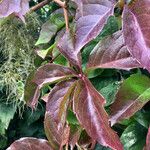
Parthenocissus quinquefolia
Virginia creeper · Poision ivy · Five-leaf-ivy · Woodbine · American ivy
Description
Source: leafsnapParthenocissus quinquefolia, commonly known as Virginia creeper, is a deciduous vine native to eastern and central North America. This fast-growing plant can climb up to 50 feet tall and spread up to 10 feet wide. Its leaves are compound with five leaflets that turn bright red in the fall. In the summer, the plant produces small greenish-white flowers, which are followed by blue-black berries that attract birds. Virginia creeper is often used as a ground cover or climbing vine for walls, fences, and trellises due to its ability to cling tightly with adhesive pads at the ends of its tendrils. It prefers moist soil but can tolerate drought once established. Although Virginia creeper can be invasive in some areas because of its rapid growth rate and ability to spread by seed or root suckers, it provides important habitat for wildlife such as birds and insects. Overall, it is a versatile plant with attractive foliage that adds interest and texture to any space where it grows.
🌳 Virginia creeper has a deep bluish-black hue that drew the attention of Native Americans. They resourcefully used the berries to dye textiles, turning to Virginia creeper as a natural source of color.
🎭 Matrimony, companionship, faithfulness, perseverance, indirect advancement, protection by concealment, intellectual or athletic accomplishment
Care Guide
💧 Water Every 7 days
Virginia creeper thrives in woodland habitats with consistent moisture, as it prefers evenly moist soil. Once established, it can tolerate moderate drought. It's important to water it weekly to ensure proper hydration. As an adaptive climber, Virginia creeper adjusts its water uptake to support growth during the growing season.
When Should I Water My Virginia Creeper?
Watering your Virginia Creeper is crucial for its health, growth, and to avoid diseases. Check the top 2-3 inches of the soil for dryness, which signals your plant needs water. Wilted or drooping leaves also indicate the need for water, but be cautious as they might not always perk up if the plant is diseased. Discoloration to a dull or yellow-green and less rigidity in the stems are other signs. Virginia Creeper's watering needs vary with environmental changes; more water is needed during hot, sunny weather. Be wary of overwatering as it could lead to root rot, while under-watering can severely stress or kill your plant.
How Should I Water My Virginia Creeper?
For optimal health, Virginia Creeper requires evenly moist soil, achieved through deep, infrequent watering. Different techniques include bottom watering, using a soaker hose, or a watering can with a long spout for deeper water penetration. It's sensitive to overwatering, which risks root rot. A moisture meter can help monitor soil moisture levels efficiently. Focus on watering the base without saturating the area or the foliage, to prevent disease-promoting conditions.
How Much Water Does Virginia Creeper Really Need?
The water requirements for Virginia Creeper vary. An average-sized potted plant needs its root ball, as deep as 2 feet, thoroughly soaked. Conditions such as dry periods or larger containers may necessitate more water. Signs of both under and overwatering are visible on the foliage. The best time to water is when the top inch of soil dries out entirely, focusing on the active growth phase to maintain a lush appearance. Improper watering could result in root rot, disease, or even death.
What Kind of Water is Best for Virginia Creeper?
Virginia Creeper thrives on rainwater, distilled water, or filtered tap water. If using tap water, let it sit for 24 hours to evaporate chlorine or potential toxins, reducing harm and improving nutrient absorption. It is sensitive to chlorine, fluoride, and high mineral concentrations, which can cause discoloration or stress. Room temperature water is preferred to prevent shock.
How Do Virginia Creeper's Watering Needs Change with the Seasons?
Virginia Creeper's watering needs change with the seasons. In spring, ensure soil moisture to support new growth, adjusting for rainfall and avoiding waterlogging. Summer's heat increases water needs, while ensuring consistency to avoid root rot. Autumn brings reduced water demand as the plant enters dormancy, gradually reducing watering and keeping soil moderately dry. In winter, water infrequently, only to prevent over-drying, avoiding root rots in the dormant phase.
☀️ Light Full sun
Virginia creeper grows best in full sun, but it can adapt to lower light or shaded locations. Its natural habitats include places with varying sun exposure, so it is flexible about light conditions. Still, excessive or insufficient light can affect the plant’s health and appearance.
What are the sunlight requirements for Virginia creeper?
Virginia creeper needs above 6 hours of sunlight daily to be considered in full sun, while it requires about 3-6 hours of sunlight if it's in partial sun or full shade. Observing how sunlight moves through your garden is crucial to find spots that offer the right balance for these plants. Despite its need for abundant sunlight, Virginia creeper is adaptable and can grow in varying light conditions, from full sun exposure to shaded areas. However, it's important to note that too little or too much sunlight can impact the plant's health and vibrancy.
How can artificial lighting support the growth of indoor Virginia creeper plants?
Indoor Virginia creeper plants benefit from adequate lighting to ensure optimal growth. In situations where natural sunlight is scarce, especially during winter or in less sunny areas, artificial lights are essential. They not only promote healthier, faster growth but can also be customized to meet the specific light requirements of your plants. For full sun plants, 30-50W/sq ft is recommended, 20-30W/sq ft for partial sun plants, and 10-20W/sq ft for full shade plants. The artificial light source should be placed 12-36 inches above the plant to mimic natural sunlight, and the duration should resemble natural daylight hours, usually between 8-12 hours daily.
What are the symptoms of insufficient light in Virginia creeper?
Virginia creeper exhibits several symptoms when it isn't receiving enough light. These include the growth of smaller leaves compared to mature ones, leggy or sparse growth where the spaces between leaves or stems lengthen, faster leaf drop as the plant tries to conserve resources, delayed growth or a complete halt in new leaf production, and the development of paler new leaves or irregular color patterns. Additionally, chlorosis, or the yellowing of leaves due to chlorophyll breakdown from excessive sunlight, sunscald, leaf curling, wilting, and leaf scorching are other notable symptoms indicating that the plant is either getting too much sun or not enough light.
How to address light deficiencies for Virginia creeper in both indoor and outdoor settings?
To remedy light deficiencies for Virginia creeper, it's advised to gradually introduce the plant to more sunlight. For indoor plants, this can be done by moving them closer to a south-facing window, ensuring they receive at least 6 hours of direct sunlight, or using artificial light sources for 8 hours daily if relocation isn't feasible. Outdoors, incrementally moving your plants to sunnier spots while avoiding sudden intense exposure prevents sunburn. Additionally, reducing obstructions like pruning tree branches can help increase sunlight. Transplanting smaller plants during their dormant period to a brighter location can also significantly benefit their growth. Note that while these interventions can encourage healthy new growth, parts of the plant that already suffered from insufficient light may not fully recover.
🌡️ Temperature 0–37.8°C
The virginia creeper is a temperate woody plant that prefers temperatures between 32°F and 100°F (0 to 38°C), conditions typical of its native range in eastern North America. During the growing season it can tolerate moderate temperatures, but cold winters may cause some leaf damage. In hotter months, giving plenty of water and some shade can help prevent wilting and leaf scorching.
What temperature range does Virginia creeper prefer, and how does it cope with the changing seasons?
Virginia creeper is a temperate woody plant native to eastern North America, thriving in temperatures from 32°F to 100°F (0°C to 38°C). During the growing season, it adjusts well to moderate temperatures, though it can suffer leaf damage in cold winters. In hotter months, providing adequate water and shade can prevent wilting and leaf scorching. Despite its strong cold resistance, in exceptionally cold winters where temperatures drop below typical limits, it's crucial to protect the plant by wrapping its trunk and branches with insulating materials and ensuring the soil is moist before the first freeze, which helps prevent drought stress.
What should be done if Virginia creeper experiences extreme cold?
Virginia creeper is cold-tolerant but performs best when temperatures remain above its minimum growth threshold. If winter temperatures fall below this critical point, the plant can endure the cold without visible changes during the winter, but come spring, the branches might turn brittle, dry, and fail to produce new shoots. To address this, in spring, it's recommended to prune away any dead branches to encourage healthy new growth.
How does high temperature affect Virginia creeper and what solutions are recommended?
During summer, it's essential to keep Virginia creeper's exposure to temperatures below it's ascribed maximum to prevent stress. Exceeding this limit can cause the leaves to lighten in color, the tips to dry and wither, and increase susceptibility to sunburn. If these symptoms occur, trim the sunburned and dried parts away, move the plant to a shaded location during peak sun hours, or use a shade cloth. Additionally, watering the plant in the morning and evening will help keep the soil moist and reduce heat stress.
💨 Humidity high (>60%)
This plant needs special care because it loves high humidity levels of 60-80% or more. The best way to achieve this is by placing a humidifier near the plant. Daily misting is also essential! Make sure the room has good ventilation.
🪴 Soil 5-7
🌱 Fertilizer
Fertilize your Virginia creeper in early spring to encourage healthy growth. Consistent fertilization improves overall health, leading to vigorous growth, increased resilience to harsh conditions, and better resistance to diseases and pests. Stick to a regular fertilization schedule for your Virginia creeper to maintain vibrant foliage with deep color and a lush appearance.
Why is it necessary to put fertilizer on my Virginia creeper plant?
To ensure your Virginia creeper's overall health, it is important to fertilize it regularly regardless of the variety you own. Adequate nutrients not only promote stronger growth but also enhance the plant's ability to resist harsh growing conditions, diseases, and pests. Since the foliage of your Virginia creeper is its main attraction, maintaining its integrity should be a priority. This entails following a tailored fertilization schedule to encourage vibrant and lush leaves.
When should I fertilize my Virginia creeper?
To ensure healthy growth, it is recommended to fertilize your Virginia creeper for the first time in late winter or early spring. This provides the necessary nutrients for the plant to thrive once the weather warms up. Additionally, in warm climate regions, it is beneficial to give another round of fertilizer in early fall. This not only supplements the soil with nutrients for the next growing season but also helps the Virginia creeper withstand winter cold and prevent foliage damage. By fertilizing earlier, the new branches will have sufficient time to grow and withstand the harsh winter conditions.
When is the best time to not fertilize my Virginia creeper?
There are specific times of the year when you shouldn't fertilize your Virginia creeper. The first instance is in the early and mid-winter when the plant is dormant and doesn't require nutrients. Additionally, it's not recommended to fertilize during the late spring and summer, as the hot and dry weather can have a negative effect on the plant's response to fertilization. To prevent any problems, it's best to stick to a fertilization schedule that involves feeding only in early spring and early fall.
What kind of fertilizer does my Virginia creeper plant need?
The most important nutrient for a Virginia creeper is usually nitrogen, but phosphorus and potassium are also important. It is recommended to use a balanced fertilizer like a 10-10-10, as all three main nutrients are needed. However, a more nuanced ratio of nutrients, with a bit higher nitrogen, can lead to optimal growth. For example, a ratio of 10-6-4 often works well. You can choose between granular fertilizer or liquid-based fertilizer when fertilizing the plant.
How should I fertilize my Virginia creeper plant?
To fertilize your Virginia creeper, there are two options: using a granular fertilizer or a liquid fertilizer. If you choose granular, simply sprinkle it on the soil at the right time. The slow-release feature of granular fertilizer will gradually release nutrients into the soil. Before applying the fertilizer, it's a good idea to lightly water your Virginia creeper. On the other hand, liquid fertilizer is less common but still an alternative. To use it, mix the fertilizer with water and pour it around the base of the creeper. Occasionally, it's helpful to conduct a soil test before fertilizing to determine if any pH adjustments are needed.
🪴 Pot & Repot Every 12 months
To ensure optimal growth of Virginia creeper, use large containers and water frequently to keep the soil moist.
✂️ Pruning
To keep your Virginia creeper thriving, perform early spring pruning. This involves removing dead stems, thinning out overcrowded areas, and controlling the vine's spread. These steps encourage healthy growth, enable flowering, and improve air circulation, which reduces the risk of disease. Pruning also helps maintain the plant’s shape and size, ensuring your garden remains attractive.
🌿 Propagating
🐛 Diseases & pets
☠️ Toxicity
Characteristics
- Plant Type
- Vine
- Life Cycle
- Perennial
- Genus
- Parthenocissus
- Family
- Vitaceae
- Hardiness Zone
- 3-11
- Mature Height
- 20.12 m to 29.87 m
- Mature Spread
- 1.52 m to 3.05 m
- Leaf Color
- Green, Red, Orange
- Leaf Type
- Deciduous
- Flower Color
- Green, White, Yellow
- Flower Size
- 7.62 cm to 20.32 cm
- Bloom Time
- Early summer, Mid summer
- Planting Time
- Spring, Autumn
- Harvest Time
- Mid summer, Late summer
- Native Area
- Bahamas, Mexico, Guatemala