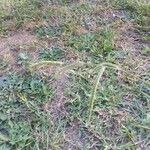
Paspalum dilatatum
ارزن باتلاقی · Dallis grass · Water grass · Caterpillar grass · Tall paspalum
Description
Source: leafsnapPaspalum dilatatum, commonly known as dallisgrass, is a warm-season perennial grass native to South America that has spread to many parts of the world. It features a deep root system and can grow up to 3 feet tall. The leaves are long and narrow with rough edges, and the stems are thick and tough. Dallisgrass is often used as forage for livestock due to its high protein content. Additionally, its deep root system makes it effective for erosion control. However, it can become invasive in some areas, outcompeting native vegetation. Dallisgrass thrives in full sun but can also tolerate some shade. It grows best in well-drained soils with moderate moisture levels and can withstand drought conditions once established. Overall, Paspalum dilatatum is a versatile plant that offers numerous benefits, but it should be monitored carefully in regions where it has the potential to become invasive.
💡 After being introduced beyond its native range, dallis grass rapidly grew and spread through its rhizomes, becoming an invasive weed in many regions. Today, it is found in the southern half of North America, Southern Europe, Africa, Australia, New Zealand, and other warm climate areas.
🌳 Dallis grass, frequently considered merely a grass, is an important fodder in regions like South America due to its high nutritional value. It is not only grazed but also preserved by ensiling to prolong its longevity. The grass harbors fungi that produce substances which repel plant-eaters, providing a natural form of pest control.
🎭 Psychic abilities, protection. It represents food, concealment and resilience.
Care Guide
💧 Water Every 7 days
Dallis grass, native to South America, thrives in moist and wet environments. For optimal growth, it should be watered twice a week. As an evergreen plant, dallis grass adapts well to outdoor settings and benefits from regular rainfall, helping it stay hydrated in various climates.
What should I do if I give my Dallis grass too much water or not enough water?
If your Dallis grass is turning yellow or pale green, it may be because it is receiving too much water. Dallis grass is very adaptable to different types of soil, but it does not do well in soil that does not drain properly. It is best to avoid planting this grass in marshy areas or places where the ground feels spongy. If you irrigate your lawn, it is better to water it less rather than more. Dallis grass thrives when it is allowed to dry out before being watered again. Excessive moisture in the soil can lead to the growth of fungus, as well as provide a favorable environment for insect pests and weeds. While you cannot control how much rain falls on your Zoysia grass, occasional heavy rainfall is generally not a problem for this resilient plant. However, consistent overwatering can cause Dallis grass to suffer or even die off. On the other hand, one of the benefits of growing Dallis grass is that it can survive with minimal water due to its water-conserving adaptations. The grass has a deep root system which allows it to access groundwater when it has not been watered for an extended period. In drought conditions, the grass may turn yellow and become crispy, but it can recover once the dry spell ends. Dallis grass's ability to bounce back from various conditions is one of the reasons why it is so popular.
How do I water Dallis grass?
In most places where grass is used in landscaping, it usually doesn't need extra watering because there is enough rainfall. However, if you're in a dry climate or there is a long drought, Dallis grass may die if it isn't watered. During winter, this grass looks dead but still needs moisture to avoid dehydration. It starts growing again in spring when the weather warms up. As for watering Dallis grass, a good rule of thumb is to give it about an inch of water every week. It's better to thoroughly drench it in a short amount of time rather than slowly drip water, as this helps the roots grow stronger and deeper. When you first plant the grass, it has specific watering requirements. For the first 3 to 4 weeks, the young grass needs to be kept moist to establish itself. Late spring to early summer is the best time to plant Dallis grass because there is usually more rainfall. However, if you recently planted grass and your area experiences a dry period, it's a good idea to cover the grass or water the lawn to keep the soil moist and prevent the water from evaporating.
What do I need to think about when I water my Dallis grass?
The frequency of watering needed for Dallis grass depends on the environmental conditions, soil type, and drainage. For sandy soil that doesn't hold moisture well, you may need to water more often. However, clay soils that drain slowly and retain water might not require additional watering. Keep in mind that Dallis grass is sensitive to excessive water around its roots, so too much water can be detrimental.
☀️ Light Full sun
Dallis grass performs best in locations that receive strong light for most of the day, though it can tolerate areas with lower brightness. Native to sunlit habitats, it grows well under those conditions, but both too much and too little sunlight can inhibit its growth and flowering.
What are the sunlight requirements for Dallis grass?
Dallis grass requires full sun, meaning it thrives in areas that receive more than 6 hours of sunlight daily, but it can also grow in partial sun with about 3-6 hours of sunlight. It is essential to watch how sunlight moves through your garden to choose spots that provide a perfect balance of light and shade, ensuring the plants' happiness. Dallis grass originates from environments with abundant sunlight, and both excessive and insufficient sunlight can impact its growth and flowering negatively.
How can artificial lighting benefit indoor Dallis grass plants?
Indoor Dallis grass plants require adequate lighting for optimal growth, especially when natural sunlight is insufficient, such as in winter or less sunny locations. Artificial lighting, like LED lights, offer a solution by promoting faster, healthier growth. For plants that need full sun, 30-50W/sq ft of artificial light is recommended, 20-30W/sq ft for partial sun plants, and 10-20W/sq ft for full shade plants. The light source should be placed 12-36 inches above the plant to mimic natural sunlight, with most plants needing 8-12 hours of light per day.
What are the common symptoms of inappropriate lighting in Dallis grass?
When Dallis grass is grown in inadequate lighting conditions, it may exhibit several symptoms including smaller new leaves, leggy or sparse growth, accelerated leaf drop, slower or no growth, lighter-colored new leaves, chlorosis (leaves turning yellow), sunscald, leaf curling, wilting, and leaf scorching. These symptoms indicate either too much or too little exposure to light, affecting the plant's ability to photosynthesize and sustain healthy growth.
What solutions can be applied to resolve lighting issues for Dallis grass?
To address lighting issues for Dallis grass, consider the following solutions: For indoor plants, gradually move them to a sunnier location until they receive at least 6 hours of direct sunlight daily, using a south-facing window and keeping curtains open. For plants that are large or not easily movable, consider using artificial light for at least 8 hours daily. Outdoor plants should also be gradually moved to sunnier spots to avoid sunburn, with affected parts unlikely to recover, but new growth will be healthy post-adjustment. To increase light exposure for ground plants, reduce obstructions like trees by pruning branches and consider transplanting smaller plants to sunnier locations during their dormant period.
🌡️ Temperature 15–37.8°C
Dallis grass is a species of plant that can thrive across a temperature range of 15 to 38 ℃ (59 to 100.4 ℉). Native to tropical and subtropical areas, it is adapted to those climates and tends to prefer warm conditions. In colder seasons it may need some adjustments to maintain optimal growth conditions.
What is Dallis grass and where does it thrive best?
Dallis grass, scientifically known as Paspalum dilatatum, is a plant species native to both tropical and subtropical regions. It is well-adapted to a wide range of temperatures, flourishing best between 15°C (59°F) to 38°C (100.4°F). Thanks to its robust nature, Dallis grass demonstrates a preference for warm temperatures and exhibits strong cold resistance, allowing it to maintain growth in varying climates without requiring special frost protection measures in most cases.
How do I protect Dallis grass from extreme cold?
While Dallis grass has strong cold resistance, in regions where winter temperatures are expected to drop below -15°C, it's important to take measures to protect the plant. This can include covering the plant with soil or straw to insulate it against the cold. Additionally, watering the plant abundantly before the first freeze in autumn is recommended. This helps ensure the soil around the plant remains moist and enters a frozen state prepared, which is vital for preventing drought and water scarcity during winter and early spring.
What are the symptoms of Dallis grass experiencing low temperature stress?
Dallis grass is cold-tolerant and generally thrives in temperatures above 15°C. However, when winter temperatures fall below -10°C, and especially under -15°C, the grass may not show immediate distress but could exhibit reduced sprouting or fail to sprout in the spring. To mitigate these effects, it is advisable to remove any parts of the grass that have failed to sprout as spring arrives.
How does high temperature affect Dallis grass, and what are the solutions?
In the summer, it's crucial to ensure that Dallis grass does not endure temperatures over 38°C. Exposure to temperatures exceeding 43°C can cause the leaves to lighten in color, become prone to curling, and be susceptible to sunburn. In severe cases, the plant might wilt and dry out. To combat these issues, affected parts should be trimmed away. Moving the plant to a shaded location or utilizing a shade cloth can protect it from the midday and afternoon sun. Additionally, watering the plant in the morning and evening helps keep the soil moist and supports the plant's health during high temperatures.
💨 Humidity
🪴 Soil 5-7
🌱 Fertilizer
Dallis grass is a warm-season grass that does well in summer and becomes dormant in winter. Fertilizing is essential for thick growth, a vibrant green color, and durability against stresses like heat, drought, and cold. Lawns that are neglected grow weak and thin and invite unwanted grasses, weeds, insects, and diseases.
🪴 Pot & Repot
✂️ Pruning
🌿 Propagating
🐛 Diseases & pets
☠️ Toxicity
Characteristics
- Plant Type
- Grass
- Life Cycle
- Perennial
- Genus
- Paspalum
- Family
- Poaceae
- Hardiness Zone
- 7-11
- Mature Height
- 0.49 m to 1.52 m
- Mature Spread
- 61 cm
- Leaf Color
- Green, Red
- Leaf Type
- Deciduous
- Flower Color
- Yellow, Green, Brown, Black, Gold
- Flower Size
- 2.54 cm
- Bloom Time
- Early summer, Mid summer
- Planting Time
- Spring, Winter
- Harvest Time
- Mid summer, Late summer
- Native Area
- Uruguay, Colombia, Chile, Paraguay, Argentina, Guatemala, Bolivia, Venezuela, Guyana, El Salvador, Brazil, Costa Rica