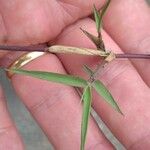
Paspalum distichum
Couch paspalum · Ginger grass · Water couch · Water-finger grass · Eternity grass
Description
Source: leafsnapPaspalum distichum is a species of grass. Common names include knotgrass, water finger-grass, couch paspalum, eternity grass, gingergrass, and Thompson grass. Its native range is obscure because it has long been present on most continents, and in most areas it is certainly an introduced species. Its native range probably includes parts of the tropical Americas. This is a perennial grass forming clumps and spreading via rhizomes and stolons. It grows decumbent or erect to a maximum height near 60 centimeters. The inflorescence is usually divided into two branches lined with spikelets. Paspalum distichum is a food source for several avian species, including the long-tailed widowbird.
Care Guide
💧 Water
Knotgrass is well-suited to moist environments and prefers soil that is consistently and evenly moist. Although it is moderately drought-tolerant, it is best to water it weekly to maintain optimal moisture levels. Typically grown outdoors, knotgrass thrives in well-draining soils that prevent waterlogging during heavy rains, while still ensuring adequate hydration.
How should I water my Knotgrass so it gets the most benefits?
When watering the Knotgrass, it is best to use filtered water at room temperature or slightly warmer. This plant benefits from filtered water because tap water may contain harmful particles. The reason for using room temperature water is because the Knotgrass originates from a warm environment, and cold water can be a shock to its system. Additionally, avoid overhead watering as it can cause foliage complications. Instead, simply apply filtered room temperature water directly to the soil until it is completely soaked. This will benefit the plant by moistening the roots and helping them spread through the soil to collect necessary nutrients.
What should I do if I give my Knotgrass too much water or not enough water?
Overwatering is a common problem for Knotgrass. When this happens, the stems and leaves may wilt and turn yellow. Overwatering can also lead to diseases like root rot, mold, and mildew that can kill the plant. Underwatering is less common, but it can still happen. When this occurs, the leaves become brittle and brown. It's important to notice the signs of overwatering early to prevent irreversible damage. If you see the signs, reduce watering immediately and check the soil's drainage. If it doesn't drain well, replace it with a loose, well-draining potting mix. On the other hand, if you notice signs of underwatering, simply water more regularly until the signs disappear.
How many times should I water my Knotgrass?
If your Knotgrass plant is in a pot, the best way to determine if it needs water is to put your finger in the soil. If the top two to three inches of soil feel dry, it's time to water it. If you have Knotgrass planted directly in the ground, you can use the same method. Once the first few inches of soil are dry, it's time to add water. Typically, you'll need to water this plant about once a week during spring and early fall. However, in very hot weather, you may need to water it twice or even more per week. It's important to note that mature and well-established Knotgrass plants are more resilient to drought.
How much water should I give my Knotgrass?
When watering your Knotgrass, don't be afraid to give it a good amount of water. Make sure the top two to three inches of soil are dry before watering, and then thoroughly soak the soil. You want to add enough water so that it drains out of the pot's drainage holes. If you don't see any excess water draining, you may not have given enough water. However, be careful not to let water accumulate in the soil, as this can be harmful to the plant. On the other hand, if water doesn't drain well from the pot, it means the soil doesn't drain properly, which is not good for the plant's health. If the plant is outside, about 1 inch of rainfall per week should be enough.
How should I water my Knotgrass at different growth stages? -> How do I water my Knotgrass as it grows?
The water requirements of Knotgrass vary depending on its growth stages. In its early years or when recently transplanted, it needs more water to support root development for future growth. As it matures, it requires less water. Additionally, during the bloom period, Knotgrass may need more water due to increased moisture needs for flower development.
☀️ Light Full sun
Knotgrass thrives in strong sunlight but can also tolerate medium levels of sun exposure. Its native habitats are those with abundant sun, so its growth is enhanced in well-lit areas. A lack of light could impede its growth, and too much light could potentially lead to damage.
What are the sunlight requirements for Knotgrass?
Knotgrass requires full sun, which means it flourishes in areas that receive more than 6 hours of direct sunlight. It can also tolerate partial sun, or about 3-6 hours of sunlight. It's important to observe how sunlight moves through your garden to find spots that offer a good balance for your plants. Despite Knotgrass' ability to thrive under intense sun, moderate exposure is acceptable, and originating from sun-rich habitats, its growth is optimal in well-lit locations. Inadequate light can impede its development, while too much exposure might be harmful.
How can artificial lighting be used for indoor Knotgrass plants?
Indoor Knotgrass plants require sufficient lighting for optimal growth, especially when natural sunlight is lacking. Artificial lights provide a crucial solution, particularly during winter or in less sunny spaces. Using the right type of artificial light, such as LED lights, is essential because they can be customized to deliver specific wavelengths needed by the plants. For full sun plants, 30-50W per square foot is recommended; partial sun plants need 20-30W per square foot, and full shade plants need 10-20W per square foot. The light source should be placed 12-36 inches above the plant, mimicking natural sunlight, and the duration should replicate natural daylight hours, typically 8-12 hours per day.
What are the symptoms of light deficiency in Knotgrass?
When Knotgrass is placed in inadequately lit rooms, symptoms of light deficiency may not be immediately apparent. However, signs can include smaller new leaves, leggy or sparse growth, faster leaf drop, slower or halted growth, lighter-colored new leaves, chlorosis, sunscald, leaf curling, wilting, and leaf scorching. These symptoms indicate that the plant is not receiving enough light or is being exposed to too much direct sunlight, which can affect its overall health.
What are the solutions for addressing Knotgrass' light exposure issues?
For indoor Knotgrass requiring more light, gradually moving the plant to a sunnier spot each week until it receives at least 6 hours of sunlight daily is recommended. Utilizing a south-facing window can maximize sunlight exposure. If moving the plant is not feasible, consider using artificial grow lights for at least 8 hours daily. Outdoors, gradually acclimate your plants to sunnier spots to prevent sunburn. Reducing obstructions, such as pruning trees that block sunlight, and transplanting smaller plants during their dormant period to sunnier locations with good drainage are effective strategies. It's important to note that parts of the plant affected by poor light may not recover, but new growth will be healthy following improved light exposure.
🌡️ Temperature 15–37.8°C
Knotgrass shows excellent resilience to temperature, with an ability to handle hotter temperatures and more significant temperature fluctuations. It is crucial to monitor watering and supply appropriate shading to prevent sunburn when temperatures soar. On the other hand, Knotgrass doesn't cope well with colder temperatures. Although it can survive moderate cold, extreme cold temperatures can result in damage from frost.
💨 Humidity
🪴 Soil 5-7
🌱 Fertilizer
Typically, Knotgrass only requires one application of fertilizer in the spring, but growth can be optimized through multiple feedings. Frequent feeding every four to six weeks can be beneficial. Fertilization improves the look and function of the leaf, ensuring constant color and a healthy texture. Furthermore, it boosts root growth and nutrient uptake, promoting long-term health of the plant.
🪴 Pot & Repot
✂️ Pruning
Knotgrass is a hardy plant that thrives with early spring pruning, which encourages healthy growth and helps prevent it from becoming invasive. To maintain its appearance and improve air circulation, trim the stems back to ground level and remove any damaged parts. Be sure to clean your tools before and after pruning to prevent the spread of diseases.
🌿 Propagating
🐛 Diseases & pets
☠️ Toxicity
Characteristics
- Plant Type
- Herb
- Life Cycle
- Perennial
- Genus
- Paspalum
- Family
- Poaceae
- Hardiness Zone
- 8-11
- Mature Height
- 30 cm to 46 cm
- Mature Spread
- 49 cm to 91 cm
- Leaf Color
- Green, Dark Green
- Leaf Type
- Semi-evergreen
- Flower Color
- Green, White, Yellow, Pink, Purple, Red, Brown, Black
- Flower Size
- 2.54 cm
- Bloom Time
- Summer, Early fall, Mid fall
- Planting Time
- Spring, Summer, Autumn
- Harvest Time
- Late summer, Fall, Early winter
- Native Area
- Belize, Mexico, Guatemala, Peru, Dominican Republic, Trinidad and Tobago, Panama, Jamaica, Uruguay, Bahamas, Cuba, Paraguay, Argentina, Haiti, Bolivia, Venezuela, Brazil, Guyana, El Salvador, Nicaragua, Ecuador, Suriname, Costa Rica