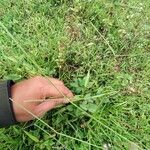
Paspalum notatum
Bahia grass · Beira grass · Common bahia · Water couch
Description
Source: leafsnapPaspalum notatum, commonly known as Bahia grass, is a warm-season perennial grass native to South America. Renowned for its high drought tolerance and ability to grow in poor soils, it is widely used as a forage crop and turfgrass species. Bahia grass has a deep root system that allows it to endure extended drought periods, making it an ideal choice for areas with low rainfall. The plant features flat leaves that are about 3-6 mm wide and 10-30 cm long. While typically green, the leaves can turn brown during periods of drought or cold weather. In the summer, Bahia grass produces seed heads on tall stems. Bahia grass is commonly found in pastures, roadsides, and other open areas across the southeastern United States and other tropical regions worldwide. Its deep root system helps stabilize soil, making it a valuable choice for erosion control. Overall, Paspalum notatum is an ecologically and economically important species. It thrives in harsh conditions, providing valuable resources such as livestock forage and turfgrass coverings for sports fields and golf courses.
🌳 Although mainly recognized as pasture grass, bahiagrass also fulfills an important but often overlooked role in erosion control because of its dense root system. In addition, its durability and resilience make bahiagrass a preferred option for turf on sports fields and golf courses — essentially in recreational areas where people seek grass that provides both aesthetic appeal and functionality.
🎭 Psychic abilities, protection. It represents food, concealment and resilience.
Care Guide
💧 Water Every 7 days
Bahiagrass flourishes in tropical regions that have consistent moisture and warm temperatures. For optimal health, it needs to be watered weekly. However, once established, it exhibits moderate drought tolerance. This grass adjusts well to changes in seasonal water availability and benefits from natural rainfall in both lawns and pastures.
☀️ Light Full sun
Bahiagrass does best in areas with plenty of light that resemble its natural habitat. Strong illumination encourages robust growth. Although it can persist in spots with partly shaded sunlight, too little or too much light can hinder its development or cause harm.
What are the sun requirements for Bahiagrass?
Bahiagrass requires full sun, defined as more than 6 hours of sunlight daily, to thrive optimally. It can also grow in partial sun, which means it can tolerate about 3-6 hours of sunlight per day. It's important to observe the movement of sunlight through your garden to choose the best spots that provide a perfect balance of light and shade, ensuring the plants' growth and health.
What essentials should be considered for Bahiagrass growth?
Bahiagrass thrives in environments that mimic its natural habitat, which means it performs best in abundant light. Intense illumination supports vigorous growth, although the grass can survive in partially shaded areas as well. Artificial lighting can be a solution for indoor plants or areas with less natural sunlight. LED lights are recommended for indoor plants, with specific wattage requirements depending on the plant's light needs (30-50W/sq ft for full sun, 20-30W/sq ft for partial sun, and 10-20W/sq ft for full shade). The distance of the light source (12-36 inches above the plant) and duration of lighting (8-12 hours per day) are also crucial for mimicking natural sunlight conditions.
What are the symptoms of inadequate lighting for Bahiagrass?
When Bahiagrass is exposed to inadequate lighting conditions, several symptoms can occur, including small leaves, leggy or sparse growth, faster leaf drop, slower or no new growth, and the development of lighter-colored new leaves. Chlorosis, or the yellowing of leaves, along with sunscald, leaf curling, wilting, and leaf scorching, are signs that a plant might be receiving too much sunlight. These symptoms highlight the importance of providing Bahiagrass with the correct amount of sunlight to prevent damage and ensure its health.
What solutions are recommended for Bahiagrass experiencing light-related issues?
For indoor Bahiagrass encountering light deficiency, gradually moving the plant to a sunnier location each week until it receives at least 6 hours of sunlight daily is advised. Using artificial light, such as desk or ceiling lamps for 8 hours a day or investing in professional grow lights, can also provide sufficient light. For outdoor plants, a gradual transition to sunnier spots can prevent sunburn. Pruning obstructions like trees or transplanting smaller plants during their dormant period to areas with more sunlight and good drainage can significantly improve the amount of light a plant receives. It's crucial to note that parts of the plant damaged by insufficient sunlight might not recover, but new growth after adjusting light exposure should be healthy.
🌡️ Temperature 15–35°C
Bahiagrass performs best in its native environment at temperatures between 15 and 35 ℃ (59 and 95 ℉). As a warm-season grass, it favors the higher end of that range during the growing season and the lower end during dormancy. In hotter periods, providing adequate water and shade helps moderate temperatures and support plant growth.
What are the optimal temperature conditions for Bahiagrass?
Bahiagrass thrives in temperatures ranging from 15 to 35°C (59 to 95°F), favoring the upper end of this range during the growing season and the lower end during dormancy. It is well-suited to its native environment and displays some level of cold tolerance, managing without additional protective measures if temperatures stay above -5°C. However, to adjust the temperature for optimal growth, especially during hotter seasons, providing sufficient water and shade is beneficial. If temperatures are expected to drop below -5°C, temporary protective measures such as wrapping the plant in plastic film, fabric, or other materials are recommended until warmer temperatures resume.
How does Bahiagrass react to low temperatures?
Bahiagrass has a moderate tolerance to low temperatures, thriving best above 15°C and generally being able to withstand temperatures down to -5°C. If temperatures fall below -10°C, you may notice the leaves starting to droop; while they can recover in mild cases, severe cold will cause leaves to wilt and fall off. To protect Bahiagrass from cold damage, trim off frost-damaged parts and wrap the plant with non-woven fabric or cloth. Erecting a wind barrier can also help protect it from cold winds during the winter.
How should Bahiagrass be cared for during high temperatures?
During the summer, Bahiagrass prefers temperatures below 35°C. If temperatures exceed 41°C, the plant may exhibit signs of stress such as leaves turning a lighter color, leaf tips becoming dry and withered, leaves curling, and increased susceptibility to sunburn. To care for Bahiagrass in high temperatures, trim away sunburned and dried-up parts of the plant. Move it to a shaded location, particularly away from the midday and afternoon sun, or utilize a shade cloth. Additionally, water the plant in the morning and evening to maintain soil moisture.
What are some general tips for Bahiagrass maintenance?
For optimal Bahiagrass growth and health, ensure it receives ample water and shade during hotter periods to help maintain suitable temperature and moisture levels. In anticipation of low temperatures, especially below -5°C, protect the plant with suitable materials and consider setting up a wind barrier for added protection against cold winds. During high temperatures, avoid heat stress by shading and properly hydrating the plant. Regularly trim off any parts of the plant that are damaged by extreme temperatures to encourage healthy growth and recovery.
💨 Humidity
🪴 Soil 5-7
🌱 Fertilizer
Bahiagrass is a warm-season grass that flourishes in summer and becomes dormant in winter. Fertilizing is essential for thick growth, a bright green color, and resilience to stressors like heat, drought, and cold. Neglected lawns weaken and thin, inviting undesirable grasses, weeds, insects, and diseases.
🪴 Pot & Repot
✂️ Pruning
Bahiagrass flourishes when pruned strategically between early and late spring, as this aligns with its period of active growth. To improve its appearance and reduce the risk of disease, trim away any dead shoots to maintain a uniform height. Be sure to sanitize your tools to prevent the spread of diseases, which will encourage robust growth and help the grass resist pests.
🌿 Propagating
🐛 Diseases & pets
☠️ Toxicity
Characteristics
- Plant Type
- Grass
- Life Cycle
- Perennial
- Genus
- Paspalum
- Family
- Poaceae
- Hardiness Zone
- 8-10
- Mature Height
- 61 cm
- Mature Spread
- 49 cm to 91 cm
- Leaf Color
- Green
- Leaf Type
- Deciduous
- Flower Color
- Green, Yellow, Purple, Brown
- Flower Size
- 6.35 cm to 15.24 cm
- Bloom Time
- Early summer, Mid summer
- Planting Time
- Spring, Summer
- Harvest Time
- Mid summer, Late summer
- Native Area
- Belize, Honduras, Mexico, Guatemala, Peru, Panama, Jamaica, Uruguay, Colombia, Cuba, Paraguay, Argentina, Bolivia, Venezuela, Brazil, Guyana, El Salvador, Nicaragua, Costa Rica