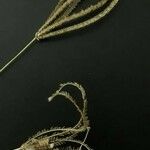
Paspalum urvillei
Vasey grass · Vasey's Grass
Description
Source: leafsnapPaspalum urvillei is a species of grass known by the common name Vasey's grass, or Vaseygrass. It is native to South America, and it is known in parts of North America as an introduced species. It is also naturalised in Australia, New Zealand, Japan, China, and southern Africa, including Madagascar. It is a noxious weed where it has been introduced in Hawaii and New Caledonia. It grows well in disturbed habitat, often in moist areas. This is a rhizomatous perennial grass which may reach 2 meters tall. The leaves are up to 2.5 centimeters wide and have a large, noticeable ligule. The inflorescence is a spreading or drooping array of up to 20
🎭 Psychic abilities, protection. It represents food, concealment and resilience.
Care Guide
💧 Water
Vasey's grass originates from moist regions and thrives best in evenly moist soil. To keep it healthy and avoid waterlogging, it should be watered weekly. Its resilience makes it well-suited for outdoor cultivation, and proper hydration encourages lush foliage during the growing season.
What do I do if I put too much or too little water on my Vasey's grass?
If your grass is turning yellow or pale green, it may be overwatered. Vasey's grass is tolerant of different soil types, but it does not thrive in soil that doesn't drain well. Avoid planting it in marshy areas or soil that feels spongy. When irrigating your lawn, it's better to give less water than too much water. Wet soil can lead to fungus growth and attract insect pests and weeds. While you can't control rainfall, occasional heavy rain is usually fine for Vasey's grass. However, excessive watering over a long period can cause damage and even kill the plant. On the other hand, Vasey's grass can survive with minimal water due to its water conservation adaptations. It has a deep root system that allows it to use groundwater when it hasn't been watered for a while. In drought conditions, the grass turns yellow and brittle, but it can recover once the dry spell ends. This ability to bounce back from various conditions is one of the reasons why Vasey's grass is highly sought after.
How should I water Vasey's grass?
Grasses used in landscaping typically do not require additional irrigation or watering as they can thrive with sufficient rainfall. However, in very dry climates or during long droughts, Vasey's grass may not survive without watering. It may appear dead during winter months, but it still needs moisture to prevent dehydration. The grass starts regrowing in spring when the weather warms up. It is recommended to water Vasey's grass with about an inch of water per week, preferably through a thorough drenching rather than a slow, steady drip, as this promotes a stronger root system. Newly planted grass has specific watering requirements, and it should be kept moist for the first 3 to 4 weeks until it establishes itself. Late spring to early summer is the best time to plant Vasey's grass, as there tends to be sufficient rainfall. However, if there is a dry spell after planting, it is advisable to cover the grass or water the lawn to maintain soil moisture.
What should I think about when watering my Vasey's grass?
The frequency of watering Vasey's grass depends on the environmental conditions, soil type, and drainage. If your lawn has sandy soil, which doesn't hold much moisture, you will likely need to irrigate more often. On the other hand, clay soils that drain slowly may not require additional water, but can be harmful to Vasey's grass due to its sensitivity to excessive moisture around its roots.
☀️ Light Full sun
Vasey's grass performs best in areas that receive sunlight for most of the day, enabling optimal photosynthesis. It can also tolerate spots where sun exposure is not consistent throughout the day, though that may slow its growth. Excessive or insufficient light can cause leaf discoloration and withering.
What are the sunlight requirements for Vasey's grass?
Vasey's grass requires full sun, which means it needs more than 6 hours of sunlight daily, to thrive optimally. However, it can also grow under partial sun conditions, receiving about 3-6 hours of sunlight. It's important to observe how sunlight moves through your garden and select spots that offer a good balance of light and shade for your plants, ensuring they remain healthy and happy.
How does Vasey's grass adapt to different lighting conditions?
Vasey's grass is versatile and thrives best under full sunlight but can also tolerate partial sunlight. In locations where sunlight is not constant, the plant's growth might slow down. Both too much and too little light can lead to discoloration and withering of leaves. For indoor plants that cannot receive natural sunlight, using artificial lights such as LEDs, which can be set to provide 30-50W/sq ft for full sun plants, 20-30W/sq ft for partial sun plants, and 10-20W/sq ft for full shade plants, is recommended. Placing the artificial light 12-36 inches above the plant and keeping it on for 8-12 hours per day can mimic natural sunlight conditions and support healthy growth.
What are the symptoms of inadequate lighting for Vasey's grass?
When Vasey's grass does not receive enough light, several growth issues can arise. Small and new leaves may be smaller than usual, and the plant can appear leggy or have sparse growth due to longer spaces between leaves or stems. The plant might also experience faster leaf drop, slower or no new growth, and light-colored new leaves, indicating insufficient chlorophyll and nutrient absorption. Excessive sunlight can cause chlorosis, sunscald, leaf curling, wilting, or leaf scorching, damaging the plant's health and reducing its photosynthetic ability.
How can you improve the growth of Vasey's grass with insufficient sunlight?
To promote better growth of Vasey's grass in insufficient light, gradually transition the plants to sunnier locations, allowing them to receive at least 6 hours of direct sunlight daily. For indoor plants, move them closer to a south-facing window or use artificial grow lights for at least 8 hours a day. For outdoor plants, identify and minimize obstructions like trees by pruning, or consider transplanting smaller plants to areas with more sunlight and better drainage. Note that damaged parts of the plant due to poor light may not recover, but new growth should be healthy with increased light exposure.
🌡️ Temperature 15–37.8°C
Vasey's grass originates from climates where temperatures usually range from 59 to 100.4 °F (15 to 38 ℃). It tolerates warm conditions well, but for optimal growth it is recommended to keep the temperature similar to its native environment.
What is the native climate for Vasey's grass?
Vasey's grass, or Paspalum urvillei, is native to climates where temperatures typically fall within the range of 59 to 100.4 °F (15 to 38 °C). It thrives in warm conditions and for optimal growth, replicating the temperature of its native environment is suggested. Despite its strong cold resistance, specific measures to protect it from frost during winters are generally not necessary. However, when winter temperatures are expected to plummet below -15°C, taking steps to provide cold protection by covering the plant with soil or straw is crucial. It's also recommended to water the plant abundantly before the first freeze in autumn to keep the soil moist and help prevent drought and water scarcity during winter and early spring.
How does Vasey's grass handle low temperatures?
Vasey's grass is quite cold-tolerant and performs best when the temperature remains above 15°C. During the winter months, ensuring the temperature does not drop below -10°C is ideal. When temperatures fall below -15°C, the plant may not show any immediate adverse effects, but come spring, there might be a noticeable decrease in sprouting or a complete absence of new growth. Addressing this issue involves removing any parts that have failed to sprout as spring arrives.
What should you do when Vasey's grass is exposed to high temperatures?
During the summer season, it is crucial to keep Vasey's grass below 38°C to prevent heat stress. If the temperatures soar above 43°C, the plant’s leaves may become lighter in color, curl, and become prone to sunburn; severe heat exposure can result in the entire plant wilting and drying out. To mitigate these issues, trim away the sunburned and dried-up parts of the plant. Relocating the plant to a shaded area during the peak sun hours or using a shade cloth can offer protection. Additionally, watering the plant in the morning and evening helps maintain soil moisture, crucial for the plant's health in high temperatures.
💨 Humidity
🪴 Soil 5-7
🌱 Fertilizer
A single spring application of fertilizer is typically sufficient for Vasey's grass, though multiple feedings can increase growth. Apply fertilizer every month to every month and a half. Fertilization improves the leaves' appearance and function, helping them keep an even color and healthy texture. It also encourages root development and enhances nutrient uptake for sustained plant health.
Why is it important to fertilize my Vasey's grass?
The main structure of Vasey's grass is made up of its leaves, so fertilization is crucial to keeping them looking amazing and functioning properly. Proper fertilization ensures consistent color and a healthy texture in the leaves. Fertilization also benefits the grass below the surface by promoting the growth of new roots and maintaining the existing ones. This not only keeps the plant healthy in the present, but also improves its ability to absorb nutrients from the soil in the long run.
When should I put fertilizer on my Vasey's grass?
If you grow Vasey's grass outdoors, it will start growing new leaves in early spring, signaling that it's time to fertilize. Usually, one application of fertilizer is enough, but if you want to promote maximum growth, you can fertilize it multiple times in spring and early summer. In this case, you can feed the grass about once a month to a month and a half.
When is the best time to not fertilize my Vasey's grass?
During the late fall and winter, your Vasey's grass goes into a dormant phase where new growth stops. Avoid fertilizing your grass during this time. If you choose to fertilize in the spring and summer, start reducing the amount as summer approaches because the grass's growth rate slows down. It's never a good idea to fertilize during extremely hot weather or when the soil is very dry, as this can stress and kill your Vasey's grass.
What kind of fertilizer does my Vasey's grass need?
Choosing the best fertilizer for Vasey's grass is actually quite simple. These plants thrive on a general-purpose garden fertilizer that contains equal amounts of nitrogen, phosphorus, and potassium. Look for a fertilizer with a ratio of 10-10-10 or something similar, as this will be very effective. It's important to avoid fertilizers with high levels of nitrogen if you're unsure. The majority of suitable fertilizers for Vasey's grass come in a granular form, which are easy to apply to the soil. Look for slow-release options, as they work best. Additionally, using an organic soil amendment like compost can be beneficial when feeding your Vasey's grass.
How can I add fertilizer to my Vasey's grass?
To ensure the proper growth of your Vasey's grass, start by waiting for the first leaves to appear in early spring. Once you notice this sign, apply a balanced, slow-release fertilizer to the soil around the base of the grass. You can repeat this process later in the season if desired. Remember to apply the fertilizer to the soil at the base of the plant, not directly onto the plant itself. It may be necessary to move some leaves aside to access the soil near the roots. Additionally, it is recommended to water your Vasey's grass before and after fertilizing.
🪴 Pot & Repot
✂️ Pruning
Vasey's grass is a hardy perennial that features dense tufts and tall stems. To encourage new growth and keep it well-shaped, prune the grass from early to late spring. Be sure to use clean, sharp tools during pruning to minimize the risk of disease and promote vigorous growth.
🌿 Propagating
🐛 Diseases & pets
☠️ Toxicity
Characteristics
- Plant Type
- Herb
- Life Cycle
- Perennial
- Genus
- Paspalum
- Family
- Poaceae
- Hardiness Zone
- 7-11
- Mature Height
- 2.13 m
- Mature Spread
- 30 cm to 61 cm
- Leaf Color
- Green, Dark Green
- Leaf Type
- Evergreen
- Flower Color
- Yellow, Green, Purple
- Flower Size
- 7.62 cm to 15.24 cm
- Bloom Time
- Summer, Early fall
- Planting Time
- Spring, Summer, Autumn
- Harvest Time
- Late summer, Fall
- Native Area
- Uruguay, Colombia, Chile, Belize, Paraguay, Argentina, Honduras, Guatemala, Bolivia, Brazil, Ecuador, Costa Rica