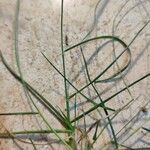
Paspalum vaginatum
Biscuit grass · Saltwater couch · Silt grass · Seashore paspalum · Seashore Crown Grass
Description
Source: leafsnapPaspalum vaginatum, commonly known as seashore paspalum, is a warm-season grass species native to tropical and subtropical regions worldwide. This perennial grass forms dense clumps and has a deep root system, enabling it to tolerate both saltwater and drought conditions. In recent years, seashore paspalum has gained popularity as a turfgrass for golf courses, sports fields, and other high-traffic areas due to its resilience and attractive appearance. Its excellent salt tolerance makes it particularly well-suited for coastal areas where soil salinity can be an issue. Typically, this grass grows between 30-60 cm tall and features narrow leaves that range in color from green to blue-green. Its flowers are small and inconspicuous, with spikelets arranged on long stems. Seashore paspalum thrives in full sun but can tolerate some shade. While it prefers well-drained soils, it can also grow in wet conditions. Overall, Paspalum vaginatum is an excellent choice for those seeking an attractive, durable turfgrass that can withstand harsh environmental conditions and maintain its appearance year-round.
Care Guide
💧 Water Every 7 days
Seashore paspalum, a plant native to coastal areas, thrives in saline conditions where the soil is moist but not overly saturated. To keep it healthy, water it once a week. This outdoor plant is resilient in sandy soils and makes efficient use of occasional rainfall during its growth cycles.
☀️ Light Full sun
Seashore paspalum is a sun-loving perennial herbaceous plant that comes from open habitats and commonly grows in meadows and grasslands. It prefers full sun but can also tolerate partial sun.
What are the sunlight requirements for Seashore paspalum?
Seashore paspalum, scientifically known as Paspalum vaginatum, thrives best in full sunlight conditions, requiring more than 6 hours of sunlight daily. It can also tolerate partial sun, which means it does well with about 3-6 hours of sunlight. It's vital to observe how sunlight moves through your garden to ensure you place your plants in spots that provide an ideal balance of light and shade, contributing to their growth and health.
What essentials should I know about Seashore paspalum?
Seashore paspalum is a perennial herbaceous plant that loves the sun and originates from open habitats like meadows and grasslands. It prefers full sunlight but can manage in partial sun conditions as well. For indoor plants where natural sunlight is scarce, especially in the winter or less sunny spaces, artificial lighting becomes crucial. LEDs are recommended for their ability to provide specific light wavelengths needed by plants. The intensity of artificial light required varies: full sun plants need 30-50W/sq ft, partial sun plants need 20-30W/sq ft, and full shade plants require 10-20W/sq ft. The lights should be placed 12-36 inches above the plant and kept on for 8-12 hours per day to mimic natural daylight hours.
What are the symptoms of light deficiency in Seashore paspalum?
Symptoms of light deficiency in Seashore paspalum include smaller new leaves compared to older ones, leggy or sparse growth, faster leaf drop, slower or no new growth, lighter-colored new leaves, chlorosis, sunscald, leaf curling, wilting, and leaf scorching. These symptoms indicate the plant is not receiving enough light or is being exposed to too much sunlight. Managing light exposure by adjusting plant positioning or using artificial lighting can help ameliorate these issues.
What solutions can help improve light conditions for Seashore paspalum?
To optimize light conditions for Seashore paspalum, you can gradually move the plants to a sunnier location, aiming for at least 6 hours of direct sunlight daily. For indoor plants, consider using a south-facing window or artificial lighting, like desk or ceiling lamps, for at least 8 hours a day. For outdoor plants, it's crucial to move them gradually to prevent sunburn. If sunlight is obstructed, consider pruning obstructive branches or moving smaller plants to a sunnier location. Remember, parts of the plant damaged by poor light may not recover, but new growth should be healthy with improved lighting.
🌡️ Temperature 15–37.8°C
Seashore paspalum naturally thrives in environments with temperatures ranging from 59 to 100°F (15 to 38℃). It favors moderate to hot climates and adapts well to seasonal changes.
What is the optimal temperature range for Seashore paspalum?
Seashore paspalum thrives in environments with temperatures ranging from 59 to 100°F (15 to 38°C). It prefers moderate to hot climates and is capable of adjusting well across seasons. Although it has some cold tolerance, it generally does not require special cold protection measures if the temperature remains above -5°C. However, if temperatures are expected to drop below -5°C, protective measures such as wrapping the plant with materials like plastic film or fabric are necessary, which should be removed once temperatures rise again.
How does Seashore paspalum react to low temperatures and what are the solutions?
Seashore paspalum has a moderate tolerance to low temperatures and thrives best when temperatures are above 15°C. During winter, it's important to keep it above -5°C to prevent damage. If temperatures fall below -10°C, the leaves might droop, and in severe cases, they could wilt and fall off. The solution includes trimming off the frost-damaged parts of the plant. Before encountering low temperatures again, wrap the plant with materials such as non-woven fabric or cloth and construct a wind barrier to protect from cold winds.
How does Seashore paspalum react to high temperatures and what are the solutions?
During summer, Seashore paspalum should be kept at temperatures below 38°C. Temperatures exceeding 43°C can cause the leaves to lighten in color, with leaf tips becoming dry and withered, leaves curling, and increased susceptibility to sunburn. The solutions to combat these symptoms include trimming away the sunburned and dried-up parts of the plant. It's advisable to move the plant to a location that provides shade during the midday and afternoon sun or use a shade cloth. Watering the plant in the morning and evening to keep the soil moist is also beneficial.
💨 Humidity dry (<40%)
This plant prefers dry conditions, so don't mist it. However, watering it less often can also thrive in higher humidity.
🪴 Soil 6-7
🌱 Fertilizer
Seashore paspalum is a warm-season grass that does well in summer and goes dormant in winter. Fertilizing is essential for thick growth, a vivid green color, and resistance to stresses like heat, drought, and cold. Lawns that are neglected weaken and thin, becoming prone to unwanted grasses, weeds, insects, and diseases.
🪴 Pot & Repot
✂️ Pruning
Seashore paspalum is a resilient and salt-tolerant grass, thriving near coastlines. To promote growth and maintain its shape, it's best to prune it in early spring. During pruning, remove dead blades and thin out dense areas. This process improves air circulation and reduces thatch. For the best results, use sharp tools and be careful not to over-prune.
🌿 Propagating
🐛 Diseases & pets
☠️ Toxicity
Characteristics
- Plant Type
- Grass
- Life Cycle
- Perennial
- Genus
- Paspalum
- Family
- Poaceae
- Hardiness Zone
- 8-11
- Mature Height
- 10 cm to 76 cm
- Mature Spread
- 30 cm to 61 cm
- Leaf Color
- Light Green, Dark Green
- Leaf Type
- Semi-evergreen
- Flower Color
- Yellow, Green, Purple, Brown
- Flower Size
- 2.03 cm to 5.08 cm
- Bloom Time
- Summer, Early fall, Mid fall
- Planting Time
- Spring, Summer, Autumn
- Harvest Time
- Late summer, Fall, Early winter
- Native Area
- Sri Lanka, Somalia, Belize, India, Angola, Mexico, Guatemala, Vanuatu, Madagascar, Dominican Republic, Nigeria, Yemen, Kenya, Uganda, Benin, Uruguay, Cuba, Paraguay, Sierra Leone, Indonesia, Cambodia, Haiti, Equatorial Guinea, Mozambique, Venezuela, Cameroon, Brazil, Argentina, Oman, Ghana, Ethiopia, South Korea, Saudi Arabia, Chile, Honduras, Peru, South Africa, Philippines, Laos, Guinea, Trinidad and Tobago, Panama, China, Colombia, Bahamas, Bolivia, Vietnam, Myanmar, Japan, Guyana, El Salvador, Nicaragua, Singapore, Costa Rica, Gambia, Congo (DRC), Thailand, Gabon