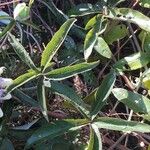
Passiflora caerulea
گل ساعتی · گل میوه پشن فروت · ورد الساعة · Common Passion Flower · Blue Passionflower
Description
Source: leafsnapPassiflora caerulea, commonly known as the blue passionflower, is a climbing vine belonging to the Passifloraceae family. Native to South America, it is widely cultivated around the world for its ornamental beauty. This plant can grow up to 10 meters long and features distinctive three-lobed, green, glossy leaves. The blue passionflower produces striking blooms about 10 cm in diameter. These flowers have a central crown of filaments surrounded by five white petals with blue-purple centers and fringed edges, giving them a detailed and intricate appearance. The flowers bloom from summer through fall, attracting bees, butterflies, and hummingbirds. The fruit of Passiflora caerulea is edible but is not commonly consumed due to its sour taste. The fruit is about the size of an egg, with green skin that turns yellow when ripe. Passionflowers have been used for medicinal purposes for centuries, valued for their calming properties that can help alleviate anxiety symptoms such as restlessness and insomnia. Overall, Passiflora caerulea is an attractive plant suitable for trellises or fences in gardens and patios. It can be appreciated both visually and aromatically, while also offering potential medicinal benefits when used appropriately under medical supervision.
💡 According to an American Indian legend, the blue passionflower is considered the daughter of Day. She inherited her father's warm sunshine and always wears a brilliant smile. As a result, she is regarded as the most beautiful flower of the forest and grassland.
🌳 Blue passionflower is valued for its soothing properties rather than for stimulation, as it is used to relieve anxiety and insomnia. Its often-overlooked fruit has a surprisingly sweet flavor, offering potential as a natural sugar substitute. Historically, indigenous South Americans used its fibers to make crafts. Currently there is interest in its role in renewable energy, with research into producing fuel from the leftover biomass after harvest.
🎭 Sight, sanctity, offering
Care Guide
💧 Water Every 7 days
Native to South America, the blue passionflower thrives in humid conditions similar to those of tropical rainforests. While it has moderate drought tolerance, it benefits from regular weekly watering to prevent waterlogging. As an evergreen climber, the blue passionflower needs careful watering during its growing season to support its vigorous vine growth and beautiful blooms.
How should I water my Blue passionflower in the best way?
When watering the Blue passionflower, it is recommended to use filtered water at room temperature. Tap water may contain harmful particles. The Blue passionflower is accustomed to warm environments, so cold water may be shocking. It is best to avoid overhead watering to prevent foliage issues. Instead, slowly apply filtered room temperature water to the soil until it is completely soaked. This helps moisten the roots and allows them to spread and collect nutrients.
What should I do if I give my Blue passionflower too much or too little water?
Overwatering is a common issue that can harm your Blue passionflower. It causes wilting and yellowing of the stems and leaves. Overwatering for a long time can also lead to diseases like root rot, mold, and mildew that can kill your plant. Underwatering is less common for the Blue passionflower because it can tolerate drought. However, it can still happen, and you'll notice brittle and brown leaves. It's important to notice signs of overwatering early to avoid irreversible damage. If you see these signs, reduce watering immediately. Check the soil's drainage too. If it's poor, replace it with a loose, well-draining potting mix. If you find signs of underwatering, simply water more regularly until the signs disappear.
How frequently should I water my Blue passionflower?
If your Blue passionflower is in a pot, the best way to check if it needs water is by sticking your finger in the soil. If the top two to three inches are dry, it's time to water it. If you have the plant in the ground outdoors, you can use the same method to test the soil. If the top few inches are dry, it's time to water. Usually, you'll need to water it about once a week during spring and early fall. However, during very hot weather, you may need to water it twice a week or more. However, mature, well-established Blue passionflower plants can handle drought well.
How much water does my Blue passionflower require?
When it's time to water your Blue passionflower, don't be afraid to give plenty of water. Wait until the top two to three inches of soil are dry, then water thoroughly until the soil is completely soaked. Make sure you give enough water for excess water to drain out of the pot's drainage holes. If you don't see excess water draining, you may have underwatered the plant. Avoid letting water accumulate in the soil, as it can harm the plant. Poor drainage can also be damaging to the plant, so make sure the water drains well. If the plant is outside, one inch of rain per week is usually enough.
How should I water my Blue passionflower as it grows?
The water needs of the Blue passionflower can vary depending on its growth stages. In the first few years or after transplanting, it requires more water to support the growth of new roots. These roots need additional moisture to thrive. As the plant matures, it will need less water. Additionally, during the bloom period, the Blue passionflower may require more water due to the increased energy used for flower development.
☀️ Light Full sun
Blue passionflower prospers when kept continually in bright light, though it can tolerate partial shade. Native to areas with plenty of radiant warmth, this plant depends on adequate light for healthy growth. Variations in light intensity at different stages of development are of little consequence for the blue passionflower. Too little sunlight inhibits growth, while too much can make the foliage pale.
What are the sunlight requirements for a Blue Passionflower?
Blue Passionflower, or Passiflora caerulea, thrives best in full sunlight, requiring more than 6 hours of sunlight daily to flourish. It can also survive in partial sun, which means about 3-6 hours of sunlight per day. It's essential to observe the movement of sunlight through your garden to find spots that provide the perfect balance for your plants, ensuring they receive the right mix of light and shade for optimal growth.
Can Blue Passionflower grow with artificial lighting, and how?
Yes, Blue Passionflower can grow under artificial lighting, especially beneficial in environments where natural sunlight is insufficient, such as during winter or in less sunny spaces. Optimal growth can be achieved by using artificial lights such as LED, which can be customized to the specific wavelengths needed by plants. For full sun plants, 30-50W per square foot is recommended, 20-30W for partial sun plants, and 10-20W for full shade plants. The light source should be placed 12-36 inches above the plant, and to mimic natural daylight hours, most plants will need 8-12 hours of light per day.
What are the symptoms of inadequate light in Blue Passionflower?
Symptoms of light deficiency in Blue Passionflower include smaller new leaves, leggy or sparse growth, faster leaf drop, slower or halted new growth, leaves developing irregular color patterns or appearing pale, and conditions such as chlorosis, sunscald, leaf curling, wilting, and leaf scorching. These symptoms indicate that the plant is not receiving the optimal amount of light necessary for healthy growth and photosynthesis.
How can you improve the lighting conditions for Blue Passionflower?
Improving lighting conditions for Blue Passionflower involves several strategies, including gradually moving plants to a sunnier location each week until they receive at least 6 hours of direct sunlight daily. For indoor plants, consider using south-facing windows or artificial light like desk lamps or professional grow lights for at least 8 hours daily. Outdoors, avoid sudden changes in light intensity to prevent sunburn. Minimizing obstructions by pruning or transplanting can also ensure your plants receive ample sunlight. Note that while parts of the plant that have been affected by insufficient light may not recover, new growth should be healthy once adequate light exposure is established.
🌡️ Temperature 15–37.8°C
Blue passionflower originates from subtropical areas and requires a minimum temperature of 15 °C (59 °F) to thrive. It favors temperatures between 15 and 38 °C (59 to 100.4 °F), but can endure higher temperatures if given adequate watering and protection from direct sunlight. In colder months, adjust conditions by providing supplemental heat or moving the plant indoors to a warmer location.
What is the native region and preferred temperature range for the Blue passionflower?
The Blue passionflower, botanically known as Passiflora caerulea, is native to subtropical regions. It thrives in temperatures between 15 to 38°C (59 to 100.4°F) and requires a minimum temperature of 15°C (59°F) to prosper. While it can handle higher temperatures with proper care such as adequate watering and protection from direct sunlight, these conditions are pivotal for its growth and health.
How should Blue passionflower be protected during winter and what measures should be taken in extremely cold temperatures?
Blue passionflower exhibits strong cold resistance and typically doesn't need special frost protection measures in the winter. However, in case of winter temperatures dropping below -15°C, it is crucial to protect the plant. Wrapping the trunk and branches with non-woven fabric or cloth can provide needed insulation. It's also recommended to water the plant abundantly before the first freeze of autumn to keep the soil moist, which helps prevent drought and water scarcity during the colder months.
What symptoms indicate that Blue passionflower is exposed to temperatures too low or too high for its optimal growth?
Symptoms of exposure to temperatures too low for Blue passionflower, specifically below -15°C, may not be immediately noticeable during winter but can result in brittle and dry branches by spring, with no new shoots emerging. In high temperature scenarios, particularly above 38°C and especially exceeding 43°C, leaves may lighten in color, tips may dry and wither, and the plant becomes prone to sunburn.
What solutions can be applied when Blue passionflower experiences adverse effects due to temperature extremes?
When faced with damage from low temperatures, such as dry and brittle branches in spring, the solution is to prune away any dead branches that have failed to produce new leaves. For adverse effects from high temperatures, like sunburned leaves and dry, withered tips, trimming the damaged parts off, relocating the plant to a shaded area, or using a shade cloth to diminish sun exposure can help. Additionally, watering the plant in the morning and evening maintains soil moisture, aiding in recovery and resilience.
💨 Humidity
🪴 Soil 6-7
🌱 Fertilizer
The best time to fertilize a Blue passionflower is in early spring, when it is coming out of dormancy and starting active growth. Fertilization supplies essential nutrients for healthy development. Although Blue passionflower has relatively low fertilizer needs, an annual application can improve its survival and encourage better, longer-lasting flowers.
Why should I put fertilizer on my Blue passionflower?
Fertilization is important for the Blue passionflower for several reasons. It provides key nutrients for growth, both above and below ground. Although the overall fertilization needs for a Blue passionflower are low and it can sometimes survive without it, annual fertilization can greatly benefit the plant. It helps keep the plant alive and encourages the creation of better, longer-lasting flowers. Therefore, those who want their Blue passionflower to look its best should prioritize annual fertilization.
What is the ideal time to put fertilizer on my Blue passionflower?
The best time to fertilize a Blue passionflower is in late winter to early spring when the plant transitions from its dormant phase to active growth. Fertilizing during this period promotes healthy growth and sets the plant up for a successful season. It is also acceptable to fertilize in the fall, but it is not recommended during summer or winter.
When should I not use fertilizer on my Blue passionflower?
To properly care for your Blue passionflower, it's important to know when to fertilize. Avoid fertilizing during spring, summer, and fall, as this can easily lead to overfertilization and complications. The plant has low fertilization needs and typically requires only one annual feeding, which should be done in late winter or early spring. However, if you missed fertilizing in spring, it is acceptable to feed the plant in the fall. Additionally, there is no need to fertilize during the winter when the plant is in a dormant growth phase and does not produce new growth.
What kind of fertilizer should I use for my Blue passionflower?
When fertilizing a Blue passionflower, any general-purpose fertilizer with a balanced mix of the three main plant nutrients will work well. However, there are some nutrient blends that can be particularly beneficial. For example, many gardeners believe that higher levels of phosphorus result in stronger roots and better flowers, making a phosphorus-rich fertilizer a good option for a flowering plant like the Blue passionflower. Both granular and liquid fertilizers can be used as long as they contain an adequate amount of nutrients. In addition to manufactured fertilizers, organic materials such as compost and manure can greatly improve the soil quality for your Blue passionflower.
How can I give my Blue passionflower plant the nutrients it needs?
To fertilize a Blue passionflower, the most common method is to use granular or pellet fertilizer around the plant's soil. It is important to fertilize when the plant is transitioning from its dormant growth phase to active growth, which typically happens in early spring when shoots start to emerge. If you prefer using liquid fertilizer, dilute it with water before applying. In any case, ensure the soil is moist before, during, and after applying fertilizer.
🪴 Pot & Repot 2-3 years
Repot the blue passionflower in early spring, selecting a pot only a little bigger than the current one and with adequate drainage. Use a well-draining potting mix and set the root ball at the same depth as before. Carefully loosen any roots that are root-bound. After repotting, water thoroughly and keep the plant in a warm, shaded spot. Prune regularly to control size and encourage new growth.
✂️ Pruning
For optimal growth, blue passionflower benefits from annual pruning. In early spring, cut back old or overcrowded stems to promote healthy growth and maintain shape. A light trim in late spring can encourage blooming. This practice not only enhances air circulation but also reduces the risk of disease. For best results, be sure to use sharp, clean tools.
🌿 Propagating
🐛 Diseases & pets
☠️ Toxicity
Characteristics
- Plant Type
- Vine, Herb
- Life Cycle
- Perennial
- Genus
- Passiflora
- Family
- Passifloraceae
- Hardiness Zone
- 7-11
- Mature Height
- 3.05 m to 9.14 m
- Mature Spread
- 3.96 m
- Leaf Color
- Green
- Leaf Type
- Deciduous
- Flower Color
- White, Blue
- Flower Size
- 6.35 cm to 10.16 cm
- Bloom Time
- Late spring, Summer, Early fall
- Planting Time
- Spring
- Harvest Time
- Mid summer, Late summer, Early fall
- Native Area
- Brazil, Uruguay, Bolivia, Paraguay