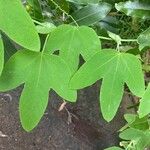
Passiflora lutea
Yellow passionflower · Passionflower · Yellow passion flower
Description
Source: leafsnapPassiflora lutea, the yellow passionflower, is a flowering plant in the family Passifloraceae, native North America, in the eastern and south-central parts of the United States from Pennsylvania west to Kansas, and south to Florida and Texas. It is the northernmost species of Passiflora, occurring slightly further north than P. incarnata, and tolerant of winter temperatures down to −15 °C, and even −30 °C for short periods. It is a perennial herbaceous climbing or trailing vine that can reach 3–5 m in length. The leaves are trilobed, 3–7 cm long and 3–15 cm broad, with a 5 cm petiole; in the north of its range, it is deciduous. The common name as well as the scientific name refers to the small, 1-1.5 cm diameter chartreuse (yellow-green) or off-white flowers it produces in summer. The flowers are followed by small black berries that contain seeds that are brown and bumpy. P. lutea grows in bright shade to sunny places with moist, rich soil. Very similar to Passiflora suberosa. Yellow passionflower is often good for butterfly gardens, as it is a host for Gulf fritillaries, julia butterflies (Dryas julia), and zebra longwings (Heliconius charitonius). It is also the only pollen source used by an unusual specialist bee, Anthemurgus passiflorae, which is the sole member of its genus; this rare bee is unusual in that despite its obligate relationship with the plant (oligolecty), it rarely pollinates it.
🌳 Yellow passionflower is an important but frequently overlooked part of local ecosystems, functioning as a larval host plant for several butterfly species, including the Gulf Fritillary and the Zebra Longwing. By supplying food for the caterpillars of these pollinators, yellow passionflower sustains biodiversity and helps pollinate various local flora.
🎭 Various aspects of the crucifixion
Care Guide
💧 Water
Yellow passionflower, native to the southeastern United States, thrives in moderate humidity and consistent moisture. It prefers soil that remains evenly moist, which necessitates weekly watering. Typically cultivated outdoors, the yellow passionflower may shed its leaves due to water stress or seasonal changes, reflecting its deciduous nature.
How should I water my Yellow passionflower?
When watering the Yellow passionflower, it is important to use filtered water that is at room temperature. Tap water may have harmful particles, so using filtered water is preferable. The Yellow passionflower is native to warm environments, so it is best to avoid using cold water, which can be a shock to the plant. Additionally, overhead watering should be avoided as it can cause issues with the foliage. Instead, water the plant by applying filtered room temperature water directly to the soil until it is soaked. This helps the roots absorb moisture and spread through the soil to collect necessary nutrients.
What should I do if I give my Yellow passionflower too much or too little water?
Overwatering is a common issue for Yellow passionflower plants. When they receive too much water, the stems and leaves wilt and turn yellow. Over time, this can lead to diseases like root rot, mold, and mildew, which can be fatal for the plant. Underwatering is less common, but still possible. In this case, the leaves become brittle and brown. It's important to notice the signs of overwatering early on, as some of the resulting diseases may not be fixable if left too long. If you see early signs of overwatering, reduce watering immediately and check the soil's drainage. If it drains poorly, replace it with a loose, well-draining potting mix. If you notice signs of underwatering, simply water more regularly until the signs improve.
How frequently should I water my Yellow passionflower?
To determine if your Yellow passionflower needs water, you can follow these steps based on whether it is potted or planted in the ground. For potted plants, check the soil by inserting your finger into it. If the top two to three inches of soil feel dry, it's time to water. The same method can be used for passionflowers grown outdoors in the ground. In spring and early fall, watering once a week is usually sufficient, but in extremely hot weather, watering twice or more per week may be necessary. It's worth noting that mature Yellow passionflowers that are well-established have a remarkable ability to tolerate drought.
How much water does my Yellow passionflower require?
When watering your Yellow passionflower, don't hold back on the amount of water you give. Make sure the top two to three inches of soil are dry, then give it a good, thorough watering until the soil is completely soaked. The water should eventually drain out through the bottom of the pot. If you don't see any excess water coming out, you may not be giving it enough water. However, be careful not to let the water accumulate in the soil, as that can harm the plant. On the other hand, if the water doesn't drain properly, it could indicate that the soil in the pot doesn't drain well, which is bad for the plant's health. If the plant is outside, it usually only needs about 1 inch of rain per week.
How do I water my Yellow passionflower as it grows?
The water requirements of the Yellow passionflower depend on its growth stages. In the early years and after transplanting, it needs more water due to the energy it uses to develop new roots. These roots require extra moisture for optimal growth. However, as the plant matures, it requires less water. Additionally, during the bloom period, increased water may be necessary to support the flower development process.
☀️ Light Full sun
The yellow passionflower grows best when it receives plenty of sunlight throughout the day. It can, however, adjust to situations where the sun is less plentiful. Its native habitat is areas with abundant sunlight, which affects its ideal growing conditions. Excessive sun can scorch its leaves, while insufficient light can impede healthy growth.
What are the sunlight requirements for yellow passionflower?
Yellow passionflower requires specific sunlight conditions to thrive. Full sun, characterized by more than 6 hours of sunlight daily, is ideal for optimal growth. However, it can also grow in partial sun, receiving about 3-6 hours of sunlight. It's essential to watch how sunlight moves through your garden, selecting spots that offer a suitable balance of light and shade to ensure the happiness and health of your plants.
How does sunlight affect the growth of yellow passionflower?
The yellow passionflower thrives best when it receives ample sunshine throughout the day, reflecting its native habitat's conditions where sunlight is abundant. Although capable of adapting to less sunny environments, overexposure to sunlight may cause leaf scorching, whereas insufficient light could hinder its healthy growth. In cases where natural sunlight is not enough, especially during winter or in less sunny spaces, artificial lighting can be a helpful supplement to promote optimal growth.
What artificial lighting is recommended for indoor yellow passionflowers?
For indoor yellow passionflowers lacking in natural sunlight, artificial lighting presents a viable solution to ensure adequate growth. LED lights, for instance, are popular due to their ability to provide specific wavelengths needed by plants. The required intensity of light varies depending on the plant's natural sunlight needs: 30-50W/sq ft for full sun plants, 20-30W/sq ft for partial sun, and 10-20W/sq ft for full shade. The artificial light source should be placed 12-36 inches above the plant, mimicking natural sunlight's distance, and it should remain on for about 8-12 hours daily to simulate the length of natural daylight.
What are the symptoms of inappropriate lighting in yellow passionflower?
Inappropriate lighting can lead to various symptoms in yellow passionflowers. Light deficiency may cause smaller new leaves, leggy or sparse growth, faster leaf drop, slower or no new growth, and lighter-colored or chlorotic leaves. On the other hand, excessive sunlight exposure can result in symptoms like sunscald, leaf curling, wilting, and leaf scorching. Recognizing these signs is crucial for adjusting the plant's exposure to light to promote its health.
How can I manage sunlight exposure for yellow passionflower to ensure optimal growth?
Managing sunlight exposure for yellow passionflower involves gradual adaptation to the correct light conditions. For indoor plants, gradually move them to sunnier locations each week until they get at least 6 hours of direct sunlight from a south-facing window. Artificial lighting can supplement natural sunlight if moving the plant isn't feasible. For outdoor plants, find the best sunlight spot and adapt them to it gradually to prevent sunburn. Reducing obstructions and, for smaller plants, considering transplanting during their dormant period to a location with ample sunlight and good drainage can also improve light exposure. It's important to note that parts of the plant affected by insufficient light may not recover, but new growth will be healthy with proper light adjustments.
🌡️ Temperature 15–35°C
The yellow passionflower comes from regions with warm climates and prefers temperatures between 59 ℉ (15 ℃) and 95 ℉ (35 ℃). It copes well with seasonal temperature changes, but it’s important to avoid extreme heat or cold.
What is the native climate for Yellow passionflower?
The Yellow passionflower, or Passiflora lutea, is native to regions that enjoy warm climates. It thrives in temperatures ranging from 59°F (15°C) to 95°F (35°C). The plant is adaptable to different seasonal temperature fluctuations, although it is crucial to shield it from extreme heat or cold conditions.
How does Yellow passionflower handle cold weather?
Yellow passionflower exhibits strong cold resistance, making special frost protection measures generally unnecessary during the winter. Nevertheless, if winter temperatures are anticipated to fall below -15°C, it's important to take steps to protect the plant. Wrapping the trunk and branches with non-woven fabric or cloth can offer adequate cold protection. Additionally, watering the plant abundantly before the first freeze in autumn to keep the soil moist is recommended. This practice helps prevent drought and water scarcity for the plant through winter and into early spring.
What should be done if a Yellow passionflower experiences temperatures below -15°C?
If a Yellow passionflower is exposed to temperatures below -15°C, you might not notice any immediate damage during the winter. However, come spring, the plant's branches may turn brittle and dry, with no new shoots emerging. In such cases, it's advisable to prune away these dead branches in the spring to encourage the growth of new leaves.
How should Yellow passionflower be cared for during high temperatures?
During the summer, it is best to keep the Yellow passionflower in conditions below 35°C. Exposure to temperatures over 38°C can lead to discoloration of leaves, drying and withering of tips, and increased susceptibility to sunburn. To mitigate these issues, trim away the damaged plant parts. Moving the plant to a shaded area or using a shade cloth can protect it from harsh midday and afternoon sun. Furthermore, watering the plant in the morning and evening can help maintain soil moisture and support the plant's wellbeing.
💨 Humidity
🪴 Soil 6-7
🌱 Fertilizer
Typically one fertilizer application in spring is enough for Yellow passionflower, though repeated feedings can help maximize growth. Feed about once a month to every six weeks. Fertilizing improves the leaves' appearance and function, maintaining uniform color and a healthy texture. It also encourages root development and better nutrient uptake for long-term plant vigor.
Why should I add fertilizer to my Yellow passionflower?
The main structure of the Yellow passionflower is made up of its leaves. Fertilization is a crucial way to make sure these leaves look good and function properly. By fertilizing correctly, you can ensure that the leaves of your Yellow passionflower have a consistent color and a healthy texture. Fertilization also benefits the plant's roots. It helps generate new roots and maintains the existing ones in the root system. This not only keeps the plant healthy presently, but also enhances its ability to absorb soil nutrients in the future.
When should I fertilize my Yellow passionflower for the best results?
If you grow your Yellow passionflower outdoors, it will start new growth in early spring. This is a signal that it's time to fertilize. Generally, one application of fertilizer in spring is enough for the plant. However, if you want to maximize growth, you can fertilize multiple times throughout spring and early summer. In this case, fertilize once every month to a month and a half.
When should I not put any fertilizer on my Yellow passionflower?
During the late fall and winter, your Yellow passionflower goes into a dormant phase and stops producing new growth. It is not recommended to fertilize it during this time. If you choose to fertilize during the spring and summer, you should decrease the amount as summer approaches since the growth rate of your Yellow passionflower slows down. In general, it is not wise to fertilize during periods of unusually hot weather or when the soil is extremely dry, as it can cause stress and early death for your Yellow passionflower.
Which fertilizer is best for my Yellow passionflower plant?
Choosing the best fertilizer for a Yellow passionflower is easy. These plants thrive on a general-purpose garden fertilizer with equal amounts of nitrogen, phosphorus, and potassium, like a 10-10-10 ratio. Avoid fertilizers high in nitrogen if unsure. The best fertilizers for a Yellow passionflower are usually granular and slow-release, making them easy to apply. Using an organic soil amendment like compost can also be helpful for feeding your plant.
How should I give fertilizer to my Yellow passionflower?
To ensure proper growth of your Yellow passionflower, wait until early spring when you notice its first leaves emerging from the soil. Once you see this, apply a granular slow-release fertilizer with a balanced formula to the soil surrounding the base of the plant. If desired, you can repeat this process later in the season. Remember to apply the fertilizer to the soil at the base of the plant, rather than directly on the plant itself. Occasionally, you may need to move some leaves to access the soil above the roots. Additionally, it is recommended to water your Yellow passionflower before and after applying fertilizer.
🪴 Pot & Repot
✂️ Pruning
The yellow passionflower is known for its delicate yellow blooms and climbing nature. To maintain its health and appearance, it's best to prune it between early and late spring. During pruning, remove any dead growth and trim back vigorous shoots to improve air circulation and sunlight exposure. Regular pruning not only encourages more blooms but also boosts the plant's overall health. Be sure to use clean, sharp tools to prevent the spread of disease.
🌿 Propagating
🐛 Diseases & pets
☠️ Toxicity
Characteristics
- Plant Type
- Vine, Herb
- Life Cycle
- Perennial
- Genus
- Passiflora
- Family
- Passifloraceae
- Hardiness Zone
- 7-9
- Mature Height
- 3.05 m to 4.88 m
- Mature Spread
- 4.57 m
- Leaf Color
- Green, Silver, Yellow, Gray
- Leaf Type
- Deciduous
- Flower Color
- Yellow
- Flower Size
- 1.02 cm to 1.52 cm
- Bloom Time
- Early summer, Mid summer
- Planting Time
- Spring
- Harvest Time
- Mid summer, Late summer, Early fall