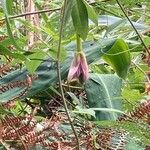
Passiflora mollissima
Banana passion fruit · Banana passionflower · Banana passionfruit · Banana poka · Bananadilla
Description
Source: leafsnapPassiflora tripartita also called curuba, tumbo, curuba de Castilla and tumbo serrano is a species of Passiflora from Peru, Bolivia, Ecuador, Colombia, and Brazil in areas at elevations of 2000 – 3200 meters.
Care Guide
💧 Water
The banana passionflower flourishes in tropical rainforests due to its need for high humidity and frequent rainfall. For optimal growth, it should be planted in consistently moist soil and watered twice a week. As an evergreen climber, regular watering is crucial to support its vigorous growth and abundant flowering throughout the growing season.
☀️ Light Full shade
The banana passionflower thrives in direct sunlight, but it's also adaptable to dimmer sunlit conditions. It's native to places with strong sunlight, and its growth might be impeded if there's not enough light. However, excessive sunlight can damage it, resulting in sunburn and compromising its health.
What are the sunlight requirements for Banana passionflower?
Banana passionflower requires full sun, meaning it should receive above 6 hours of sunlight daily, but it can also grow in partial sun with about 3-6 hours of sunlight. It's essential to observe the movement of sunlight through your garden to ensure that your plants get a balance of light and shade. Originating from environments with strong sunlight, the Banana passionflower can grow in less intense sunlit areas but may experience stunted growth if there’s insufficient light. Excessive exposure, however, can result in sunburn and negatively impact the plant's health.
Can Banana passionflower adapt to indoor environments, and how?
Yes, Banana passionflower can adapt to indoor environments. In cases of insufficient natural sunlight, especially during winter or in less sunny spaces, artificial lighting can be a vital solution, promoting faster and healthier growth. LED lights are recommended as they can be customized to provide specific light wavelengths needed by the plant, adjusting for full sun to shade requirements. The artificial light should be placed 12-36 inches above the plant and kept on for 8-12 hours per day to mimic natural daylight hours.
What are the symptoms of inadequate light in Banana passionflower?
Inadequate light can cause several symptoms in Banana passionflower including smaller than usual new leaves, leggy or sparse growth, faster leaf drop, slower or ceased new growth, and paler new leaves. Excessive sunlight can lead to chlorosis (yellowing of the leaves), sunscald (damage from intense light causing pale or necrotic spots), leaf curling (as a defense mechanism), wilting (due to excessive water loss), and leaf scorching (brown, dry, crispy leaf edges). These symptoms indicate the plant's struggle with light conditions, whether too little or too much.
How can I improve the light conditions for my Banana passionflower?
To improve light conditions for Banana passionflower, gradually increase sunlight exposure by moving the plant to a sunnier spot each week, aiming for at least 6 hours of direct sunlight daily. For indoor plants, consider using artificial light (keeping lamps on for at least 8 hours daily) if the plant is large or immovable. Outdoors, avoid sudden changes in light intensity to prevent sunburn. Reducing obstructions like trees by pruning can help increase sunlight. For smaller plants, consider transplanting during their dormant period to a sunny location with good drainage.
🌡️ Temperature 20–37.8°C
The banana passionflower, originally from temperate climates, grows best at temperatures ranging from 20 to 38 degrees Celsius (or 68 to 100 degrees Fahrenheit). For its ideal development, it requires that the temperature falls within this range. Adaptations may be necessary in response to seasonal changes.
What is the native environment of the Banana passionflower?
The Banana passionflower, or Passiflora mollissima, is native to temperate environments. It thrives in conditions where temperatures range between 68 to 100 °F (20 to 38 °C), preferring such temperatures for optimal growth. Given its love for heat, it is vital to make adjustments based on seasonal changes to keep the plant in its preferred temperature range.
How should Banana passionflower be cared for in colder seasons?
During the colder months, it is essential to protect the Banana passionflower from the cold by bringing outdoor plants indoors. A placement near a bright window is ideal, but the plant should not be placed too close to heaters, as maintaining temperatures above 20°C during winter is beneficial for its growth. It is crucial to avoid allowing the temperature to drop near 5°C, as such cold conditions can be detrimental to the plant.
What are the symptoms and solutions for Banana passionflower exposed to low temperatures?
When Banana passionflower is exposed to temperatures below its preferred range, specifically lower than 20°C, the leaves may lighten in color. If the temperature falls below 1°C, leading to frost damage, the leaves can turn brown or black, and symptoms such as wilting and drooping may occur. To address this, trim off the frost-damaged parts and immediately move the plant indoors to a warmer environment. Place it near a south-facing window for ample sunlight, while avoiding close proximity to heaters or air conditioning vents to prevent air dryness.
How does high temperature affect Banana passionflower and what are the solutions?
Banana passionflower should ideally be kept below 38°C during the hotter months. Exposure to temperatures above 43°C can cause the leaves to lighten and increase susceptibility to sunburn. To mitigate such stress, trim away sunburned and dry parts of the plant. Relocate it to a spot that provides shade during the midday and afternoon sun. Additionally, watering the plant in the morning and evening can help keep the soil moist and support the plant's health under high temperatures.
💨 Humidity
🪴 Soil 6-7
🌱 Fertilizer
Select organic fertilizers (for instance, compost, fish emulsion) instead of synthetic ones for Banana passionflower. Young plants need more nitrogen and phosphorus during the spring season. You should mix compost or fertilizer before or after the planting process. Established plants require a balanced or specific fertilizer addressing deficiencies in springtime. Not receiving enough nutrients can lead to symptoms like undersized leaves, abbreviated branches, yellow or bronze leaves, fruits with high acidity, early fruit drop-off, and splitting of fruits.
🪴 Pot & Repot
✂️ Pruning
The banana passionflower is a vigorous grower that produces beautiful flowers. To keep it healthy, prune it in early spring by removing dead or damaged branches and thinning out older stems. This will enhance growth and improve air circulation. Regular pruning encourages flowering and should be done with sharp, clean tools to prevent the spread of disease.
🌿 Propagating
🐛 Diseases & pets
☠️ Toxicity
Characteristics
- Plant Type
- Fern
- Life Cycle
- Perennial
- Genus
- Passiflora
- Family
- Passifloraceae
- Hardiness Zone
- 10-11
- Mature Height
- 7.92 m
- Mature Spread
- 3.05 m
- Leaf Color
- Green, Dark Green
- Leaf Type
- Evergreen
- Flower Color
- Pink
- Flower Size
- 10.16 cm to 12.70 cm
- Bloom Time
- All year round
- Planting Time
- Spring, Summer
- Harvest Time
- All year round
- Native Area
- Colombia, Venezuela, Peru, Ecuador, Costa Rica, Panama