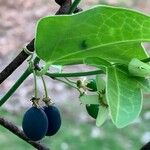
Passiflora suberosa
Cork passionflower · Cork passionvine · Indigo-berry · Devil's-pumpkin · Small passionflower
Description
Source: leafsnapPassiflora suberosa, commonly known as the corky-stemmed passionflower, is a species of flowering plant in the Passiflora genus. It is native to Central and South America and thrives in a variety of habitats, including forests, savannas, and disturbed areas. This plant typically grows as a vine or shrub, with corky stems that can extend up to 10 meters in length. The leaves are alternate, three-lobed, and have serrated edges. Its showy flowers consist of five white petals surrounding a central structure of stamens and pistils, which develop into fruit after pollination. Passiflora suberosa is notable for its medicinal properties, particularly its use as an anti-inflammatory agent for treating skin conditions such as eczema and psoriasis. It also holds cultural significance among indigenous communities, where it is used for spiritual purposes, including inducing visions during shamanic rituals and ceremonies. Although it is considered an invasive species in some regions due to its rapid spread through vegetative reproduction, Passiflora suberosa remains an important component of many ecosystems. It provides food and habitat for various animals, including butterflies, bees, birds, and bats, making it ecologically significant as well.
Care Guide
💧 Water Every 7 days
The Corkystem passionflower flourishes in moisture-rich, humid environments and benefits from weekly watering. Although it can withstand short periods of drought, it is important to regularly check soil moisture throughout the year. Typically grown outdoors, this evergreen plant benefits from natural rainfall. However, it requires careful management to prevent both overwatering and underwatering.
How should I water my Corkystem passionflower?
To ensure the health of the Corkystem passionflower, it is important to water it correctly. Use filtered water at room temperature or slightly warmer, since tap water may contain harmful particles. Avoid cold water, as it can shock the plant. Instead of overhead watering, simply apply filtered room temperature water directly to the soil until it is completely soaked. This benefits the plant by moistening the roots and aiding their spread in the soil for nutrient collection.
What should I do if I give too much or too little water to my Corkystem passionflower?
Overwatering is a common problem for Corkystem passionflowers and can lead to wilting, yellowing of the stems and leaves, and various diseases. These diseases, like root rot, mold, and mildew, can be fatal for the plant if not addressed promptly. Underwatering is less likely to occur as this plant can tolerate drought to some extent. However, when it does happen, the leaves will become brittle and brown. It is important to be vigilant for signs of overwatering and take immediate action, as some of the resulting diseases may be irreversible if left unchecked. To prevent overwatering, reduce watering and ensure the soil drains well. Conversely, if underwatering is identified, increase watering until the plant recovers.
How frequently do I need to water my Corkystem passionflower?
If your Corkystem passionflower is in a pot, the best way to determine if it needs water is to check the soil with your finger. If the top two to three inches of soil are dry, it needs watering. If it is planted outside in the ground, you can use the same method. When the first few inches of soil have dried out, it is time to water. During spring and early fall, watering once a week is usually sufficient. In very hot weather, you may need to water twice a week or more. However, mature and well-established Corkystem passionflowers can handle drought well.
How much water does my Corkystem passionflower require?
To properly water your Corkystem passionflower, you should not hold back on the amount of water you provide. Wait until the top two to three inches of soil are dry, and then give the plant a thorough watering. Make sure to fully saturate the soil. The water should be enough to cause excess water to drain out of the pot through the holes at the bottom. If you don't see any excess water draining, it means you have not given enough water. However, be cautious not to let the water collect inside the soil, as this can harm the plant. Alternatively, if you notice that water is not draining properly from the pot, it could be a sign of poorly draining soil, which is bad for the plant's health. Finally, if the plant is outdoors, it only requires about 1 inch of rain per week.
How do I water my Corkystem passionflower as it grows?
The water needs of the Corkystem passionflower can vary depending on its growth stages. For example, during the first few years or after transplanting to a new location, you will need to provide more water. During these stages, the plant focuses on developing new roots to support future growth, so they require additional moisture. As the plant matures, it will require less water overall. Another stage that may require increased watering is when the plant is blooming, as the flowers need ample moisture for development.
☀️ Light Full sun
Corkystem passionflower grows best in places that get full sunlight every day. It can, however, cope in locations where sunlight is only occasional. Coming from areas with abundant sun, it is adapted to take in the amount it needs for essential functions and growth. Too little or too much sun can affect the plant's vigor and flowering.
What are the sunlight requirements for Corkystem Passionflower?
Corkystem passionflower requires full sun exposure, thriving in areas with over 6 hours of sunlight daily, but it can also tolerate partial sun with about 3 to 6 hours of sunlight. This adaptability is attributed to its origin in habitats with abundant sunlight, where it's evolved to effectively utilize sunlight for its essential functions and growth. Adequate sun exposure is crucial, as both lack and excess of sunlight can impact the plant's vigor and flowering.
How do you provide adequate lighting for indoor Corkystem Passionflower plants?
For indoor Corkystem passionflower plants, adequate lighting is vital for optimal growth, especially when natural sunlight is insufficient, such as in winter or less sunny spaces. Artificial lighting can be a valuable solution for offering the required light intensity and duration. Opt for LED lights designed to emit specific wavelengths needed by the plant. Full sun plants require 30-50W/sq ft, partial sun plants 20-30W/sq ft, and full shade plants 10-20W/sq ft of artificial light. Position the light source 12-36 inches above the plant and ensure it receives 8-12 hours of light per day to mimic natural daylight conditions.
What are the signs of insufficient light exposure in Corkystem Passionflower?
Signs of insufficient light in Corkystem passionflower include small, new leaves growing smaller than previous ones, leggy or sparse growth due to extended spaces between leaves or stems, faster leaf drop as a resource conservation measure, slower or halted new growth, and the development of lighter-colored or irregularly patterned leaves. These symptoms indicate the plant is not receiving enough sunlight to maintain healthy growth and photosynthesis.
What are solutions for Corkystem Passionflower light deficiencies?
To address light deficiencies in Corkystem passionflower, gradually acclimatize the plant to brighter conditions. For indoor plants, move them closer to a south-facing window or use artificial lighting, such as desk lamps or professional grow lights, for at least 8 hours a day. Outdoor plants should be transitioned to sunnier spots carefully over several weeks to prevent sunburn. Pruning obstructions or transplanting to sunnier locations can also help increase sunlight exposure. It's essential to note that while parts of the plant affected by light deprivation may not recover, new growth should be healthy with improved lighting.
🌡️ Temperature 5–35°C
Native to areas with temperatures ranging from 41 to 95 °F (5 to 35 ℃), corkystem passionflower favors this moderate climate. In colder or hotter seasons, adjustments may be necessary to replicate its preferred temperature habitat.
What is the preferred temperature range for Corkystem passionflower?
Corkystem passionflower, or Passiflora suberosa, thrives in moderate climates where temperatures range from 41 to 95°F (5 to 35°C). This range is native to its environment, indicating that the plant prefers this moderate temperature habitat. During colder or hotter seasons, adjustments may need to be made to ensure the conditions mimic its preferred temperature habitat closely.
Does Corkystem passionflower need special protection during winter?
Corkystem passionflower has strong cold resistance and usually does not require special frost protection measures during winter. However, if winter temperatures are expected to drop below -25°C, it is important to provide cold protection. This can be done by covering the plant with materials such as soil or straw. Additionally, before the first freeze in autumn, abundant watering is recommended to ensure the soil remains moist and enters a frozen state, which helps prevent the plant from experiencing drought and water scarcity during winter and early spring.
How does low temperature affect Corkystem passionflower, and what are the recommended solutions?
Corkystem passionflower is known for its cold tolerance, best thriving when temperatures are above 5°C and kept above -20°C during winter. If temperatures fall below -25°C, you might not notice any immediate changes, but there may be a decrease in sprouting or even no sprouting at all come springtime. The recommended solution for cases where parts of the plant have failed to sprout in spring is simply to remove these parts.
What happens when Corkystem passionflower is exposed to high temperatures, and how can it be managed?
During summer, it is important to keep Corkystem passionflower below 35°C to avoid heat stress. Exposure to temperatures exceeding 38°C may cause the leaves to lighten in color, become prone to curling, and susceptible to sunburn. In severe cases, the entire plant may wilt and dry out. Managing this involves trimming away the sunburned and dried-up parts of the plant, moving it to a location with shade from the midday and afternoon sun, or using a shade cloth. It's also recommended to water the plant in the morning and evening to maintain soil moisture.
💨 Humidity
🪴 Soil 6-7
🌱 Fertilizer
The best time to fertilize a Corkystem passionflower is in early spring, when it is coming out of dormancy and starting active growth. Fertilizing supplies essential nutrients for healthy development. Although the Corkystem passionflower has fairly low fertilizer requirements, a yearly application can improve its survival and encourage better, longer-lasting blooms.
Why is it necessary to add fertilizer to my Corkystem passionflower?
The Corkystem passionflower's leaves are vital to its overall structure, so it's important to fertilize the plant properly to ensure healthy and vibrant leaves. Fertilization benefits the leaves by maintaining their color and texture. Additionally, fertilization plays a role below the soil's surface by aiding in the growth of new roots and maintaining existing ones. This ensures that the plant not only stays healthy in the present but also improves its ability to absorb nutrients from the soil in the long run.
When should I fertilize my Corkystem passionflower?
If you have an outdoor Corkystem passionflower, it will start growing new leaves in early spring. This is a sign that you should start fertilizing it for the year. Usually, one application of fertilizer is sufficient, but if you want the maximum growth, you can fertilize it multiple times throughout the spring and early summer. In this case, you can feed it about once every month to a month and a half.
When is the best time to not fertilize my Corkystem passionflower?
During late fall and winter, your Corkystem passionflower will go through a dormant phase where it stops producing new growth. During this time, avoid fertilizing it. In spring and summer, if you choose to fertilize, start reducing the amount as summer arrives, since the growth rate will also slow down. In general, it is not advisable to fertilize your Corkystem passionflower when the weather is unusually hot or the soil is extremely dry. Fertilizing in such conditions can stress the plant and cause it to die prematurely.
What kind of fertilizer does my Corkystem passionflower need?
Choosing the best fertilizer for a Corkystem passionflower is fortunately an easy task. These plants thrive on a general-purpose garden fertilizer with equal amounts of nitrogen, phosphorus, and potassium, such as a 10-10-10 ratio. Avoid fertilizers with high nitrogen content when unsure. The ideal fertilizers for a Corkystem passionflower usually come in a granular, slow-release form, making them easy to apply to the soil. Additionally, using organic soil amendments like compost can also be beneficial for feeding your Corkystem passionflower.
How can I add fertilizer to my Corkystem passionflower?
To ensure optimal growth of your Corkystem passionflower, start by waiting for it to sprout its first leaves in early spring. Once you spot the leaves, apply a granular slow-release fertilizer with a balanced formula to the soil around the base of the plant. You can repeat this process again later in the season if desired. Remember to apply the fertilizer to the soil rather than directly to the plant, which may involve moving some leaves aside. Additionally, it is recommended to water the plant before and after fertilizing.
🪴 Pot & Repot Every 12 months
✂️ Pruning
To promote healthy growth in corkystem passionflower, it is important to prune the plant from early to late spring. Remove any dead or overcrowded stems to improve air circulation. Light pruning can encourage blooming and help manage the vine's size. Be sure to make clean cuts just above the nodes, as this will facilitate new growth and improve both the plant's appearance and its overall health.
🌿 Propagating
🐛 Diseases & pets
☠️ Toxicity
Characteristics
- Plant Type
- Herb, Vine
- Life Cycle
- Perennial
- Genus
- Passiflora
- Family
- Passifloraceae
- Hardiness Zone
- 5-9
- Mature Height
- 3.05 m to 3.96 m
- Mature Spread
- 91 cm
- Leaf Color
- Dark Green, Forest Green
- Leaf Type
- Deciduous
- Flower Color
- Green, White
- Flower Size
- 2.54 cm
- Bloom Time
- All year round
- Planting Time
- Spring, Summer
- Harvest Time
- All year round
- Native Area
- Belize, Honduras, Mexico, Guatemala, Peru, Dominican Republic, Panama, Jamaica, Uruguay, Colombia, Bahamas, Cuba, Paraguay, Argentina, Haiti, Bolivia, Venezuela, Brazil, Guyana, El Salvador, Nicaragua, Ecuador, Suriname, Costa Rica