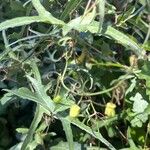
Passiflora tenuiloba
Birdwing passionflower
Care Guide
💧 Water
The birdwing passionflower needs consistent moisture while it is germinating. Once the plant is mature, water it twice a week if there is less than 1.5 inches (3.8 cm) of rainfall. Be careful not to overwater, as overly damp soil can damage the plant. If the passionflower is in a container, keep in mind that the soil dries out more quickly, so it may require more frequent watering.
☀️ Light Full sun
Birdwing passionflower is a sun-loving perennial herbaceous plant that comes from open habitats and frequently does well in meadows and grasslands. It prefers full sun but can also tolerate partial sun.
What are the sunlight requirements for Birdwing passionflower (Passiflora tenuiloba)?
The Birdwing passionflower (Passiflora tenuiloba) thrives in different sunlight conditions. For it to grow best, it needs full sun, meaning it should receive above 6 hours of sunlight daily. However, it can also grow well in partial sun, with about 3-6 hours of sunlight. It's important to observe the movement of sunlight in your garden to find the best spot that provides a perfect balance of light and shade to ensure the happiness and health of your Birdwing passionflower.
🌡️ Temperature 15–37.8°C
Birdwing passionflower adapts well to temperature, tolerating higher heat and larger temperature fluctuations. In hot weather, attention should be paid to watering and providing appropriate shade to avoid sunburn. However, its resistance to low temperatures is relatively weak: it can withstand some cold, but excessively low temperatures may cause frost damage.
What is the name of the plant?
The plant is known as Birdwing passionflower.
What is the botanical name of the Birdwing passionflower?
The botanical name of the Birdwing passionflower is Passiflora tenuiloba.
💨 Humidity
🪴 Soil 6-8
🌱 Fertilizer
One fertilizer application in spring is typically enough for Birdwing passionflower, though several feedings can boost growth to its fullest. Apply fertilizer about once every month to a month and a half. Fertilizing improves the leaves’ appearance and function, helping maintain uniform color and a healthy texture. It also promotes root development and nutrient uptake, supporting the plant’s long-term health.
🪴 Pot & Repot
✂️ Pruning
The Birdwing Passionflower features unique birdwing-shaped leaves and vibrant flowers. To maintain its health, prune it in early spring by removing any damaged branches to enhance airflow. Regular trimming encourages more blooms and improves overall health; make sure to cut above leaf nodes. Always use sterile tools to prevent disease, which will enhance both the plant's vigor and aesthetic appeal.
🌿 Propagating
🐛 Diseases & pets
☠️ Toxicity
Characteristics
- Plant Type
- Herb, Vine
- Life Cycle
- Perennial
- Genus
- Passiflora
- Family
- Passifloraceae
- Hardiness Zone
- 8-11
- Mature Height
- 2.13 m to 3.96 m
- Mature Spread
- 0.91 m to 2.13 m
- Leaf Color
- Dark Green, Forest Green
- Leaf Type
- Deciduous
- Flower Size
- 3.05 cm to 5.08 cm
- Bloom Time
- Late spring, Summer, Early fall
- Planting Time
- Autumn
- Harvest Time
- Mid summer, Late summer, Fall
- Native Area
- Mexico