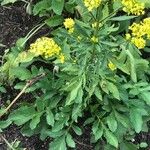
Patrinia scabiosifolia
Golden lace · Eastern Valerian
Description
Source: leafsnapPatrinia scabiosifolia, the eastern valerian or golden lace, is a species of flowering plant in the family Caprifoliaceae. It is native to southeastern Siberia, Mongolia, the Russian Far East, most of China, Vietnam, Korea, Japan, and the Ryukyu Islands, and it has been introduced to Irkutsk. In Japan it is one of the popular Seven Flowers of Autumn. A spreading perennial, it is readily available in commerce.
Care Guide
💧 Water Every week
☀️ Light Full sun
Yellow patrinia prefers sites that get abundant sunlight throughout the day. It tolerates partial sun and can manage places with some shade. In its native habitat it does best with plenty of light. Too little sun can slow its growth, while too much may cause minor damage.
What are the sunlight requirements for Yellow patrinia?
Yellow patrinia flourishes in locations with generous sun exposure throughout the day. It requires full sun, defined as more than 6 hours of sunlight daily, but it can also tolerate partial sun, about 3-6 hours of sunlight. Observing how sunlight moves through your garden helps in selecting spots that balance light and shade, thus promoting the health of your plants.
What are the essential practices for growing Yellow patrinia?
For optimal growth, Yellow patrinia needs ample sunlight. When natural light is insufficient, especially in winter or less sunny spaces, artificial lighting can be crucial. Indoor plants benefit from LED lights, which can provide specific light wavelengths needed for growth. Full sun plants require 30-50W/sq ft of artificial light, while partial sun plants need 20-30W/sq ft, and full-shade plants need 10-20W/sq ft. The artificial light source should be placed 12-36 inches above the plant for 8-12 hours per day, mimicking natural daylight hours.
What are the symptoms of insufficient or excessive sunlight in Yellow patrinia?
Inadequate sunlight can cause symptoms such as smaller new leaves, leggy or sparse growth, faster leaf drop, slower or no new growth, and lighter-colored or yellow new leaves. Excessive sunlight leads to chlorosis, sunscald, leaf curling, wilting, and leaf scorching. These symptoms indicate both a lack of and excessive sun exposure, affecting the plant's ability to photosynthesize and maintain health.
How do you address symptoms of poor lighting in Yellow patrinia?
To combat poor lighting conditions, gradually move Yellow patrinia plants to sunnier locations, ensuring at least 6 hours of direct sunlight daily. For indoor plants, use artificial light for at least 8 hours a day or utilize professional plant grow lights if the plant is large. Outdoors, adapt your plants gradually to avoid sunburn. If sunlight is blocked, consider pruning or transplanting your plants during their dormant period for better exposure. Remember, parts of the plant that have been affected by insufficient sunlight may not recover, but new growth will be healthy once light exposure is increased.
🌡️ Temperature 5–32.2°C
Yellow patrinia is native to habitats where temperatures generally fall between 41 to 89.6 °F (5 to 32 ℃). It favors these moderate temperatures and may need artificial temperature control to maintain that range during periods of extreme weather.
💨 Humidity
🪴 Soil 5-7
🌱 Fertilizer
The best time to fertilize a Yellow patrinia is in early spring, as it emerges from dormancy and starts active growth. Fertilization supplies essential nutrients for healthy development. While Yellow patrinia has fairly low fertilizer requirements, feeding it annually can boost its survival and encourage healthier, longer-lasting blooms.
🪴 Pot & Repot
✂️ Pruning
Yellow patrinia is characterized by its tall stems and vibrant yellow blooms. To keep the plant healthy, it's important to prune it from early to late spring. Start by removing any dead wood and thinning out stems that are too crowded; this will improve air circulation and allow more light to reach the plant. When cutting, make sure to trim just above healthy buds to maintain the plant's shape and promote more abundant flowering. Additionally, always sanitize your tools before pruning to prevent the spread of disease.
🌿 Propagating
🐛 Diseases & pets
☠️ Toxicity
Characteristics
- Plant Type
- Herb
- Life Cycle
- Perennial
- Genus
- Patrinia
- Family
- Caprifoliaceae
- Hardiness Zone
- 5-8
- Mature Height
- 0.3 m to 1.83 m
- Mature Spread
- 61 cm to 91 cm
- Leaf Color
- Green
- Leaf Type
- Deciduous
- Flower Color
- Yellow
- Flower Size
- 12.70 cm
- Bloom Time
- Late summer, Early fall, Mid fall
- Planting Time
- Spring, Winter
- Harvest Time
- Mid fall, Late fall
- Native Area
- Russia, Vietnam, Japan, Mongolia, Koppen, South Korea, China