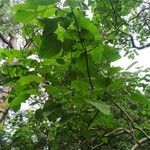
Paulownia fortunei
Dragontree
Description
Source: leafsnapPaulownia fortunei commonly called the dragontree, dragon tree or Fortune's empress tree, is a deciduous tree in the family Paulowniaceae, native to southeastern China (including Taiwan), Laos and Vietnam. It is an extremely fast-growing tree, due to its use of C4 carbon fixation, and is planted for timber harvesting. It appears to be nowhere near as dangerously invasive as Paulownia tomentosa.
💡 In Japan, there is a tradition that when a family has a daughter, they plant a paulownia tree by their house. As their daughter grows up and eventually marries, the wood from this tree is used to craft furniture for her dowry.
Care Guide
💧 Water
☀️ Light Full sun
Dragon tree comes from open habitats, such as sunny meadows and forest edges, which supply abundant light. It flourishes in Full Sun but can also tolerate Partial Sun, adapting well to various sunlight conditions.
What are the sunlight requirements for a Dragon Tree (Paulownia fortunei)?
The Dragon Tree, known botanically as Paulownia fortunei, thrives best under specific sunlight conditions. It requires full sun, which means it should receive above 6 hours of sunlight daily. However, it can also grow under partial sun, needing about 3 to 6 hours of sunlight. When selecting a spot for your Dragon Tree, it's important to observe your garden's patterns of sunlight throughout the day. Choose locations that offer a harmonious balance of light and shade, ensuring an environment where your plant can flourish.
🌡️ Temperature 15–35°C
Dragon tree adapts well to temperature, tolerating high heat and wide temperature variations. In hot conditions, ensure proper watering and provide suitable shade to prevent sunburn. However, Dragon tree is relatively sensitive to low temperatures. While it can tolerate some cold, excessively low temperatures can cause frost damage.
What is the botanic name of the Dragon tree?
The botanic name of the Dragon tree is Paulownia fortunei. This name helps in scientifically identifying the tree, distinguishing it from other species that might share a common name.
💨 Humidity
🪴 Soil 6-8
🌱 Fertilizer
The timing of fertilizing a Dragon tree is important. Apply fertilizer in early spring and continue monthly through early summer. Fertilizer helps produce lovely blooms and supplies energy during both dormant and active growth periods.
🪴 Pot & Repot
✂️ Pruning
The dragon tree grows quickly and needs regular pruning in early spring to maintain its shape and promote good health. To do this, remove any dead branches and thin out crowded areas for better air circulation. Pruning just above the nodes encourages new shoots, which enhances flowering and boosts the plant's overall vigor in the garden.
🌿 Propagating
🐛 Diseases & pets
☠️ Toxicity
Characteristics
- Plant Type
- Tree
- Life Cycle
- Perennial
- Genus
- Paulownia
- Family
- Paulowniaceae
- Hardiness Zone
- 7-10
- Mature Height
- 10.06 m to 20.12 m
- Mature Spread
- 7.92 m to 11.89 m
- Leaf Color
- Light Green, Dark Green
- Leaf Type
- Deciduous
- Flower Color
- Lavender
- Flower Size
- 2.54 cm to 7.62 cm
- Bloom Time
- Mid spring, Late spring
- Planting Time
- Spring, Summer, Autumn
- Harvest Time
- Summer
- Native Area
- Myanmar, Vietnam, Laos, China