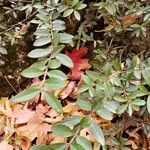
Paxistima myrsinites
Mountain-lover · Goatbrush · Oregon-boxwood · Myrtle boxleaf · Oregon boxleaf
Description
Source: leafsnapPaxistima myrsinites, commonly known as mountain lover or Oregon boxleaf, is a low-growing evergreen shrub native to the western United States. This plant typically reaches a height of 1 to 2 feet and spreads slowly through underground stems. Its small, glossy leaves remain dark green throughout the year. Paxistima myrsinites thrives in well-drained soils and can grow in both partial shade and full sun. Once established, it is drought-tolerant. It makes an excellent groundcover or addition to rock gardens, where its low-growing nature is perfect for filling gaps between rocks. In early spring, this shrub produces small, inconspicuous flowers followed by red berries that last into winter. These berries serve as an important food source for birds and other wildlife. Overall, Paxistima myrsinites is an attractive evergreen shrub that offers year-round interest, making it a versatile choice for various landscape settings.
Care Guide
💧 Water Every 7 days
The Oregon Boxleaf is a drought-tolerant plant that thrives with minimal moisture. To avoid overwatering, you should water it every 2-3 weeks. As an evergreen, it retains its foliage year-round, so it needs consistent, moderate hydration to adapt to varying indoor moisture levels.
☀️ Light Full sun
Oregon Boxleaf performs best in locations with plentiful sunlight, which supports vigorous growth. It tolerates areas with only partial sun and can remain healthy. It originates from habitats where strong sunlight is an important element. However, too much or too little sun can adversely affect the plant’s overall health.
What are the sunlight requirements for Oregon Boxleaf?
Oregon Boxleaf thrives best in full sun, meaning it requires more than 6 hours of sunlight daily, but it can also grow well in partial sun, with about 3-6 hours of sunlight. It's essential to watch how sunlight moves through your garden to choose spots providing the perfect balance of light and shade for your plants. This ensures their health and happiness. Originally from environments rich in sunlight, Oregon Boxleaf can endure spots with less-than-complete sun exposure while still maintaining vitality, though excessive or insufficient solar exposure could harm its overall health.
How can artificial lighting benefit indoor Oregon Boxleaf plants?
Indoor Oregon Boxleaf plants require adequate lighting for optimal growth, especially when natural sunlight is insufficient, like in winter or in less sunny spaces. Artificial lights, such as LED lights, offer a vital solution by providing the specific wavelengths of light that your plants need. Full sun plants need 30-50W/sq ft of artificial light, partial sun plants require 20-30W/sq ft, and full shade plants benefit from 10-20W/sq ft. It's important to place the light source 12-36 inches above the plant to mimic natural sunlight and determine the duration of light exposure, typically 8-12 hours per day, to promote faster, healthier growth.
What are the symptoms of inadequate light for Oregon Boxleaf?
When Oregon Boxleaf does not receive enough light, it may show several symptoms indicative of light deficiency. These include smaller new leaves compared to previous ones, leggy or sparse growth with longer spaces between leaves or stems, faster leaf drop as the plant conserves resources, slower or no new growth as the plant enters survival mode, lighter-colored new leaves signifying a lack of chlorophyll, and symptoms caused by excessive sunlight like chlorosis, sunscald, leaf curling, wilting, and leaf scorching. These conditions reflect the plant's struggle in suboptimal lighting conditions.
How can I address light-related problems in Oregon Boxleaf?
To address light-related issues in Oregon Boxleaf, gradually move the plant to sunnier locations until it receives at least 6 hours of direct sunlight daily for outdoor plants. For indoor plants, use a south-facing window or consider artificial lighting sources, like a desk or ceiling lamp for at least 8 hours daily or professional plant grow lights. If outdoor plants suffer from insufficient sunlight, relocate them gradually to avoid sunburn. Minimizing obstructions like pruning trees can help, as can transplanting smaller plants during their dormant period to areas with ample sunlight and good drainage. It's crucial to make these adjustments gently to avoid shocking the plant, focusing on new, healthy growth post-adjustment.
🌡️ Temperature 0–32.2°C
Oregon Boxleaf is native to climates with temperatures between 32 and 90 °F (0 and 32 °C). It prefers these moderate conditions and may need seasonal adjustments, such as providing shade or mulch, to keep within this preferred temperature range.
What are the ideal climate conditions for Oregon Boxleaf?
Oregon Boxleaf, scientifically known as Paxistima myrsinites, thrives in climates where temperatures range between 32 to 90 °F (0 to 32 °C). This plant prefers moderate conditions and may need adjustments like providing shade or mulch to sustain its preferred temperature range. It is highly cold-tolerant and does not necessitate additional frost protection in winter. Nonetheless, it is advised to water the plant generously before the first freeze in autumn to keep the soil moist and mitigate the potential for drought and water scarcity during winter and early spring.
What should be done if the temperature drops below Oregon Boxleaf's cold tolerance level?
Although Oregon Boxleaf is extremely cold-tolerant, surviving winter temperatures above -35°C, it's crucial to monitor it for any adverse effects when temperatures drop below this point. While there may not be noticeable changes during the winter, branches may become brittle and dry, with no new shoots emerging in the spring. In such cases, it's recommended to prune away any dead branches that have failed to produce new leaves come spring.
How does high temperature affect Oregon Boxleaf and what can be done?
Oregon Boxleaf does not fare well in high temperatures, particularly above 32°C, where it may experience significant leaf drop. In severe cases, the entire plant might wither and die. To combat this, it's important to trim away sunburned and dried-up parts, relocate the plant to a shaded location or use a shade cloth to protect it from the midday and afternoon sun. Watering the plant in the morning and evening will help keep the soil moist and support the plant's health during hot periods.
💨 Humidity
🪴 Soil 5-6
🌱 Fertilizer
Fertilize your Oregon Boxleaf in early spring to encourage healthy growth. Regular feeding improves the plant’s overall health, leading to strong growth, increased tolerance of harsh conditions, and enhanced resistance to diseases and pests. Keep a consistent fertilization routine for your Oregon Boxleaf to achieve foliage that is vibrant, deeply colored, and lush in appearance.
🪴 Pot & Repot
✂️ Pruning
The Oregon Boxleaf is an evergreen shrub characterized by its dense foliage and small leaves. To ensure optimal growth, it's best to prune the plant between early and late winter. Focus on removing dead or overcrowded branches to encourage healthy regrowth in the spring. Be sure to use clean, sharp tools to minimize damage and promote quick healing.
🌿 Propagating
🐛 Diseases & pets
☠️ Toxicity
Characteristics
- Plant Type
- Shrub
- Life Cycle
- Perennial
- Genus
- Paxistima
- Family
- Celastraceae
- Hardiness Zone
- 3-7
- Mature Height
- 30 cm to 61 cm
- Mature Spread
- 61 cm to 91 cm
- Leaf Color
- Green
- Leaf Type
- Evergreen
- Flower Color
- Green
- Flower Size
- 2.54 cm
- Bloom Time
- Mid spring, Late spring
- Planting Time
- Spring, Summer
- Harvest Time
- Late summer, Early fall, Mid fall